What?!? No, I have neither lost my mind nor traded in my copies of Man, Economy and State and Economics in One Lesson for for Prison Notebooks and What is to be Done? I further do not support nor will I vote for the Bern. So why in the name of Gramsci and Lenin do I think Sanders (now that Rand Paul is out of the race) is the most favorable option for libertarians?
In a word: GRIDLOCK. But, before I elaborate, let me offer some caveats. First, I am assuming both houses of Congress remain in Republican hands. This is crucial to my argument because Democratic Congressmen will rubber stamp such populist Sanders ideas as free college education since it will ensure they retain in perpetuity the slavish votes of the college age/recent college grad demographic and, further, pay back their statist acolytes in academia who continue to initiate the aforementioned demographic into the Cult of the State. Secondly, everyone loves a dictator in times of war, so I am also assuming that World War III doesn't begin during the Bern's first term. Thirdly, the size, scope, and power of government only goes in one direction. Until we can elect enough representatives willing to shrink government (and, right now, there are only a handful), the best thing we can hope is for Congress to be able to do as little as possible. Now, the argument...
1. The Big Government Party will not allow Sanders to put in place confiscatory tax rates.
Based on Sanders' performances in Iowa and New Hampshire and polling, in general, union workers and youth have a disproportionate representation among his followers. These groups traditionally vote democratic and will continue to do so. However, they don't have any money. Union money is distributed by union bosses and union bosses are concerned only with political power and lining their own pockets. That is why most of them have aligned with Hillary. As for the youth, they can't find jobs in the Obama economy and are overburdened with student loan debt (hence their support for free college education - see above). They don't have the financial firepower to elect the candidates of their choice. Moreover, even though potential young voters seem genuinely enthusiastic about Sanders, Democratic primary participation is actually down in both primary states. In short, it may be that young voters talk the talk but don't really walk the walk when it comes time to enter the voting booth.
No, it's Big Military, Big Insurance, Big Energy (both the fossil fuel and green varieties), Big Finance, Big Pharma, Big Hollywood, and Big Tech that elect Congressmen and fund the national parties. Their BFFs in the Big Government Party aren't going to bite the hands that feeds them. This means that government's legalized theft won't ever get too out of control. Sure, taxes on the rich will increase, but I doubt the rates will be any higher than what Donald Trump has promised to do. They'll placate the Jacobins who want to lay siege to Wall Street by raising rates on the 1%, but they also will leave plenty of loopholes in the Internal Revenue Code of which the wealthiest - with an army of accountants and tax attorneys at their disposal - can take advantage.
Somewhere in year 3 of his presidency, the notoriously economic knowledge-challenged Sanders may realize that, historically, government revenue as a percentage of GDP remains at 19% no matter what the highest marginal tax rate is. The wealthiest merely move their money around so they can avoid paying higher taxes. This may lead the Bern to propose a tax hike on the middle class. That proposal is a non-starter and will cause him to lose his bid for a second term.
2. Not only will Congress not fear Sanders, most members will not even take him seriously.
If Sanders wins, it will be because he has promised the salt of the earth that he will give them free stuff and because they have bought into the idea that he has come to liberate them from the special interests who control Washington. In other words, he will have been carried to victory on the shoulders of the common man (that is, if the common man is a bunch of economically illiterate, naive bunch of whiny freeloaders - but, I digress). The common man has no political power neither literally nor in the minds of the political elite. Because of that, no one in Washington is going to do anything Bernie wants that doesn't also forward the agenda(s) of their respective political financiers and cronies. Being that Bernie is all about fighting the corruption of money in politics, his agenda is in diametrical opposition to the Washington establishment. That means Bernie will get little accomplished. That's a good thing for you and I.
Furthermore, once it becomes clear to his supporters that Sanders is unable to deliver on his promises, he will lose even more political clout. Count on that perception starting to take hold somewhere the 6th - 9th month of a Sanders presidency.
3. Sanders' Democratic Socialism will fail horribly.
We are heading for a major global economic reset. Evidence abounds:
http://www.zerohedge.com/news/2016-02-09/what-central-bank-failure-looks-part-2
http://www.zerohedge.com/news/2016-02-09/global-stocks-enter-bear-market
http://www.zerohedge.com/news/2016-02-09/if-it-looks-recession-and-smells-recession
http://davidstockmanscontracorner.com/the-spook-in-the-casino-recession-just-ahead-part-1/
http://davidstockmanscontracorner.com/why-the-bulls-will-get-slaughtered/
http://peterschiffblog.blogspot.com/2016/02/us-economy-recession-is-already-under.html
Whoever is President will be called on by the masses (and Wall Street) to take immediate, decisive action to right the economy. However, as the articles above demonstrate, opening up the money spigots and lowering interest rates will not work. Quantitative easing, bailouts, the Stimulus, and backdoor Federal Reserve cash injections were a temporary Band Aids that merely placed a thin veneer over the mess the economy had become and interest rates, which have remained artificially low for almost 15 years, simply can't go any lower (although we are heading into uncharted waters from ZIRP to NIRP). The fall will be especially hard and longer lasting than the official eighteen month or so recession (which, in reality, never really ended). It will change our economy on a very fundamental level. The economic trauma will be such that no matter what socialist moves Sanders and the central planners make, the economy will not recover for a very long time. Only the wholesale elimination of government impediments to sustainable growth will allow us to crawl back out of the hole and we know that is not going to happen any time soon.
When the crash arrives, we need to hammer the philosophy of statism that has caused us to arrive at that singularity. We need to pillory its advocates - Sanders being only one of the many, are you listening Krugman, Stiglitz, et al? - and call for a return to the halcyon days of yore when all we had to deal with were merely corrupt politicians and not the burgeoning, out of control, bureaucratic technocracy - the purveyors and perpetrators of the Talebian Harvard Soviet delusion - that currently rules us.
Next Post: Why Bernie Sanders is the Best Candidate Remaining for Libertarians and Other Lovers of Liberty - Part 2: Why Trump Won't Be Any Better (with an emphasis on foreign policy)
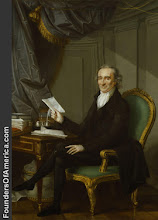
Thomas Paine
Tuesday, February 9, 2016


Back from exile
With the possible demise of Twitter, now might be the time to get back into the swing of things on this blog. Let's see where to begin?
Tuesday, May 7, 2013
Proof that American Lefties who decry "income inequality" may be a little spoiled
According to this graph, if you have at least $10000 in total wealth, then you are better off than 68.4% of the world:
http://www.zerohedge.com/sites/default/files/images/user5/imageroot/2013/05/Global%20Wealth%202.jpg
http://www.zerohedge.com/sites/default/files/images/user5/imageroot/2013/05/Global%20Wealth%202.jpg
Billionaire Paul Singer: The Federal Reserve is undermining society
Unbelievable quote worth repeating here (and a thousand more times):
"If you look at the history of Fed policy from Greenspan to Bernanke, you see two broad and destructive paths quite clearly. One path is the cult of central banking, in which the central bank gradually acquired the mantle of all-knowing guru and maestro, capable of fine-tuning the global economy and financial system, despite their infinite complexity. On this path traveled arrogance, carelessness and a rigid and narrow orthodoxy substituting for an open-minded quest to understand exactly what the modern financial system actually is and how it really works. The second path is one of lower and lower discipline, less and less conservative stewardship of the precious confidence that is all that stands between fiat currency and monetary ruin. Monetary debasement in its chronic form erodes people’s savings. In its acute and later stages, it can destroy the social cohesion of a society as wealth is stolen and/or created not by ideas, effort and leadership, but rather by the wild swings of asset prices engendered by the loss of any anchor to enduring value. In that phase, wealth and credit assets (debt) are confiscated or devalued by various means, including inflation and taxation, or by changes to laws relating to the rights of asset holders. Speculators win, savers are destroyed, and the ties that bind either fray or rip. We see no signs that our leaders possess the understanding, courage or discipline to avoid this."
But, wait, there's more:
"Central banks facing high inflation and/or sluggish growth after sustained money-printing frequently are paralyzed by the enormity of their mistake, or they are deranged by the thought that the difficult and complicated conditions in a more advanced stage of a period of monetary debasement are due to just not printing enough. At some stage, central banks inevitably realize, regardless of whether they admit the catastrophic nature of their own failings, that the cessation of money-printing will cause an instant depression. Even though at that point the cessation of money-printing may be the only action capable of saving society, that becomes a secondary consideration compared to the desire to avoid immediate pain and blame. The world’s central banks are in very deep with QE at present, and the risks continue to build with every new purchase of stocks and bonds with newly-printed money."
By the way, if you want the straight dope on economics and the world of finance, you absolutely have to check out www.zerohedge.com. Add it to your Twitter feed.
"If you look at the history of Fed policy from Greenspan to Bernanke, you see two broad and destructive paths quite clearly. One path is the cult of central banking, in which the central bank gradually acquired the mantle of all-knowing guru and maestro, capable of fine-tuning the global economy and financial system, despite their infinite complexity. On this path traveled arrogance, carelessness and a rigid and narrow orthodoxy substituting for an open-minded quest to understand exactly what the modern financial system actually is and how it really works. The second path is one of lower and lower discipline, less and less conservative stewardship of the precious confidence that is all that stands between fiat currency and monetary ruin. Monetary debasement in its chronic form erodes people’s savings. In its acute and later stages, it can destroy the social cohesion of a society as wealth is stolen and/or created not by ideas, effort and leadership, but rather by the wild swings of asset prices engendered by the loss of any anchor to enduring value. In that phase, wealth and credit assets (debt) are confiscated or devalued by various means, including inflation and taxation, or by changes to laws relating to the rights of asset holders. Speculators win, savers are destroyed, and the ties that bind either fray or rip. We see no signs that our leaders possess the understanding, courage or discipline to avoid this."
But, wait, there's more:
"Central banks facing high inflation and/or sluggish growth after sustained money-printing frequently are paralyzed by the enormity of their mistake, or they are deranged by the thought that the difficult and complicated conditions in a more advanced stage of a period of monetary debasement are due to just not printing enough. At some stage, central banks inevitably realize, regardless of whether they admit the catastrophic nature of their own failings, that the cessation of money-printing will cause an instant depression. Even though at that point the cessation of money-printing may be the only action capable of saving society, that becomes a secondary consideration compared to the desire to avoid immediate pain and blame. The world’s central banks are in very deep with QE at present, and the risks continue to build with every new purchase of stocks and bonds with newly-printed money."
By the way, if you want the straight dope on economics and the world of finance, you absolutely have to check out www.zerohedge.com. Add it to your Twitter feed.
Today's Episode of Government Spending Gone Wild: $400K for Cigarette-detecting Underwear
http://m.cnsnews.com/news/article/feds-spend-402721-underwear-senses-cigarette-smoke
Sheila Jackson Lee admits gun registry is so she can find gun owners.
http://m.mrconservative.com/mrconservative/#!/entry/democrat-congresswoman-admits-gun-registry-meant-to-find-guns,518868d4da27f5d9d0bd91ca/1
Wednesday, March 20, 2013
Returning as if to visit an old friend
It's hard to believe that sixteen months have passed since I last posted here. It's time to start again.
Sunday, November 27, 2011
Create jobs - Lesson 2 - End the policies that discourage long-term investment
ITEM #5 - Repeal Obamacare
Besides being unconstitutional, Obamacare does not accomplish its stated purpose of insuring all Americans and, in fact, counts on Americas NOT obeying the law's individual mandate in order to secure the fines necessary to fund a good portion of the plan. For purposes of this discussion, the most damning aspect of Obamacare is that it creates uncertainty. Businesses cannot estimate what their healthcare costs are going to be and, therefore, cannot project what their future profit margins will be. If they do not know how much money they will have on hand, then businesses cannot make a determination as to whether or not they have sufficient funds to make new hires and they do not know what it will cost to provide benefits to those new employees.
This same principle of uncertainty applies to any government-compliance related cost: energy reg compliance (i.e. what will be the cost of transporting goods, supplying offices/plants with electricity, etc. with an Administration and a regulatory regime in place that are dead set on killing the fossil fuel industry, which supplies so much of our energy requirement), financial reg compliance (ex. the Consumer Financial Protection Bureau has carte blanche to draft and promulgate its own regs with no Congressional oversight and relies solely on the Federal Reserve for funding, in essence, placing it outside the purview of the Legislature; and Dodd-Frank with its stringent, but non-sensical requirements, all of which favor large banks, and its provisions that actually institutionalize the concept of "too big to fail" in perpetuity), and labor law compliance (i.e. the government has no business getting involved in labor disputes or contracts between employee and employer and the NLRB was created for the specific purpose of "evening the playing field" between labor and management which necessarily means that the federal government has decided to take the side of employees against employers). Ending government employee unions will help eliminate costs at every level of government.
ITEM #6 - Privatize government entities.
Any time the government provides a good or service, there is at least some degree of inefficiency and there are potential private sector jobs that are crowded out. We should end the boondoggle that is Amtrak or sell it at a fire sale to a private entity and let them try to operate it. Dissolve the Postal Service and repeal the laws that prevent private entities from competing to deliver our mail. That will end the USPS's annual $5 billion in losses. End Freddie and Fannie (did I already make this argument?). If there is going to be a mortgage clearing house, then the more efficient private market should supply it. This will have the added benefit of reducing the likelihood of future housing bubbles. End the Export/Import Bank, the Small Business Admnistration, and every other federally-funded entity and organization designed to provide cheap credit to businesses based on politics. These types of entities distort the market and contribute to malinvestment/bubbles or they result in the misallocation of taxpayer funds.
Clearly, there will be some that will call into question the possibility of creating jobs by ending government jobs and here's my response: government agencies that drain taxpayer dollars take money out of the economy that could be used on more productive activities and create terrible inefficiencies and waste. They should not exist, period, for that simple fact alone. However, there will be a tremendous demand for some of the services they perform. Accordingly, private entities will step in to fill that vacuum. This will allow government employees to obtain equivalent jobs in the private sector. Moreover, growth in any industry leads to greater employment opportunities. Since the USPS, for example, cannot grow unless the government says it can grow, the amount of jobs it can create is a fixed number. However, private entities, motivated by profit (and the increased productivity that leads to it), will want to grow as much as is feasible, thereby increasing the rate of job creation.
Item #7 - End government employee unions.
See my reasoning in Items 6 and 7 above. By way of further argument, government employee unions are particularly egregious because they allow one group of citizens (government union employees) to leverage money from other citizens solely for the benefit of those unionized workers. The real employers, the taxpayers, have no say in the negotiating process. Providing a service in the public sector should not grant you rights that other citizens cannot enjoy simply because you work for the government and have joined a union.
Item #8 - End the employers' contribution to FICA.
It is monumentally stupid to force employers to match their employees' contributions to FICA. First, it discourages employers from paying those employees a higher wage. Second, why should an employer be forced to contribute to its employee's retirement? What benefit does the employer received from doing so? None. Third, it is a cost that employers use to calculate whether or not to hire someone. Make it easier for them and repeal the employer's matching requirement.
I am sure that there are other areas of regulatory compliance that need to be trimmed back if not outright deleted. Ultimately, federal regulatory compliance is estimated to cost businesses $1.75 TRILLION annually. Remove that cost, save our economy, and create jobs.
Besides being unconstitutional, Obamacare does not accomplish its stated purpose of insuring all Americans and, in fact, counts on Americas NOT obeying the law's individual mandate in order to secure the fines necessary to fund a good portion of the plan. For purposes of this discussion, the most damning aspect of Obamacare is that it creates uncertainty. Businesses cannot estimate what their healthcare costs are going to be and, therefore, cannot project what their future profit margins will be. If they do not know how much money they will have on hand, then businesses cannot make a determination as to whether or not they have sufficient funds to make new hires and they do not know what it will cost to provide benefits to those new employees.
This same principle of uncertainty applies to any government-compliance related cost: energy reg compliance (i.e. what will be the cost of transporting goods, supplying offices/plants with electricity, etc. with an Administration and a regulatory regime in place that are dead set on killing the fossil fuel industry, which supplies so much of our energy requirement), financial reg compliance (ex. the Consumer Financial Protection Bureau has carte blanche to draft and promulgate its own regs with no Congressional oversight and relies solely on the Federal Reserve for funding, in essence, placing it outside the purview of the Legislature; and Dodd-Frank with its stringent, but non-sensical requirements, all of which favor large banks, and its provisions that actually institutionalize the concept of "too big to fail" in perpetuity), and labor law compliance (i.e. the government has no business getting involved in labor disputes or contracts between employee and employer and the NLRB was created for the specific purpose of "evening the playing field" between labor and management which necessarily means that the federal government has decided to take the side of employees against employers). Ending government employee unions will help eliminate costs at every level of government.
ITEM #6 - Privatize government entities.
Any time the government provides a good or service, there is at least some degree of inefficiency and there are potential private sector jobs that are crowded out. We should end the boondoggle that is Amtrak or sell it at a fire sale to a private entity and let them try to operate it. Dissolve the Postal Service and repeal the laws that prevent private entities from competing to deliver our mail. That will end the USPS's annual $5 billion in losses. End Freddie and Fannie (did I already make this argument?). If there is going to be a mortgage clearing house, then the more efficient private market should supply it. This will have the added benefit of reducing the likelihood of future housing bubbles. End the Export/Import Bank, the Small Business Admnistration, and every other federally-funded entity and organization designed to provide cheap credit to businesses based on politics. These types of entities distort the market and contribute to malinvestment/bubbles or they result in the misallocation of taxpayer funds.
Clearly, there will be some that will call into question the possibility of creating jobs by ending government jobs and here's my response: government agencies that drain taxpayer dollars take money out of the economy that could be used on more productive activities and create terrible inefficiencies and waste. They should not exist, period, for that simple fact alone. However, there will be a tremendous demand for some of the services they perform. Accordingly, private entities will step in to fill that vacuum. This will allow government employees to obtain equivalent jobs in the private sector. Moreover, growth in any industry leads to greater employment opportunities. Since the USPS, for example, cannot grow unless the government says it can grow, the amount of jobs it can create is a fixed number. However, private entities, motivated by profit (and the increased productivity that leads to it), will want to grow as much as is feasible, thereby increasing the rate of job creation.
Item #7 - End government employee unions.
See my reasoning in Items 6 and 7 above. By way of further argument, government employee unions are particularly egregious because they allow one group of citizens (government union employees) to leverage money from other citizens solely for the benefit of those unionized workers. The real employers, the taxpayers, have no say in the negotiating process. Providing a service in the public sector should not grant you rights that other citizens cannot enjoy simply because you work for the government and have joined a union.
Item #8 - End the employers' contribution to FICA.
It is monumentally stupid to force employers to match their employees' contributions to FICA. First, it discourages employers from paying those employees a higher wage. Second, why should an employer be forced to contribute to its employee's retirement? What benefit does the employer received from doing so? None. Third, it is a cost that employers use to calculate whether or not to hire someone. Make it easier for them and repeal the employer's matching requirement.
I am sure that there are other areas of regulatory compliance that need to be trimmed back if not outright deleted. Ultimately, federal regulatory compliance is estimated to cost businesses $1.75 TRILLION annually. Remove that cost, save our economy, and create jobs.
Monday, October 24, 2011
How to create jobs: Lesson 1 - It's not about creating jobs - it's about growing the economy
Opposing bloggers often respond to my attacks on this Administration's policies by alleging that I complain all of the time without offering any of my own solutions. I disagree, but, in order to lay to rest those inane accusations, I am going to propose solutions to turn the economy around and create jobs. I'll start by making a number of assumptions: 1) growing the economy is what creates jobs. A strong economy means that there is stability in the markets and an anticipation of greater future profits. If there is an anticipation of greater profits, then investors and job creators know that they will have sufficient capital in the future to cover the cost of hiring new employees; 2) government is not the solution. Instead of creating a multiplier effect, every dollar spent in the public sector is a dollar taken out of the private sector where it can be used by the private sector, whose sole goal is the creation and massing of wealth, and, instead, spent based on political expediency, i.e. that money is given to someone who is a member of a favored special interest group. The net effect of public spending is at best zero and, usually, after deducting administrative costs, a net negativ; and 3) as Hazlitt teaches us, any good policy lifts all boats and considers the long-term consequences.
Idea #1 - END THE CORPORATE INCOME TAX
Eliminate the corporate income tax. Shareholders are taxed on their income. Those same shareholders own shares in companies whose taxable income is taxed again at the 35% corporate tax rate. That's double taxation. Elimating that double taxation will free up more capital for expanding businesses and creating jobs.
Item #2 - REFORM THE TAX SYSTEM
Many conservatives recommend making the Bush tax cuts permanent. They're right in principal, yet tax cuts only have a positive effect on the economy if they last long enough for entrepeneurs and investors to make long-term decisions based on them. However, a paltry 3% reduction is not enough to stimulate a stagnant economy. Instead, we should implement a flat tax so that everyone has skin in the game. People who don't pay taxes and receive their incomes from the government, have few qualms about spending other people's money. If they know that they will have to contribute an equal percentage to the pot, then they will be less likely to elect representatives whose sole intent is to tax and spend.
I'm not sure what that percentage rate should be. However, if government revenues as a percentage of GDP average 18% per year, then that would be a good starting point. We should ask for a little more than we know that we need, in the event there are some unforeseen costs, so let's set the rate at an even 20%. That should make our tax returns easier to prepare.
Next, we eliminate every tax credit and every deduction, including the sacred mortgage interest credit and the child tax credit. If you make $100,000 in income, then you pay $20,000 in taxes. If you make $10,000 in income, then you pay $2,000 in taxes. Businesses do not get a deduction for expenses or depreciation because we have eliminated the corporate income tax which allows them to keep more of their income. We also have lowered the top individual tax rates anywhere from 8%-16%.
ITEM #3 - CUT SPENDING DRAMATICALLY
Eliminate the following federal agencies: the Commerce Department, the Education Department, the Department of Energy, and the Department of Housing and Urban Development. Cut the budgets of all remaining agencies and departments by 10%. Let the agency and department heads, who are closer to where the rubber hits the road, choose what programs are to fall under the knife.
End all federal farm and energy subsidies and all corporate welfare.
End the federal gasoline tax.
Eliminate the Federal Reserve (I already took out Fannie and Freddie when I axed HUD). Since its inception, it has done nothing but create inflation and exacerbate business cycles, while, through its printing press, it enables politicians to start unconstitutional wars and fund their favorite government pet projects.
End all funding to the UN and NATO. The UN has not been our friend since the early 1950s, even though we have funded over 2/3 of its operations. Without the threat of the Soviet Union, are European allies can defend themselves at their own cost.
Reduce our military presence abroad. Not only should we get out of "foreign entanglements" in the form of multinational organizations, we should also close all of our bases in Europe and South America. It goes without saying that we need to withdraw our troops from Afghanistan.
ITEM #4 REMOVE ALL PROTECTIVE TARIFFS/END EMBARGOES
We live in a global economy. With our advancing levels of technology, we are able to transmit information, including prices, instantly across the globe. Our economy needs to be able to modernize and compete in a global market. When we impose protective tariffs, we disincentivize that growth and will trigger retaliatory tariffs, resulting in increased prices for all and greater difficulty for domestic firms to sell their own products abroad.
I detest trade embargoes and it's not because I don't get the point. Cubans are communists and we don't like that. Iranians want to kill us and we don't like that either. However, embargoes only hurt the citizens of that country. The government and the wealthy elite are going to get what they want, regardless of what we do. And disabuse yourself of the idea that they lead to popular revolution and the toppling of despots. There are no instances in which embargoes have led to such upheavals.
It's time for a different strategy. The 2 things that the United States has most going for it, more than any other nation, are its freedoms and its wealth. Why not trade freely with those countries and let them witness firsthand the benefits of a free market. Let them listen to US music, read our books, visit our websites, and taste of our liberty. Communism and despotism don't stand a chance. The added benefit is that we open up new markets for American products and services.
Idea #1 - END THE CORPORATE INCOME TAX
Eliminate the corporate income tax. Shareholders are taxed on their income. Those same shareholders own shares in companies whose taxable income is taxed again at the 35% corporate tax rate. That's double taxation. Elimating that double taxation will free up more capital for expanding businesses and creating jobs.
Item #2 - REFORM THE TAX SYSTEM
Many conservatives recommend making the Bush tax cuts permanent. They're right in principal, yet tax cuts only have a positive effect on the economy if they last long enough for entrepeneurs and investors to make long-term decisions based on them. However, a paltry 3% reduction is not enough to stimulate a stagnant economy. Instead, we should implement a flat tax so that everyone has skin in the game. People who don't pay taxes and receive their incomes from the government, have few qualms about spending other people's money. If they know that they will have to contribute an equal percentage to the pot, then they will be less likely to elect representatives whose sole intent is to tax and spend.
I'm not sure what that percentage rate should be. However, if government revenues as a percentage of GDP average 18% per year, then that would be a good starting point. We should ask for a little more than we know that we need, in the event there are some unforeseen costs, so let's set the rate at an even 20%. That should make our tax returns easier to prepare.
Next, we eliminate every tax credit and every deduction, including the sacred mortgage interest credit and the child tax credit. If you make $100,000 in income, then you pay $20,000 in taxes. If you make $10,000 in income, then you pay $2,000 in taxes. Businesses do not get a deduction for expenses or depreciation because we have eliminated the corporate income tax which allows them to keep more of their income. We also have lowered the top individual tax rates anywhere from 8%-16%.
ITEM #3 - CUT SPENDING DRAMATICALLY
Eliminate the following federal agencies: the Commerce Department, the Education Department, the Department of Energy, and the Department of Housing and Urban Development. Cut the budgets of all remaining agencies and departments by 10%. Let the agency and department heads, who are closer to where the rubber hits the road, choose what programs are to fall under the knife.
End all federal farm and energy subsidies and all corporate welfare.
End the federal gasoline tax.
Eliminate the Federal Reserve (I already took out Fannie and Freddie when I axed HUD). Since its inception, it has done nothing but create inflation and exacerbate business cycles, while, through its printing press, it enables politicians to start unconstitutional wars and fund their favorite government pet projects.
End all funding to the UN and NATO. The UN has not been our friend since the early 1950s, even though we have funded over 2/3 of its operations. Without the threat of the Soviet Union, are European allies can defend themselves at their own cost.
Reduce our military presence abroad. Not only should we get out of "foreign entanglements" in the form of multinational organizations, we should also close all of our bases in Europe and South America. It goes without saying that we need to withdraw our troops from Afghanistan.
ITEM #4 REMOVE ALL PROTECTIVE TARIFFS/END EMBARGOES
We live in a global economy. With our advancing levels of technology, we are able to transmit information, including prices, instantly across the globe. Our economy needs to be able to modernize and compete in a global market. When we impose protective tariffs, we disincentivize that growth and will trigger retaliatory tariffs, resulting in increased prices for all and greater difficulty for domestic firms to sell their own products abroad.
I detest trade embargoes and it's not because I don't get the point. Cubans are communists and we don't like that. Iranians want to kill us and we don't like that either. However, embargoes only hurt the citizens of that country. The government and the wealthy elite are going to get what they want, regardless of what we do. And disabuse yourself of the idea that they lead to popular revolution and the toppling of despots. There are no instances in which embargoes have led to such upheavals.
It's time for a different strategy. The 2 things that the United States has most going for it, more than any other nation, are its freedoms and its wealth. Why not trade freely with those countries and let them witness firsthand the benefits of a free market. Let them listen to US music, read our books, visit our websites, and taste of our liberty. Communism and despotism don't stand a chance. The added benefit is that we open up new markets for American products and services.
Monday, July 18, 2011
The Importance of the Rule of Law
Hayek defined the Rule of Law as meaning that "government in all its actions is bound by rules fixed and announced beforehand - rules which make it possible to foresee with fair certainty how the authority will use its coercive powers in given circumstances and to plan one's individual affairs on the basis of this knowledge...Within the known rules of the game, the individual is free to pursue his personal ends and desires, certain that the powers of government will not be used deliberately to frustrate his efforts." The Rule of Law provides a stable environment for all of man's myriad interactions, whether economic or otherwise, as well as the legal framework most conducive to freedom. Such a principle requires the state to limit itself to establishing formal rules that apply generally, to all persons, irrespective of time or circumstance, and those rules that are the must likely to benefit all of the people affected by them.
Contrast this principle with the concept of economic and social planning. In a planned system in which the goal is equality of outcome and distributive justice, the state is required to produce the same result for different people and, as a necessity, it must treat them differently. After all, in an imperfect world, some people are born healthy, but others sick, and some are intelligent and others not. Some people have the advantages of good parents, live in lands that are safe from natural disasters, and pass their entire lives without a significant illness or injury. Accordingly, a planned system can only pursue an equality of outcome and level the playing field by elevating those less fortunate or less endowed with superior characteristics, knowledge, skills, and talents. In short, it must offer the disadvantaged group some form of subsidy, typically, financial or legal in nature. However, there are both intended and unintended consequences of that action. Because the state has limited resources, it must first choose which of the groups it will benefit. This requires discriminating against on or more groups who either will not be the recipients of the subsidy or from which the material resources or wealth will be taken in order to benefit the less advantaged group. Moreover, the beneficiary of the subsidy will have an incentive not to achieve equality on their own since he/she is being sustained, in whole or in part, by the state. The government may reach a point at which it cannot remove the benefit because doing so will leave the beneficiary destitute or unable to fend for his/herself. At such time, it must adjust its laws, rules, and regulations to redirect or siphon more funds or resources from other groups. Ultimately, the Rule of Law is undermined as the planning authority must continuously adjust the laws to meet the various circumstances and changing needs of its beneficiaries, whose needs are often in conflict with the needs of others.
One way planned systems attempt to address these ever-changing circumstances is to delegate the law-making authority to agencies, bureaus, committees, and departments. The goal is efficiency. In theory, the legislature in a planned system does not have to debate and pass a law everytime that it is compelled to respond to a pressing need - it can merely defer to the bureaucrats who bear that responsibility. However, deferral to such a group only serves to make government action more arbitrary because, now, instead of having an elected legislature make the decisions, the rules are developed and implemented by unelected government employees who are politically-appointed and are not accountable to anyone other than the party in power. Rarely does anyone in the general public take the opportunity to learn what regulations are passed although it is certain that, at some point, they will feel the rules' effects, often without knowing the party responsible.
The legislature in a planned system is doomed to irrelevance. They are viewed as incompetent because, due to conflicting ideas of what priorities should take precedence, who should be the recipients of government benefits, and what actions should be taken, they will be slow to act and even slower to adjust to changes in circumstances. As noted above, bureaucracies, with their legions of so-called experts, are imbued with plenary authority with little legislative oversight to carry out the state's political goals. Unfortunately for advocates of this system, bureaucracies naturally only larger to combat the ever-growing list of problems that need immediate redress. This accretion of size and levels of structure leads to further inertia. At some point, the disgruntled masses of government beneficiaries cry out for someone to step up and do something. Almost invariably, that person is a dictator. Suddenly, things are getting done as the dictator, usually under the auspices of reform, implements sweeping reform, all of which is certain to grow the size of government and expand its intrusion into citizens' lives.
This scenario has played out time and time again. Carl Schmitt, the legal theorist of National Socialism, contrasted the National Socialist ideal of gerechte Staat (the "just state") with the concept of Rechstaat (the Rule of Law) and concluded that the type of justice that opposes formal justice must necessarily require discrimination against certain persons. I don't think that I need to elaborate on how those thoughts became actions.
More significantly, we see the same derogation of the Rule in Law in the last two Administrations. Billion dollar bailouts benefited some Wall Street entities, but did not benefit others nor did they extend to industries other than the financial industry. GM and Chrysler receive bailouts, while Ford does not (at least, not directly. Although not a technical government bailout, many firms, including Ford, McDonald's, Toyota, and GM received huge low interest loans from the Federal Reserve). Some companies receive exemptions from Obamacare (a decision based solely on authority delegated to the Department of Health and Human Services who has no regulatory criteria with which to determine who is eligible for an exemption). The green industry received government subsidies, while the oil industry did not. States whose employees are predominantly members of government employee unions received government stimulus money while non-unionized employees did not. Of course, all of these allocations of taxpayer funds are based on politics and reveals the corrupt nature of our government and its leaders, but, ultimately, the biggest blow to our freedom is that the Rule of Law has been persistently undermined and disregarded. A precedent has been established that says that there are no formal rules restricting government, that it can do whatever it deems necessary to further its own political goals. In the final analysis, a foundation has been laid for unbridled tyranny.
Contrast this principle with the concept of economic and social planning. In a planned system in which the goal is equality of outcome and distributive justice, the state is required to produce the same result for different people and, as a necessity, it must treat them differently. After all, in an imperfect world, some people are born healthy, but others sick, and some are intelligent and others not. Some people have the advantages of good parents, live in lands that are safe from natural disasters, and pass their entire lives without a significant illness or injury. Accordingly, a planned system can only pursue an equality of outcome and level the playing field by elevating those less fortunate or less endowed with superior characteristics, knowledge, skills, and talents. In short, it must offer the disadvantaged group some form of subsidy, typically, financial or legal in nature. However, there are both intended and unintended consequences of that action. Because the state has limited resources, it must first choose which of the groups it will benefit. This requires discriminating against on or more groups who either will not be the recipients of the subsidy or from which the material resources or wealth will be taken in order to benefit the less advantaged group. Moreover, the beneficiary of the subsidy will have an incentive not to achieve equality on their own since he/she is being sustained, in whole or in part, by the state. The government may reach a point at which it cannot remove the benefit because doing so will leave the beneficiary destitute or unable to fend for his/herself. At such time, it must adjust its laws, rules, and regulations to redirect or siphon more funds or resources from other groups. Ultimately, the Rule of Law is undermined as the planning authority must continuously adjust the laws to meet the various circumstances and changing needs of its beneficiaries, whose needs are often in conflict with the needs of others.
One way planned systems attempt to address these ever-changing circumstances is to delegate the law-making authority to agencies, bureaus, committees, and departments. The goal is efficiency. In theory, the legislature in a planned system does not have to debate and pass a law everytime that it is compelled to respond to a pressing need - it can merely defer to the bureaucrats who bear that responsibility. However, deferral to such a group only serves to make government action more arbitrary because, now, instead of having an elected legislature make the decisions, the rules are developed and implemented by unelected government employees who are politically-appointed and are not accountable to anyone other than the party in power. Rarely does anyone in the general public take the opportunity to learn what regulations are passed although it is certain that, at some point, they will feel the rules' effects, often without knowing the party responsible.
The legislature in a planned system is doomed to irrelevance. They are viewed as incompetent because, due to conflicting ideas of what priorities should take precedence, who should be the recipients of government benefits, and what actions should be taken, they will be slow to act and even slower to adjust to changes in circumstances. As noted above, bureaucracies, with their legions of so-called experts, are imbued with plenary authority with little legislative oversight to carry out the state's political goals. Unfortunately for advocates of this system, bureaucracies naturally only larger to combat the ever-growing list of problems that need immediate redress. This accretion of size and levels of structure leads to further inertia. At some point, the disgruntled masses of government beneficiaries cry out for someone to step up and do something. Almost invariably, that person is a dictator. Suddenly, things are getting done as the dictator, usually under the auspices of reform, implements sweeping reform, all of which is certain to grow the size of government and expand its intrusion into citizens' lives.
This scenario has played out time and time again. Carl Schmitt, the legal theorist of National Socialism, contrasted the National Socialist ideal of gerechte Staat (the "just state") with the concept of Rechstaat (the Rule of Law) and concluded that the type of justice that opposes formal justice must necessarily require discrimination against certain persons. I don't think that I need to elaborate on how those thoughts became actions.
More significantly, we see the same derogation of the Rule in Law in the last two Administrations. Billion dollar bailouts benefited some Wall Street entities, but did not benefit others nor did they extend to industries other than the financial industry. GM and Chrysler receive bailouts, while Ford does not (at least, not directly. Although not a technical government bailout, many firms, including Ford, McDonald's, Toyota, and GM received huge low interest loans from the Federal Reserve). Some companies receive exemptions from Obamacare (a decision based solely on authority delegated to the Department of Health and Human Services who has no regulatory criteria with which to determine who is eligible for an exemption). The green industry received government subsidies, while the oil industry did not. States whose employees are predominantly members of government employee unions received government stimulus money while non-unionized employees did not. Of course, all of these allocations of taxpayer funds are based on politics and reveals the corrupt nature of our government and its leaders, but, ultimately, the biggest blow to our freedom is that the Rule of Law has been persistently undermined and disregarded. A precedent has been established that says that there are no formal rules restricting government, that it can do whatever it deems necessary to further its own political goals. In the final analysis, a foundation has been laid for unbridled tyranny.
Tuesday, July 12, 2011
They will never learn
During the late 1920s and early 1930s, many influential progressives, including members of FDR's Brain Trust and other close advisers like Rexford Tugwell, Harold Ickes, and Stuart Chase couldn't wait to implement the economic planning of Russia, Germany, Italy, and Japan in America. Later, when knowledge of those nations' derogation of basic human rights, concentration camps, and the Gulag reached the light of day, progressives immediately began distancing themselves from their previous positions, at least, publicly. Those members of the general public that bought into the idea of government control of the economy fell into 2 groups: 1) the desperate, the poor, and the hungry who benefited from New Deal programs; and 2) those who may not have been the direct recipients of government handouts, but, nevertheless, believed that government provided the only path out of the Depression - in short, those who fed on a steady diet of pro-New Deal, pro-FDR propaganda. Both groups failed to comprehend the overwhelming weight of history: no government has been able to control the economy without exerting political control on its citizens. Freedom cannot be neatly compartmentalized into economic freedom and all other types of freedom - the concepts must go in hand. After all, what is more important than a man being able to work hard in a trade that he has chosen, being fairly compensated for his efforts, holding on to as much of those hard earned wages as possible, and spending it in the manner that he chooses? Economic freedom opens doorways to a better life. The head of the household does not have to worry about the fear of being unable to maintain a roof over his family's head and put food on the table. He can send his children to better schools, take family trips with them, enroll them in summer camp and pay for them to play sports. He can save for their education and his and his spouse's retirement.
If you take away economic freedom, then you become a slave to the whims of the state unless, of course, you belong to the ranks of the politically privileged. That concept, more than anything, has led to the economic ruin in which the world finds itself.
Although patronage has been a part of the American political landscape since the days of Andrew Jackson and Martin Van Buren, it was FDR who transformed it into a science. FDR understood that, once Americans realized the ineffectiveness of his policies and the sad state in which the economy wallowed, there was no way that he could win in an open and fair election. FDR's strategy was to create as many special interest groups as possible, ensure their loyalty by distributing taxpayer money to them, and then rely upon them to return the favor by re-electing him in perpetuity and donating to his campaign. How did he do it? He created agencies like the TVA which provided cheap electricity to certain areas of the country. The fact that the electricity was supported by taxes paid by people in other parts of the country was never really mentioned nor would it have mattered to the recipients of such largesse. FDR signed the Wagner Act into law which, by tilting the balance of power in favor of unions, led to 1000% growth in the number of Union workers - all of whom showed their appreciation by voting for FDR in national elections. FDR counted among his fans farmers, whom his programs subsidized (in fact, farmers were paid not to produce in order to drive up prices which further benefited them), academics (since he gave them jobs and a say in government), and the elderly and the retired (by creating Social Security). Everyone else, the so-called "Forgotten Man" of the 1940s, who did not benefit from government handouts, was left out on the cold. [Note: See William Sumner's quote - not the one that Roosevelt twisted for his own purposes].
The parallels with the Obama Administration are astounding. The members of his cabinet and the heads of the various government agencies with which he implements his policies are a microcosm of the broader group of special interest groups that form his core supporters: Wall Street bankers and hedge fund managers, academics, the unions, the youth, trial lawyers, and government employees. The stimulus was specifically designed to funnel taxpayer money into the coffers of those groups. Of course, those groups then turn around and repay Obama's magnanimity by donating to the DNC and to the President's reelection campaign (which, as of the date of this post, amounts to approximately $1 billion).
This is not how a republic functions. Instead, we are witnessing some bastardized form of direct democracy: the special interest groups elect their man who represents them exclusively - the rest of the nation be damned. Moreover, not only has our political system been transformed, our economy has experienced the same perversion: the stimulus bill, Obamacare, etc. are all redistributionist actions designed to only help the privileged few. It is as if the US has a two-tiered economy: on one level we find the special interest groups willing to play ball with the regime for financial gain and a second level of the virtually ignored who just happen to pay the tax dollars that support the other group. If we do not correct this imbalance of power and return to the principles of economics and government that created the greatest nation in the history of the world, then we will be doomed to an inferior existence, a mere extension of the economically weak and morally bankrupt Europe.
Lastly, as I mentioned above, the intelligentsia and social engineers have engaged in an enormous act of self-deception. In their blind pursuit of "change," whatever that term means, they have completely ignored the clear lessons of history. Those four (4) nations I listed at the beginning of my post all had planned economies. We fought a war against 3 of them and a cold war against the remaining one. The evidence is overwhelming that all 4 engaged in horrific acts of inhumanity, primarily against dissidents or those who were different. Eventually, the social planners will realize that they must firmly place their black boots on the necks of the opposition if they are ever going to realize their dreams of a socialist Utopia. Unfortunately for them, that fantasy never materializes and never will so long as the price is the end of human freedom.
If you take away economic freedom, then you become a slave to the whims of the state unless, of course, you belong to the ranks of the politically privileged. That concept, more than anything, has led to the economic ruin in which the world finds itself.
Although patronage has been a part of the American political landscape since the days of Andrew Jackson and Martin Van Buren, it was FDR who transformed it into a science. FDR understood that, once Americans realized the ineffectiveness of his policies and the sad state in which the economy wallowed, there was no way that he could win in an open and fair election. FDR's strategy was to create as many special interest groups as possible, ensure their loyalty by distributing taxpayer money to them, and then rely upon them to return the favor by re-electing him in perpetuity and donating to his campaign. How did he do it? He created agencies like the TVA which provided cheap electricity to certain areas of the country. The fact that the electricity was supported by taxes paid by people in other parts of the country was never really mentioned nor would it have mattered to the recipients of such largesse. FDR signed the Wagner Act into law which, by tilting the balance of power in favor of unions, led to 1000% growth in the number of Union workers - all of whom showed their appreciation by voting for FDR in national elections. FDR counted among his fans farmers, whom his programs subsidized (in fact, farmers were paid not to produce in order to drive up prices which further benefited them), academics (since he gave them jobs and a say in government), and the elderly and the retired (by creating Social Security). Everyone else, the so-called "Forgotten Man" of the 1940s, who did not benefit from government handouts, was left out on the cold. [Note: See William Sumner's quote - not the one that Roosevelt twisted for his own purposes].
The parallels with the Obama Administration are astounding. The members of his cabinet and the heads of the various government agencies with which he implements his policies are a microcosm of the broader group of special interest groups that form his core supporters: Wall Street bankers and hedge fund managers, academics, the unions, the youth, trial lawyers, and government employees. The stimulus was specifically designed to funnel taxpayer money into the coffers of those groups. Of course, those groups then turn around and repay Obama's magnanimity by donating to the DNC and to the President's reelection campaign (which, as of the date of this post, amounts to approximately $1 billion).
This is not how a republic functions. Instead, we are witnessing some bastardized form of direct democracy: the special interest groups elect their man who represents them exclusively - the rest of the nation be damned. Moreover, not only has our political system been transformed, our economy has experienced the same perversion: the stimulus bill, Obamacare, etc. are all redistributionist actions designed to only help the privileged few. It is as if the US has a two-tiered economy: on one level we find the special interest groups willing to play ball with the regime for financial gain and a second level of the virtually ignored who just happen to pay the tax dollars that support the other group. If we do not correct this imbalance of power and return to the principles of economics and government that created the greatest nation in the history of the world, then we will be doomed to an inferior existence, a mere extension of the economically weak and morally bankrupt Europe.
Lastly, as I mentioned above, the intelligentsia and social engineers have engaged in an enormous act of self-deception. In their blind pursuit of "change," whatever that term means, they have completely ignored the clear lessons of history. Those four (4) nations I listed at the beginning of my post all had planned economies. We fought a war against 3 of them and a cold war against the remaining one. The evidence is overwhelming that all 4 engaged in horrific acts of inhumanity, primarily against dissidents or those who were different. Eventually, the social planners will realize that they must firmly place their black boots on the necks of the opposition if they are ever going to realize their dreams of a socialist Utopia. Unfortunately for them, that fantasy never materializes and never will so long as the price is the end of human freedom.
Sunday, July 10, 2011
Where are the jobs?
The United States created a paltry 18,000 jobs in June and the unemployment rate increased to 9.2%. The number of long-term unemployed (those jobless for 27 weeks and over) sits at 6.3 million and accounts for 44.4% of the unemployed. Let that marinate for a while: almost half of all unemployed persons have been without a job for more than 6 months. Also, do you recall a few months ago how this Administration and its propagandists in the media trumpeted an alleged reduction trend in the jobless rate? The decrease in the jobless numbers apparently was not as reported. From the BLS website: "The change in total nonfarm payroll employment for April was revised from +232,000 to +217,000, and the change for May was revised from +54,000 to +25,000." The 15,000 discrepancy might be excused due to miscounting or slightly-off estimates, but being off by 29,000 (approximately 54% difference)? It appears as if someone is fudging on the figures.
So, in spite of the New Dealesque stimulus spending and over a trillion dollars in government bailouts, unemployment has not fallen lower than 8.8% since March 2009 - the date the original stimuls bill became law. The average unemployment rate under the Obama Administration has been 9.4% (I did not include January 2009 since the President did not take office until January 21, 2009). Unemployment has averaged 9.5% since the passage of the stimulus bill. For those who argue that we need to give the stimulus bill time to work, unemployment has averaged 9.5% for a period beginning 6 months after the stimulus bill was passed. It has averaged 9.4% for a period beginning 12 months after the bill passed.
The multi-trillion dollar question is: WHY?
Many bloggers and pundits blame corporate job outsourcing for the lack of jobs. The same group often bundles the ephemeral concept of hoarding with outsourcing in its condemnation of evil corporations.
If corporations are "hoarding," which I believe detractors define as "not spending greater money on employee compensation and not hiring new workers," then what is the reason for their failure to spend their cash reserves? One reason is that the US currently exists under a regime that plays favorites, only helps its friends (i.e. its pet special interest groups) and punishes its enemies (i.e. everyone not willing to play ball). If you do not have a multi-million dollar lobbying budget or cannot order hundreds of thousands of workers contribute to and vote for this President and his cronies in Congress, then you are insignificant. If, like the US Chamber of Commerce, Boeing, or Fox News, you attempt to challenge this President's agenda, then you will feel his wrath via a facilitating media or punitive legislation. How can you operate a business in that type of environment? How can you plan for the future, including determining whether you can hire more employees.
Moreover, the first 18 months of the Obama Administration has resulted in the passage of the most sweeping redistributionist legislation since the New Deal. Regulation continue to accumulate. Businesses are unable to determine their future finances because they have no way of determining whether or not some new law will pass in the near future that will result in higher compliance costs or a reduction in production (and revenue). This means that it would not be advisable for many businesses to take the risk of hiring new employees and spend the time and resources to train them if they only have to let them go in a few months because of a future increase in costs. In addition, those same businesses are equally reluctant to invest in capital goods because of potentially higher costs. That means there is less spending on big ticket items like buildings, equipment, and vehicles because the businesses do not know if they will be able to afford them in the future. Businesses' inability to predict their costs translates into an inability to obtain credit. After all, commercial lenders will not loan to businesses because they have no way of assessing their risk since the businesses themselves do not know what their costs will be. Along those same lines, in an environment in which lending money to businesses is much more risky (and other investments options like stocks, due to their volatility, or real estate, due to the collapse of prices, are rendered highly unattractive), they will invest in government securities since there is a guaranteed return. Said differently, banks will invest in treasury bonds because of their guaranteed return over running the risk of lending to a business that may default or file bankruptcy.
Because businesses are reluctant or, due to the inability to obtain credit, incapable of purchasing capital goods, it creates a snowball effect of ever-increasing unemployment. Less capital goods purchased means fewer revenue for manufacturers which means fewer manufacturing jobs. But the negative tidal wave does not end there. Fewer capital goods being made means that the producers of raw materials, transportation companies, wholesalers, salespeople, repairmen, etc. (together with all of the countless industries that support the various industries) all experience a drop in revenue. Less revenue means less money for capital goods purchases and hiring.
Lastly, in such an environment, one in which corporations are constantly demonized, investors who would otherwise run the risk of investing their money in shares, funds that corporations would have been able to use to purchase capital goods and hire employees, instead invest in other vehicles such as treasury bonds guaranteed by the full faith and credit of the United States government, or they save (i.e. investing in money market accounts, CDs, etc. - lower return but safer investments). Without investment, the economy suffers deleterious effects in other ways. There is less capital available to support innovation. In fact, the only investment in innovation is typically government subsidies that go to political favorites resulting in distortions in the economy, malinvestment (often creating bubbles), and inefficiencies (i.e. allocations of resources to areas that do not provide the maximum benefit to consumers or for the production of items that consumers neither want nor need).
So, in spite of the New Dealesque stimulus spending and over a trillion dollars in government bailouts, unemployment has not fallen lower than 8.8% since March 2009 - the date the original stimuls bill became law. The average unemployment rate under the Obama Administration has been 9.4% (I did not include January 2009 since the President did not take office until January 21, 2009). Unemployment has averaged 9.5% since the passage of the stimulus bill. For those who argue that we need to give the stimulus bill time to work, unemployment has averaged 9.5% for a period beginning 6 months after the stimulus bill was passed. It has averaged 9.4% for a period beginning 12 months after the bill passed.
The multi-trillion dollar question is: WHY?
Many bloggers and pundits blame corporate job outsourcing for the lack of jobs. The same group often bundles the ephemeral concept of hoarding with outsourcing in its condemnation of evil corporations.
If corporations are "hoarding," which I believe detractors define as "not spending greater money on employee compensation and not hiring new workers," then what is the reason for their failure to spend their cash reserves? One reason is that the US currently exists under a regime that plays favorites, only helps its friends (i.e. its pet special interest groups) and punishes its enemies (i.e. everyone not willing to play ball). If you do not have a multi-million dollar lobbying budget or cannot order hundreds of thousands of workers contribute to and vote for this President and his cronies in Congress, then you are insignificant. If, like the US Chamber of Commerce, Boeing, or Fox News, you attempt to challenge this President's agenda, then you will feel his wrath via a facilitating media or punitive legislation. How can you operate a business in that type of environment? How can you plan for the future, including determining whether you can hire more employees.
Moreover, the first 18 months of the Obama Administration has resulted in the passage of the most sweeping redistributionist legislation since the New Deal. Regulation continue to accumulate. Businesses are unable to determine their future finances because they have no way of determining whether or not some new law will pass in the near future that will result in higher compliance costs or a reduction in production (and revenue). This means that it would not be advisable for many businesses to take the risk of hiring new employees and spend the time and resources to train them if they only have to let them go in a few months because of a future increase in costs. In addition, those same businesses are equally reluctant to invest in capital goods because of potentially higher costs. That means there is less spending on big ticket items like buildings, equipment, and vehicles because the businesses do not know if they will be able to afford them in the future. Businesses' inability to predict their costs translates into an inability to obtain credit. After all, commercial lenders will not loan to businesses because they have no way of assessing their risk since the businesses themselves do not know what their costs will be. Along those same lines, in an environment in which lending money to businesses is much more risky (and other investments options like stocks, due to their volatility, or real estate, due to the collapse of prices, are rendered highly unattractive), they will invest in government securities since there is a guaranteed return. Said differently, banks will invest in treasury bonds because of their guaranteed return over running the risk of lending to a business that may default or file bankruptcy.
Because businesses are reluctant or, due to the inability to obtain credit, incapable of purchasing capital goods, it creates a snowball effect of ever-increasing unemployment. Less capital goods purchased means fewer revenue for manufacturers which means fewer manufacturing jobs. But the negative tidal wave does not end there. Fewer capital goods being made means that the producers of raw materials, transportation companies, wholesalers, salespeople, repairmen, etc. (together with all of the countless industries that support the various industries) all experience a drop in revenue. Less revenue means less money for capital goods purchases and hiring.
Lastly, in such an environment, one in which corporations are constantly demonized, investors who would otherwise run the risk of investing their money in shares, funds that corporations would have been able to use to purchase capital goods and hire employees, instead invest in other vehicles such as treasury bonds guaranteed by the full faith and credit of the United States government, or they save (i.e. investing in money market accounts, CDs, etc. - lower return but safer investments). Without investment, the economy suffers deleterious effects in other ways. There is less capital available to support innovation. In fact, the only investment in innovation is typically government subsidies that go to political favorites resulting in distortions in the economy, malinvestment (often creating bubbles), and inefficiencies (i.e. allocations of resources to areas that do not provide the maximum benefit to consumers or for the production of items that consumers neither want nor need).
The argument that the 14th Amendment allows the Treasury Department to borrow as much money as it wants is hogwash
From the National Review Online:
July 4, 2011 4:00 A.M.
Obama’s Spendthrift Constitution
Congress, not the president, authorizes new borrowing.
All those pesky people attempting to tie raising the debt limit to reducing the debt through spending cuts must be unreconstructed southerners. How so? Well, they are clearly obstructing the president’s efforts to enforce the 14th amendment!
A constitutional claim newly minted by some administration asserts that the president can raise the debt ceiling if Congress doesn’t. This novel claim rests on Section 4 of the 14th Amendment, which says:
The validity of the public debt of the United States, authorized by law, including debts incurred for payment of pensions and bounties for services in suppressing insurrection or rebellion, shall not be questioned. But neither the United States nor any State shall assume or pay any debt or obligation incurred in aid of insurrection or rebellion against the United States, or any claim for the loss or emancipation of any slave; but all such debts, obligations and claims shall be held illegal and void.
The argument claims: (1) The federal government is constitutionally prohibited from defaulting on its debt; (2) therefore, Congress must raise the debt ceiling in order to avoid a default; and (3) if Congress refuses to do so, the 14th Amendment’s Section 4 impliedly allows the president to authorize the issuance of additional debt.
For many liberal constitutional-law professors — including former constitutional-law professor Barack Obama — the 14th Amendment is the only part of the Constitution that really matters. Still, even if the rest of the Constitution did not exist, Section 4’s language could not support this argument.
The argument blurs the meaning of “public debt.” It fails to distinguish deficit spending from issuing debt instruments to cover that deficit.
No one has questioned the federal government’s obligations to pay the debt instruments already issued — Treasury notes, bills, and bonds held by investors and foreign governments. Congress has authorized issuance of debt instruments of up to $14.29 trillion.
The controversy concerns whether Congress will authorize the Treasury to issue additional debt instruments. Section 4 specifies “public debt of the United States, authorized by law” (emphasis added). Only Congress — not the president — makes laws. Nothing in Section 4 requires Congress to “authorize[] by law” any additional debt.
Nevertheless, some who claim Section 4 supports implied presidential powers cite dicta in the Supreme Court’s plurality opinion in Perry v. U.S. (1935). This case involved a Treasury bond written as “payable in United States gold coin,” which the Treasury refused to pay in gold after Congress barred gold payments in 1933. In reality, the plurality opinion’s discussion of Section 4 cuts against arguments for expanded presidential power. It states:
We regard [Section 4] as confirmatory of a fundamental principle, which applies as well to the government bonds in question, and to others duly authorized by the Congress, as to those issued before the Amendment was adopted. Nor can we perceive any reason for not considering the expression “the validity of the public debt” as embracing whatever concerns the integrity of the public obligations. [Emphasis added.]
Perry confirms that Section 4 deals with debt “duly authorized by Congress.”
Even if Congress refused to pay debts already authorized — which no one is suggesting — the president could not provide a remedy. As the Perry plurality also stated, Congress has no duty to provide a remedy: “While the Congress is under no duty to provide remedies through the courts, the contractual obligation still exists and, despite infirmities of procedure, remains binding upon the conscience of the sovereign [emphasis added].”
Obligations “binding on the conscience” are also recognized by Article VI of the Constitution. It obligates the payment of “All Debts” incurred under the Confederation. Nevertheless, both that provision and Section 4 rely on Congress’s power “to borrow money on credit of the United States” (Article I, Section 8).
The struggle between House Republicans, who insist on spending cuts, and the president, who advocates higher taxes, simply exemplifies our separation-of-powers system in action. By design, the system usually forces resolutions of policy conflicts through some kind of compromise. And if the president and Congress fail to reach an agreement, the Constitution has not left the president powerless. As Senator Toomey insists, the Treasury can easily pay interest to bondholders first. The remaining funds would cover about two-thirds of the budget, and the president would simply be forced to make drastic cuts because he lacked money to pay all the bills.
Ultimately, public opinion will dictate whether a compromise occurs and whether spending cuts or tax increases prevail. That is as it should be in a self-governing republic.
On the debt ceiling, House Republicans have both the moral and the constitutional high ground. The 14th Amendment’s Section 4 and Article VI recognize the general obligation “binding upon the conscience of the sovereign” to pay lawful debts. Congress — not the president — decides the lawful debt level under its Article I power to borrow. Section 4 cannot imply novel presidential powers of enforcement because Section 5 provides: “The Congress shall have power to enforce, by appropriate legislation, the provisions of this article.”
The Congress need not even pass legislation requiring that current debt holders be paid first. Nor should House Republicans be intimidated by the Section 4 argument. In fact, they should use it against the president. The argument recognizes the president’s obligation to pay existing debt instruments. He can do so regardless of whether Congress raises the debt limit.
July 4, 2011 4:00 A.M.
Obama’s Spendthrift Constitution
Congress, not the president, authorizes new borrowing.
All those pesky people attempting to tie raising the debt limit to reducing the debt through spending cuts must be unreconstructed southerners. How so? Well, they are clearly obstructing the president’s efforts to enforce the 14th amendment!
A constitutional claim newly minted by some administration asserts that the president can raise the debt ceiling if Congress doesn’t. This novel claim rests on Section 4 of the 14th Amendment, which says:
The validity of the public debt of the United States, authorized by law, including debts incurred for payment of pensions and bounties for services in suppressing insurrection or rebellion, shall not be questioned. But neither the United States nor any State shall assume or pay any debt or obligation incurred in aid of insurrection or rebellion against the United States, or any claim for the loss or emancipation of any slave; but all such debts, obligations and claims shall be held illegal and void.
The argument claims: (1) The federal government is constitutionally prohibited from defaulting on its debt; (2) therefore, Congress must raise the debt ceiling in order to avoid a default; and (3) if Congress refuses to do so, the 14th Amendment’s Section 4 impliedly allows the president to authorize the issuance of additional debt.
For many liberal constitutional-law professors — including former constitutional-law professor Barack Obama — the 14th Amendment is the only part of the Constitution that really matters. Still, even if the rest of the Constitution did not exist, Section 4’s language could not support this argument.
The argument blurs the meaning of “public debt.” It fails to distinguish deficit spending from issuing debt instruments to cover that deficit.
No one has questioned the federal government’s obligations to pay the debt instruments already issued — Treasury notes, bills, and bonds held by investors and foreign governments. Congress has authorized issuance of debt instruments of up to $14.29 trillion.
The controversy concerns whether Congress will authorize the Treasury to issue additional debt instruments. Section 4 specifies “public debt of the United States, authorized by law” (emphasis added). Only Congress — not the president — makes laws. Nothing in Section 4 requires Congress to “authorize[] by law” any additional debt.
Nevertheless, some who claim Section 4 supports implied presidential powers cite dicta in the Supreme Court’s plurality opinion in Perry v. U.S. (1935). This case involved a Treasury bond written as “payable in United States gold coin,” which the Treasury refused to pay in gold after Congress barred gold payments in 1933. In reality, the plurality opinion’s discussion of Section 4 cuts against arguments for expanded presidential power. It states:
We regard [Section 4] as confirmatory of a fundamental principle, which applies as well to the government bonds in question, and to others duly authorized by the Congress, as to those issued before the Amendment was adopted. Nor can we perceive any reason for not considering the expression “the validity of the public debt” as embracing whatever concerns the integrity of the public obligations. [Emphasis added.]
Perry confirms that Section 4 deals with debt “duly authorized by Congress.”
Even if Congress refused to pay debts already authorized — which no one is suggesting — the president could not provide a remedy. As the Perry plurality also stated, Congress has no duty to provide a remedy: “While the Congress is under no duty to provide remedies through the courts, the contractual obligation still exists and, despite infirmities of procedure, remains binding upon the conscience of the sovereign [emphasis added].”
Obligations “binding on the conscience” are also recognized by Article VI of the Constitution. It obligates the payment of “All Debts” incurred under the Confederation. Nevertheless, both that provision and Section 4 rely on Congress’s power “to borrow money on credit of the United States” (Article I, Section 8).
The struggle between House Republicans, who insist on spending cuts, and the president, who advocates higher taxes, simply exemplifies our separation-of-powers system in action. By design, the system usually forces resolutions of policy conflicts through some kind of compromise. And if the president and Congress fail to reach an agreement, the Constitution has not left the president powerless. As Senator Toomey insists, the Treasury can easily pay interest to bondholders first. The remaining funds would cover about two-thirds of the budget, and the president would simply be forced to make drastic cuts because he lacked money to pay all the bills.
Ultimately, public opinion will dictate whether a compromise occurs and whether spending cuts or tax increases prevail. That is as it should be in a self-governing republic.
On the debt ceiling, House Republicans have both the moral and the constitutional high ground. The 14th Amendment’s Section 4 and Article VI recognize the general obligation “binding upon the conscience of the sovereign” to pay lawful debts. Congress — not the president — decides the lawful debt level under its Article I power to borrow. Section 4 cannot imply novel presidential powers of enforcement because Section 5 provides: “The Congress shall have power to enforce, by appropriate legislation, the provisions of this article.”
The Congress need not even pass legislation requiring that current debt holders be paid first. Nor should House Republicans be intimidated by the Section 4 argument. In fact, they should use it against the president. The argument recognizes the president’s obligation to pay existing debt instruments. He can do so regardless of whether Congress raises the debt limit.
Wednesday, July 6, 2011
Wednesday, May 4, 2011
Osama Bin Laden is dead...now what?
You can't help but be elated over OBL's death at the hands of 6 US Navy SEALs. In some ways, it is as if America has awoken from a dream and found out that Freddy Krueger is finally dead. There will be "deathers" attempting to cast doubt on whether or not he is actually dead or still in hiding somewhere (it has happened with Hitler, Elvis, and a number of others). There will be alternative versions of how the assault went down. Many now comment that Pakistan - an alleged ally - must have been harboring Bin Laden since he spent 6 years approximately 1000 yards away from the Pakistani military academy without detection. What do you say we celebrate his death for a few days...and then get back to business? Forget conspiracy theories, don't fixate on the logistics and minutiae, and avoid attributing the success of the operation to any one person or group of people. Instead, understand that the death of one man - even one whose mere name carries so much significance and symbolism - doesn't change the fact that we still face the same insidious threat to our liberty from those who would supplant our constitutional republican form of government and our free market economy, people who hate our very existence and patiently work towards bringing down the entire house of cards. The Middle East is a boiling cauldron of chaos and will be for some time - OBL or no OBL.
Sunday, March 13, 2011
Analyzing the Mind of the Left - pt. 5
Lewis's makes the following reference to Fanon: "To Franz Fanon, a rebirth of consciousness was necessary, a violent reawakening to the basic rights and responsibilities that are every human being's birthright. That decades of seemingly thuggish stability could be blasted apart so quickly in Egypt speaks to the fragility of that consciousness of suppression. Fanon spoke to a different era, for in these events we see that no existential cataclysm was required."
"Existential cataclysm?" Indulge in melodrama much, do we Mr. Lewis? What does that phrase mean exactly? Is this combination of words tautological? "Existential" means pertaining to existence. Cataclysm, in Lewis's context, means "any violent upheaval, especially one of a social or political nature." Accordingly, lumped together, the words mean a violent upheaval pertaining to one's existence? Can there be any other type of violent upheaval? But I digress...
Now to my point, followers of Fanon make the same mistake often committed by followers of Marx: they re-package their spiritual mentor's theories into what they believe the guy meant, in essence, imbuing the original texts with meanings that simply aren't there. This is particular so with regards to modern socialists' interpretations of Marx's theories of economics.
In the present case, Lewis implies that Fanon advocated a collective "rebirth of consciousness" as the means of escaping colonialist/imperialist oppression. In reality, Fanon advocated nationalism as the foundation of developing a collective identity:
"The nation is not only the condition of culture, its fruitfulness, its
continuous renewal, and its deepening. It is also a necessity. It is the
fight for national existence which sets culture moving and opens to it
the doors of creation. Later on it is the nation which will ensure the
conditions and framework necessary to culture...Far from keeping aloof from other nations, therefore, it is national liberation which leads the nation to play its part on the stage of history. "
Marxists like Lewis cannot attribute nationalistic tendencies to a Marxist hero like Fanon for two reasons: 1) Socialism is intended to be an international and universal system. It will not succeed unless the entire world converts to socialism; and 2) nationalism is the purview of the Nazis and other fascists. So, Lewis projects his own interpretations (or, the more likely scenario, Lewis' poli sci professor interpreted Fanon and Lewis absorbed that interpretation as the gospel). Interestingly, the original nationalist movement which surfaced in France during the French Revolution, with its emphasis on the collective and the rights of all mankind, is one of the primary inspirations of Marxist thought.
How close does Fanon approximate Hitler? Consider this quote from Mein Kampf:
"All the human culture, all the results of art, science, and technology that we see before us today, are almost exclusively the creative product of the Aryan. This very fact admits of the not unfounded inference that he alone was the founder of all higher humanity, therefore representing the prototype of all that we understand by the word "man." He is the Prometheus of mankind from whose bright forehead the divine spark of genius has sprung at all times.... Exclude him and perhaps after a few thousand years darkness will again descend on the earth, human culture will pass, and the world turn to a desert. Human culture and civilization on this continent are inseparably bound up with the presence of the Aryan. If he dies out or declines, the dark veils of an age without culture will again descend on this globe."
Some will balk at the idea of comparing Fanon's ideas regarding African nationalism to Hitler's Aryanism, but, before you discount my comments, consider the reference in the article I copied in a previous post: Fanon was a protege of Aime Cesaire, one of, if not, the progenitor of the Negritude movement. Negritude was a form of black consciousness and racial solidarity against French colonial racism. It is as race-based as Aryanism. From Black Skin, White Masks:
"The Negro is aiming for the universal, but on the screen his Negro essence, his Negro 'nature,' is kept intact: . . . I have barely opened my eyes that had been blindfolded, and someone already wants to drown me in the universal? . . . I need to lose myself in my negritude, to see the fires, the segregations, the repressions, the rapes, the discriminations, the boycotts. We need to put our fingers on every sore that mottles the black uniform. . . . It is my belief that a true culture cannot come to life under present conditions. It will time enough to talk of the black genius when the man has regained his rightful place."
To summarize, the pantheon of the Left must remain inviolate and virginal in its purity at all costs. Since many of its icons are ahistorical, common sense averse, and self-contradictory, it is incumbent upon the priests of the Left to fill in the gaps where necessary to ensure that the overall narrative is preserved. This clergy interprets the words of the deities for the masses from their Delphic oracles (aka post-secondary institutions of lower learning). [An aside: although the comparison of the Left's monopoly on divine "truth" to the oracles of ancient Greece holds true, an identical comparison could be made to the Dark Age Catholic church]. As a result, the useful idiots on the Left frequently fail to read their own holy writ.
Also, there is often little ideological difference between the radicals on the Left and the radicals on the Right. Fanon may have joined the French army to fight Hitler, but, when he returned to peacetime Algiers, his soon to be acquired radical ideas that appear very similar to Hitler's. Of course, since the Left's narrative is that oppressed minorities, by their very natures, cannot be racist, confronting the Left with examples of these similarities will only fall on deaf ears.
"Existential cataclysm?" Indulge in melodrama much, do we Mr. Lewis? What does that phrase mean exactly? Is this combination of words tautological? "Existential" means pertaining to existence. Cataclysm, in Lewis's context, means "any violent upheaval, especially one of a social or political nature." Accordingly, lumped together, the words mean a violent upheaval pertaining to one's existence? Can there be any other type of violent upheaval? But I digress...
Now to my point, followers of Fanon make the same mistake often committed by followers of Marx: they re-package their spiritual mentor's theories into what they believe the guy meant, in essence, imbuing the original texts with meanings that simply aren't there. This is particular so with regards to modern socialists' interpretations of Marx's theories of economics.
In the present case, Lewis implies that Fanon advocated a collective "rebirth of consciousness" as the means of escaping colonialist/imperialist oppression. In reality, Fanon advocated nationalism as the foundation of developing a collective identity:
"The nation is not only the condition of culture, its fruitfulness, its
continuous renewal, and its deepening. It is also a necessity. It is the
fight for national existence which sets culture moving and opens to it
the doors of creation. Later on it is the nation which will ensure the
conditions and framework necessary to culture...Far from keeping aloof from other nations, therefore, it is national liberation which leads the nation to play its part on the stage of history. "
Marxists like Lewis cannot attribute nationalistic tendencies to a Marxist hero like Fanon for two reasons: 1) Socialism is intended to be an international and universal system. It will not succeed unless the entire world converts to socialism; and 2) nationalism is the purview of the Nazis and other fascists. So, Lewis projects his own interpretations (or, the more likely scenario, Lewis' poli sci professor interpreted Fanon and Lewis absorbed that interpretation as the gospel). Interestingly, the original nationalist movement which surfaced in France during the French Revolution, with its emphasis on the collective and the rights of all mankind, is one of the primary inspirations of Marxist thought.
How close does Fanon approximate Hitler? Consider this quote from Mein Kampf:
"All the human culture, all the results of art, science, and technology that we see before us today, are almost exclusively the creative product of the Aryan. This very fact admits of the not unfounded inference that he alone was the founder of all higher humanity, therefore representing the prototype of all that we understand by the word "man." He is the Prometheus of mankind from whose bright forehead the divine spark of genius has sprung at all times.... Exclude him and perhaps after a few thousand years darkness will again descend on the earth, human culture will pass, and the world turn to a desert. Human culture and civilization on this continent are inseparably bound up with the presence of the Aryan. If he dies out or declines, the dark veils of an age without culture will again descend on this globe."
Some will balk at the idea of comparing Fanon's ideas regarding African nationalism to Hitler's Aryanism, but, before you discount my comments, consider the reference in the article I copied in a previous post: Fanon was a protege of Aime Cesaire, one of, if not, the progenitor of the Negritude movement. Negritude was a form of black consciousness and racial solidarity against French colonial racism. It is as race-based as Aryanism. From Black Skin, White Masks:
"The Negro is aiming for the universal, but on the screen his Negro essence, his Negro 'nature,' is kept intact: . . . I have barely opened my eyes that had been blindfolded, and someone already wants to drown me in the universal? . . . I need to lose myself in my negritude, to see the fires, the segregations, the repressions, the rapes, the discriminations, the boycotts. We need to put our fingers on every sore that mottles the black uniform. . . . It is my belief that a true culture cannot come to life under present conditions. It will time enough to talk of the black genius when the man has regained his rightful place."
To summarize, the pantheon of the Left must remain inviolate and virginal in its purity at all costs. Since many of its icons are ahistorical, common sense averse, and self-contradictory, it is incumbent upon the priests of the Left to fill in the gaps where necessary to ensure that the overall narrative is preserved. This clergy interprets the words of the deities for the masses from their Delphic oracles (aka post-secondary institutions of lower learning). [An aside: although the comparison of the Left's monopoly on divine "truth" to the oracles of ancient Greece holds true, an identical comparison could be made to the Dark Age Catholic church]. As a result, the useful idiots on the Left frequently fail to read their own holy writ.
Also, there is often little ideological difference between the radicals on the Left and the radicals on the Right. Fanon may have joined the French army to fight Hitler, but, when he returned to peacetime Algiers, his soon to be acquired radical ideas that appear very similar to Hitler's. Of course, since the Left's narrative is that oppressed minorities, by their very natures, cannot be racist, confronting the Left with examples of these similarities will only fall on deaf ears.
Sunday, March 6, 2011
Analyzing the Mind of the Left: pt. 4
We move now to Mr. Lewis's reference to Frantz Fanon. To understand the importance of this reference, you need to know more about the man. The following is from www.absoluteastronomy.com:
"Frantz Omar Fanon (July 20, 1925 – December 6, 1961) was a French psychiatrist and author, born in Martinique. His work remains influential in the fields of post-colonial studies and critical theory. Fanon is known as a Marxist thinker on the issue of decolonization of colonization. His works have incited and inspired anti-colonial liberation movements for more than four decades.
Martinique and World War II
Frantz Fanon was born on the Caribbean island of Martinique, which was then a French colony and is now a French département. He was born into a mixed family background: his father was the descendent of African slaves, and his mother was said to be an illegitimate child of mixed race, whose white ancestors came from Strasbourg. Fanon's family was socioeconomically middle-class, and they could afford the fees for the Lycée Schoelcher, then the most prestigious high school in Martinique, where the writer Aimé Césaire was one of his teachers.
After France fell to the Nazis in 1940, Vichy French naval troops were blockaded on Martinique. Forced to remain on the island, French soldiers became "authentic racists." Many accusations of harassment and sexual misconduct arose. The abuse of the Martiniquan people by the French Army was a major influence on Fanon, as it reinforced his feelings of alienation and his disgust at the realities of colonial racism. At the age of eighteen, Fanon fled the island as a "dissident" (the coined word for French West Indians joining the gaullist forces) and traveled to then-British colony to join the Free French ForcesFree French Forces. He later enlisted in the French army and joined an Allied convoy that arrived in Casablanca. He was later transferred to an army base at Bejaia on the Kabyle coast of Algeria. Fanon left Algeria from Oran and saw service in France. In 1944 he was wounded at Colmar and received the Croix de Guerre medal. When the Nazis were defeated and Allied forces crossed the Rhine, along with photo journalists, Fanon's regiment was 'bleached' of all non-white soldiers and Fanon and his fellow Caribbean soldiers were sent to Toulon (Provence) instead. Later, they were transferred to Normandy to await repatriation home.
In 1945 Fanon returned to Martinique. His return lasted only a short time. While there, he worked for the parliamentary campaign of his friend and mentor Aimé Césaire, who would be the greatest influence in his life. Although Fanon never professed to be a communist, Césaire ran on the communist ticket. Fanon stayed long enough to complete his Baccalaureate and then went to France where he studied medicine. He was educated in Lyon where he also studied literature, drama and philosophy, sometimes attending Merleau-Ponty's lectures. During this period he wrote three plays, whose manuscripts are now lost. After qualifying as a psychiatrist in 1951, Fanon did a residency in psychiatry at Saint-Alban under the radical Catalan psychiatrist Francois Tosquelles, who invigorated Fanon's thinking by emphasizing the important yet often overlooked role of culture in psychopathology. After his residency, Fanon practiced psychiatry at Pontorson, near Mont St Michel, for another year and then (from 1953) in Algeria. He was chef de service at the Blida-Joinville Psychiatric Hospital in Algeria, where he stayed until his deportation in January 1957.
His service in France's army (and his experiences in Martinique) influenced Black Skin, White Masks. For Fanon, being colonized by a language had larger implications for one's political consciousness: "To speak . . . means above all to assume a culture, to support the weight of a civilization" (BSWM 17-18). Speaking French means that one accepts, or is coerced into accepting, the collective consciousness of the French.
France
While in France, Fanon then wrote his first book in 1952, Black Skin, White Masks. In this study, Fanon uses psychoanalysis and psychoanalytical theory to explain the feelings of dependency and inadequacy that Black people experience in a White world, an analysis of the effect of colonial subjugation on humanity. This book was originally his doctoral thesis submitted at Lyon and entitled, "The Disalienation of the Black Man". The rejection of the thesis led Fanon to seek to have the book published. It was the left wing philosopher Francis Jeanson, leader of the pro-Algerian independence, who insisted on the new title and also wrote an epilogue for this publication.
Algeria
Fanon left France for Algeria, where he had been stationed for some time during the war. He secured an appointment as a psychiatrist at Blida-Joinville Psychiatric Hospital. It was there that he radicalized methods of treatment. In particular, he began socio-therapy which connected with his patients' cultural backgrounds. He also trained nurses and interns. Following the outbreak of the Algerian revolution in November 1954 he joined the FLN liberation front (Front de Libération Nationale) as a result of contacts with Dr. Pierre Chaulet at Blida in 1955.
In The Wretched of the Earth (Les damnés de la terre), published shortly before Fanon's death in 1961, Fanon discusses in depth the effects on Algerians of torture by the French forces. His book was then censored by the French government.
Fanon made extensive trips across Algeria, mainly in the Kabyle region, to study the cultural and psychological life of Algerians. His lost study of "The marabout of Si Slimane" is an example. These trips were also a means for clandestine activities, notably in his visits to the ski resort of Chrea which hid an FLN base. By summer 1956 he wrote his "Letter of resignation to the Resident Minister" and made a clean break with his French assimilationist upbringing and education. He was expelled from Algeria in January 1957 and the "nest of fellaghas [rebels]" at Blida hospital was dismantled.
Fanon left for France and subsequently traveled secretly to Tunis. He was part of the editorial collective of El Moudjahid for which he wrote to the end of his life. He also served as Ambassador to Ghana for the Provisional Algerian Government and attended conferences in Accra, Conakry, Addis Ababa, Leopoldville, Cairo and Tripoli. Many of his shorter writings from this period were collected posthumously in the book Toward the African Revolution. In this book Fanon reveals himself as a war strategist; in one chapter he discusses how to open a southern front to the war and how to run the supply lines.
Death
On his return to Tunis, after his exhausting trip across the Sahara
to open a Third Front, Fanon was diagnosed with leukemia. He went to the Soviet Union for treatment and experienced some remission of his illness. On his return to Tunis he dictated his testament The Wretched of the EarthThe Wretched of the Earth. When he was not confined to his bed, he delivered lectures to ALN (Armée de Libération Nationale) officers at Ghardimao on the Algero-Tunisian border. He made a final visit to Sartre in Rome and went for further leukemia treatment in the USA.
He died in Bethesda, Maryland, on December 6, 1961 under the name of Ibrahim Fanon. He was buried in Algeria, after lying in state in Tunisia. Later his body was moved to a martyrs (chouhada) graveyard at Ain Kerma
in eastern Algeria. Fanon was survived by his wife Josie (née Dublé), their son Olivier, and his daughter (from a previous relationship) Mireille. Mireille married Bernard Mendès-France, son of the French politician Pierre Mendès-France. Josie committed suicide in Algiers in 1989.
Work
Although Fanon wrote Black Skin, White Masks while still in France, most of his work was written while in North Africa. It was during this time that he produced works such as L'An Cinq, de la Révolution Algérienne, or Year Five of the Algerian Revolution, later republished as 'Sociology of a Revolution" and later still as 'A Dying Colonialism'. The irony of this was that Fanon's original title was "Reality of a Nation", however the publisher, Francois Maspero, refused to accept this title. He also wrote an important work on decolonization. The Wretched of the Earth was first published in 1961 by François Maspero and has a preface by Jean-Paul Sartre. In it Fanon analyzes the role of class, race, national culture and violence in the struggle for national liberation. Both books established Fanon in the eyes of much of the Third World as the leading anti-colonial thinker of the 20th century.
Fanon's three books were supplemented by numerous psychiatry articles as well as radical critiques of French colonialism in journals such as Esprit and El Moudjahid.
The reception of his work has been affected by English translations which are recognized to contain numerous omissions and errors, while his unpublished work, including his doctoral thesis, has received little attention. As a result, Fanon has often been portrayed as an advocate of violence. This reductionist vision of Fanon's work ignores the subtlety of his understanding of the colonial system.
For Fanon in The Wretched of the Earth, the colonizer's presence in Algeria is based sheerly on military strength. Any resistance to this strength must also be of a violent nature because it is the only 'language' the colonizer speaks. The relevance of language and the reformation of discourse pervades much of his work, which is why it is so interdisciplinary, spanning psychiatric concerns to encompass politics, sociology, anthropology, linguistics and literature.
His participation in the Algerian FLN from 1955 determined his audience as the Algerian colonized. It was to them that his final work, Les damnés de la terre (translated into English by Constance Farrington as The Wretched of the Earth) was directed. It constitutes a warning to the oppressed of the dangers they face in the whirlwind of decolonization and the transition to a neo-colonialist/globalized world.
Influences
Much of Fanon's writings is traced to the influence of Aimé Césaire. But, while it could be said that Fanon's works are directly influenced by the Négritude movement, Fanon reformulated the theory of Césaire and Léopold Senghor by positing a new theory of consciousness. Négritude implicitly based consciousness in racial difference and tension. A mean to achieve equality and remain under French rule without losing one’s identity through assimilation. Fanon's psychological training and experience influenced him to base much of the problems he saw as psychological and as the product of the domination which arises in oppressive colonial situations. That is, consciousness was not of "racial essence" but a fact arising from political and social situations. Fanon's consciousness was not purely black, but extended to colonized peoples of any racial category. Fanon's own explanation of the difference between his theory and that of Blaise Diagne, Senghor and Césaire was based in an evolutionary model where the colonized ideologies transition from assimiliationist, négritude, and finally Fanon's own theory.
Influence
Fanon has had an influence on anti-colonial and national liberation movements. In particular, Les damnés de la terre was a major influence on the work of revolutionary leaders such as Ali Shariati in Iran, Steve Biko in South Africa, Malcolm X in the United States and Ernesto Che Guevara in Cuba. Of these only Guevara was primarily concerned with Fanon's theories on violence; for Shariati and Biko the main interest in Fanon was "the new man" and "black consciousness" respectively. Fanon's influence extended to the liberation movements of the Palestinians, the Tamils and others. His work was a key influence on the Black Panther Party. More recently, radical South African people's movements have been influenced by Fanon's work. His work was a key influence on Brazilian educationist Paulo Freire. Barack Obama references Fanon in his book, Dreams From My Father."
I have no reason to doubt the veracity of the biographical portion of this article. I cannot say the same with the analysis part of the article.
Before proceeding with my analysis of Lewis's article and its connection to Fanon, one term in the biographical article has to be defined: critical theory. The term "critical theory," at times, is improperly used as a general term describing any theory founded on critique. However, in its proper context, critical theory is a Marxist theory that draws upon all of the social sciences and humanities in making a critique of society and culture. The "theory" part is somewhat of a misnomer since Marxism, as a general rule, does not rely on science or the scientific method, especially with regards to economics.
Now that you have a background on Fanon, we will discuss his theories in my next post. In the meantime, should you want to read Fanon, you can find the full text of The Wretched of the Earth here: http://www.questia.com/PM.qst?a=o&d=9701586.
"Frantz Omar Fanon (July 20, 1925 – December 6, 1961) was a French psychiatrist and author, born in Martinique. His work remains influential in the fields of post-colonial studies and critical theory. Fanon is known as a Marxist thinker on the issue of decolonization of colonization. His works have incited and inspired anti-colonial liberation movements for more than four decades.
Martinique and World War II
Frantz Fanon was born on the Caribbean island of Martinique, which was then a French colony and is now a French département. He was born into a mixed family background: his father was the descendent of African slaves, and his mother was said to be an illegitimate child of mixed race, whose white ancestors came from Strasbourg. Fanon's family was socioeconomically middle-class, and they could afford the fees for the Lycée Schoelcher, then the most prestigious high school in Martinique, where the writer Aimé Césaire was one of his teachers.
After France fell to the Nazis in 1940, Vichy French naval troops were blockaded on Martinique. Forced to remain on the island, French soldiers became "authentic racists." Many accusations of harassment and sexual misconduct arose. The abuse of the Martiniquan people by the French Army was a major influence on Fanon, as it reinforced his feelings of alienation and his disgust at the realities of colonial racism. At the age of eighteen, Fanon fled the island as a "dissident" (the coined word for French West Indians joining the gaullist forces) and traveled to then-British colony to join the Free French ForcesFree French Forces. He later enlisted in the French army and joined an Allied convoy that arrived in Casablanca. He was later transferred to an army base at Bejaia on the Kabyle coast of Algeria. Fanon left Algeria from Oran and saw service in France. In 1944 he was wounded at Colmar and received the Croix de Guerre medal. When the Nazis were defeated and Allied forces crossed the Rhine, along with photo journalists, Fanon's regiment was 'bleached' of all non-white soldiers and Fanon and his fellow Caribbean soldiers were sent to Toulon (Provence) instead. Later, they were transferred to Normandy to await repatriation home.
In 1945 Fanon returned to Martinique. His return lasted only a short time. While there, he worked for the parliamentary campaign of his friend and mentor Aimé Césaire, who would be the greatest influence in his life. Although Fanon never professed to be a communist, Césaire ran on the communist ticket. Fanon stayed long enough to complete his Baccalaureate and then went to France where he studied medicine. He was educated in Lyon where he also studied literature, drama and philosophy, sometimes attending Merleau-Ponty's lectures. During this period he wrote three plays, whose manuscripts are now lost. After qualifying as a psychiatrist in 1951, Fanon did a residency in psychiatry at Saint-Alban under the radical Catalan psychiatrist Francois Tosquelles, who invigorated Fanon's thinking by emphasizing the important yet often overlooked role of culture in psychopathology. After his residency, Fanon practiced psychiatry at Pontorson, near Mont St Michel, for another year and then (from 1953) in Algeria. He was chef de service at the Blida-Joinville Psychiatric Hospital in Algeria, where he stayed until his deportation in January 1957.
His service in France's army (and his experiences in Martinique) influenced Black Skin, White Masks. For Fanon, being colonized by a language had larger implications for one's political consciousness: "To speak . . . means above all to assume a culture, to support the weight of a civilization" (BSWM 17-18). Speaking French means that one accepts, or is coerced into accepting, the collective consciousness of the French.
France
While in France, Fanon then wrote his first book in 1952, Black Skin, White Masks. In this study, Fanon uses psychoanalysis and psychoanalytical theory to explain the feelings of dependency and inadequacy that Black people experience in a White world, an analysis of the effect of colonial subjugation on humanity. This book was originally his doctoral thesis submitted at Lyon and entitled, "The Disalienation of the Black Man". The rejection of the thesis led Fanon to seek to have the book published. It was the left wing philosopher Francis Jeanson, leader of the pro-Algerian independence, who insisted on the new title and also wrote an epilogue for this publication.
Algeria
Fanon left France for Algeria, where he had been stationed for some time during the war. He secured an appointment as a psychiatrist at Blida-Joinville Psychiatric Hospital. It was there that he radicalized methods of treatment. In particular, he began socio-therapy which connected with his patients' cultural backgrounds. He also trained nurses and interns. Following the outbreak of the Algerian revolution in November 1954 he joined the FLN liberation front (Front de Libération Nationale) as a result of contacts with Dr. Pierre Chaulet at Blida in 1955.
In The Wretched of the Earth (Les damnés de la terre), published shortly before Fanon's death in 1961, Fanon discusses in depth the effects on Algerians of torture by the French forces. His book was then censored by the French government.
Fanon made extensive trips across Algeria, mainly in the Kabyle region, to study the cultural and psychological life of Algerians. His lost study of "The marabout of Si Slimane" is an example. These trips were also a means for clandestine activities, notably in his visits to the ski resort of Chrea which hid an FLN base. By summer 1956 he wrote his "Letter of resignation to the Resident Minister" and made a clean break with his French assimilationist upbringing and education. He was expelled from Algeria in January 1957 and the "nest of fellaghas [rebels]" at Blida hospital was dismantled.
Fanon left for France and subsequently traveled secretly to Tunis. He was part of the editorial collective of El Moudjahid for which he wrote to the end of his life. He also served as Ambassador to Ghana for the Provisional Algerian Government and attended conferences in Accra, Conakry, Addis Ababa, Leopoldville, Cairo and Tripoli. Many of his shorter writings from this period were collected posthumously in the book Toward the African Revolution. In this book Fanon reveals himself as a war strategist; in one chapter he discusses how to open a southern front to the war and how to run the supply lines.
Death
On his return to Tunis, after his exhausting trip across the Sahara
to open a Third Front, Fanon was diagnosed with leukemia. He went to the Soviet Union for treatment and experienced some remission of his illness. On his return to Tunis he dictated his testament The Wretched of the EarthThe Wretched of the Earth. When he was not confined to his bed, he delivered lectures to ALN (Armée de Libération Nationale) officers at Ghardimao on the Algero-Tunisian border. He made a final visit to Sartre in Rome and went for further leukemia treatment in the USA.
He died in Bethesda, Maryland, on December 6, 1961 under the name of Ibrahim Fanon. He was buried in Algeria, after lying in state in Tunisia. Later his body was moved to a martyrs (chouhada) graveyard at Ain Kerma
in eastern Algeria. Fanon was survived by his wife Josie (née Dublé), their son Olivier, and his daughter (from a previous relationship) Mireille. Mireille married Bernard Mendès-France, son of the French politician Pierre Mendès-France. Josie committed suicide in Algiers in 1989.
Work
Although Fanon wrote Black Skin, White Masks while still in France, most of his work was written while in North Africa. It was during this time that he produced works such as L'An Cinq, de la Révolution Algérienne, or Year Five of the Algerian Revolution, later republished as 'Sociology of a Revolution" and later still as 'A Dying Colonialism'. The irony of this was that Fanon's original title was "Reality of a Nation", however the publisher, Francois Maspero, refused to accept this title. He also wrote an important work on decolonization. The Wretched of the Earth was first published in 1961 by François Maspero and has a preface by Jean-Paul Sartre. In it Fanon analyzes the role of class, race, national culture and violence in the struggle for national liberation. Both books established Fanon in the eyes of much of the Third World as the leading anti-colonial thinker of the 20th century.
Fanon's three books were supplemented by numerous psychiatry articles as well as radical critiques of French colonialism in journals such as Esprit and El Moudjahid.
The reception of his work has been affected by English translations which are recognized to contain numerous omissions and errors, while his unpublished work, including his doctoral thesis, has received little attention. As a result, Fanon has often been portrayed as an advocate of violence. This reductionist vision of Fanon's work ignores the subtlety of his understanding of the colonial system.
For Fanon in The Wretched of the Earth, the colonizer's presence in Algeria is based sheerly on military strength. Any resistance to this strength must also be of a violent nature because it is the only 'language' the colonizer speaks. The relevance of language and the reformation of discourse pervades much of his work, which is why it is so interdisciplinary, spanning psychiatric concerns to encompass politics, sociology, anthropology, linguistics and literature.
His participation in the Algerian FLN from 1955 determined his audience as the Algerian colonized. It was to them that his final work, Les damnés de la terre (translated into English by Constance Farrington as The Wretched of the Earth) was directed. It constitutes a warning to the oppressed of the dangers they face in the whirlwind of decolonization and the transition to a neo-colonialist/globalized world.
Influences
Much of Fanon's writings is traced to the influence of Aimé Césaire. But, while it could be said that Fanon's works are directly influenced by the Négritude movement, Fanon reformulated the theory of Césaire and Léopold Senghor by positing a new theory of consciousness. Négritude implicitly based consciousness in racial difference and tension. A mean to achieve equality and remain under French rule without losing one’s identity through assimilation. Fanon's psychological training and experience influenced him to base much of the problems he saw as psychological and as the product of the domination which arises in oppressive colonial situations. That is, consciousness was not of "racial essence" but a fact arising from political and social situations. Fanon's consciousness was not purely black, but extended to colonized peoples of any racial category. Fanon's own explanation of the difference between his theory and that of Blaise Diagne, Senghor and Césaire was based in an evolutionary model where the colonized ideologies transition from assimiliationist, négritude, and finally Fanon's own theory.
Influence
Fanon has had an influence on anti-colonial and national liberation movements. In particular, Les damnés de la terre was a major influence on the work of revolutionary leaders such as Ali Shariati in Iran, Steve Biko in South Africa, Malcolm X in the United States and Ernesto Che Guevara in Cuba. Of these only Guevara was primarily concerned with Fanon's theories on violence; for Shariati and Biko the main interest in Fanon was "the new man" and "black consciousness" respectively. Fanon's influence extended to the liberation movements of the Palestinians, the Tamils and others. His work was a key influence on the Black Panther Party. More recently, radical South African people's movements have been influenced by Fanon's work. His work was a key influence on Brazilian educationist Paulo Freire. Barack Obama references Fanon in his book, Dreams From My Father."
I have no reason to doubt the veracity of the biographical portion of this article. I cannot say the same with the analysis part of the article.
Before proceeding with my analysis of Lewis's article and its connection to Fanon, one term in the biographical article has to be defined: critical theory. The term "critical theory," at times, is improperly used as a general term describing any theory founded on critique. However, in its proper context, critical theory is a Marxist theory that draws upon all of the social sciences and humanities in making a critique of society and culture. The "theory" part is somewhat of a misnomer since Marxism, as a general rule, does not rely on science or the scientific method, especially with regards to economics.
Now that you have a background on Fanon, we will discuss his theories in my next post. In the meantime, should you want to read Fanon, you can find the full text of The Wretched of the Earth here: http://www.questia.com/PM.qst?a=o&d=9701586.
Wednesday, February 23, 2011
Analyzing the Mind of the Left (pt. 3)
"One of the most insidious aspects of life under despotism is that it can create an existential ennui among the subject, a barely conscious layer of hopelessness and helplessness, which then becomes a tacit participation in allowing the despotism to continue."
First of all, Mr. Lewis, in his rush to dazzle you with his vernacular, misdefines "ennui." "Ennui" means boredom. What he meant to say was "malaise." That's the result of using a thesaurus in a vacuum without being sufficiently well-read to understand the contexts in which the word should be used. Ok, I'm nitpicking so let's move on...Let's crack these little nuts such as "existential ennui," ""barely conscious layer of hopelessness and helplessness," and "tacit participation allowing the depotism to continue." Again, "ennui" should be "malaise," but the use of the term "existential" is key to Lewis's point. The French existentialist, Albert Camus, is a hero of the Left. Camus joined the Algerian Communist Party in order to work politically towards expanding the rights of Algerians. Camus saw communism as a means to an end, but was never a devout Marxist-Leninist. Nevertheless, Camus' appeal to the Left arises from his commitment to revolting against one's state in life. Camus' philosophy, reduced to one sentence is: "Human beings are caught in a constant attempt to derive meaning from a meaningless world. This is the ‘paradox of the absurd’." Life is absurd because it has no meaning despite our heroic attempts to impose meaning on it without considering the possibility (and, in fact, dismissing out of hand the possibility) that life has no meaning at all. Without getting too far into the weeds, Camus believed that existential authenticity demands that we admit to ourselves that our plans and projects are for the most part hopeless and in vain – and struggle on regardless. This, for Camus, is existential revolt – to affirm the absurdity of life and continue. As Camus said:
"Revolt … is a constant confrontation between man and his own obscurity … [It] is certainty of a crushing fate, without the resignation which ought to accompany it".
To sell his point, Camus used the attitude of revolt in the mythological figure of Sisyphus.
"The gods had condemned Sisyphus to ceaselessly rolling a rock to the top of a mountain, whence the stone would fall back of its own weight. They had thought with some reason that there is no more dreadful punishment than futile and hopeless labor."
According to Camus, Sisyphus is heroic not because he suffers his fate, but because "he is superior to his fate." Sisyphus does not weep and lament his fate. Out of scorn for the gods who condemned him to this fate, he affirms his labor, and concludes that all is well. Fixing his eye on the stone at the bottom of the hill, he trudges down the slope to retrieve it. Camus says: "One must imagine that Sisyphus is happy."
To revolt is to affirm the absurdity of existence and continue. As Camus muses:
"It may be thought that suicide follows revolt – but wrongly. … [R]evolt gives value to life. … To a man devoid of blinders, there is no finer sight than that of the intelligence at grips with a reality that transcends it." (Camus, The Myth of Sisyphus).
(Note: Much of the above was plagiarized liberally from various websites on topic).
Lewis believes that the Egyptian people (pre-Jan. 25, 2011) were living in a state of abject existential malaise. They had very little meaning in their lives due to a natural reaction to 30 years of despotism (actually, the despotism predates Mubarak and his predecessor, Sadat. It goes all the way back to 1952 when the military deposed King Farouk-last scion of a 150 year dynasty, took over Egypt, and established a "republic" that was nothing more than a Soviet puppet-state. I assume that, since the original Egyptian revolution installed a communist-friendly regime that distanced itself from Russian influence only when President Sadat wisely decided to side with the US in the late '70s, Lewis doesn't want to tack on 28 more years to Egypt's history of oppression. In Lewis's mind, communism, by definition, can never be oppressive). In this barely conscious existence, the Egyptians knew they were oppressed, but had little motivation to throw off their chains. Then, according to Lewis, freedom surfaced ex nihilo in the malaise-stricken minds of the Egyptians and they knew a priori what path they needed to take towards democracy. Purely spontaneous, purely organic. Pure horse-hocky. Anyways, as the argument goes, the Egyptians have achieved existential authenticity by revolting and casting off the yoke of their oppressor. "I rebel; therefore, I exist" as Camus said.
First of all, Mr. Lewis, in his rush to dazzle you with his vernacular, misdefines "ennui." "Ennui" means boredom. What he meant to say was "malaise." That's the result of using a thesaurus in a vacuum without being sufficiently well-read to understand the contexts in which the word should be used. Ok, I'm nitpicking so let's move on...Let's crack these little nuts such as "existential ennui," ""barely conscious layer of hopelessness and helplessness," and "tacit participation allowing the depotism to continue." Again, "ennui" should be "malaise," but the use of the term "existential" is key to Lewis's point. The French existentialist, Albert Camus, is a hero of the Left. Camus joined the Algerian Communist Party in order to work politically towards expanding the rights of Algerians. Camus saw communism as a means to an end, but was never a devout Marxist-Leninist. Nevertheless, Camus' appeal to the Left arises from his commitment to revolting against one's state in life. Camus' philosophy, reduced to one sentence is: "Human beings are caught in a constant attempt to derive meaning from a meaningless world. This is the ‘paradox of the absurd’." Life is absurd because it has no meaning despite our heroic attempts to impose meaning on it without considering the possibility (and, in fact, dismissing out of hand the possibility) that life has no meaning at all. Without getting too far into the weeds, Camus believed that existential authenticity demands that we admit to ourselves that our plans and projects are for the most part hopeless and in vain – and struggle on regardless. This, for Camus, is existential revolt – to affirm the absurdity of life and continue. As Camus said:
"Revolt … is a constant confrontation between man and his own obscurity … [It] is certainty of a crushing fate, without the resignation which ought to accompany it".
To sell his point, Camus used the attitude of revolt in the mythological figure of Sisyphus.
"The gods had condemned Sisyphus to ceaselessly rolling a rock to the top of a mountain, whence the stone would fall back of its own weight. They had thought with some reason that there is no more dreadful punishment than futile and hopeless labor."
According to Camus, Sisyphus is heroic not because he suffers his fate, but because "he is superior to his fate." Sisyphus does not weep and lament his fate. Out of scorn for the gods who condemned him to this fate, he affirms his labor, and concludes that all is well. Fixing his eye on the stone at the bottom of the hill, he trudges down the slope to retrieve it. Camus says: "One must imagine that Sisyphus is happy."
To revolt is to affirm the absurdity of existence and continue. As Camus muses:
"It may be thought that suicide follows revolt – but wrongly. … [R]evolt gives value to life. … To a man devoid of blinders, there is no finer sight than that of the intelligence at grips with a reality that transcends it." (Camus, The Myth of Sisyphus).
(Note: Much of the above was plagiarized liberally from various websites on topic).
Lewis believes that the Egyptian people (pre-Jan. 25, 2011) were living in a state of abject existential malaise. They had very little meaning in their lives due to a natural reaction to 30 years of despotism (actually, the despotism predates Mubarak and his predecessor, Sadat. It goes all the way back to 1952 when the military deposed King Farouk-last scion of a 150 year dynasty, took over Egypt, and established a "republic" that was nothing more than a Soviet puppet-state. I assume that, since the original Egyptian revolution installed a communist-friendly regime that distanced itself from Russian influence only when President Sadat wisely decided to side with the US in the late '70s, Lewis doesn't want to tack on 28 more years to Egypt's history of oppression. In Lewis's mind, communism, by definition, can never be oppressive). In this barely conscious existence, the Egyptians knew they were oppressed, but had little motivation to throw off their chains. Then, according to Lewis, freedom surfaced ex nihilo in the malaise-stricken minds of the Egyptians and they knew a priori what path they needed to take towards democracy. Purely spontaneous, purely organic. Pure horse-hocky. Anyways, as the argument goes, the Egyptians have achieved existential authenticity by revolting and casting off the yoke of their oppressor. "I rebel; therefore, I exist" as Camus said.
The World is in a State of Utter Chaos...and There is No Way I Can Keep Up with It.
The Middle East is on fire. Every Arab nation with the exception of Saudi Arabia is in a state of revolt or at war. Our oil prices are about to skyrocket off the charts. Stateside, there are public union employee protests in Wisconsin, Ohio, and Illinois. Van Jones, the unions, and the other communist/socialist agitators are calling for protests in every state capital. There are a large number of protests scheduled for this Saturday. Meanwhile, while the public's attention is on the protests and the growing violence in Libya (and the potential increases in crude oil prices), the President and his Attorney General unilaterally decided that discrimination against gays is unconstitutional and any law discriminating in such a way is subject to heightened scrutiny. In short, the President, without any Supreme Court precedent or legislative action to support him, has decided, apparently, by executive fiat, that: 1) his Department of Justice will no longer defend the US government in lawsuits filed against the Defense of Marriage Act; and 2) that, the DOJ is going to subject state laws that discriminate against gays to the same standard that they use in prosecuting cases of discrimination on the basis of age, gender, and race. Said differently, the President is extending rights to a complete group of people based solely on their sexual orientation. It is rule by edict. King Obama has no qualms about circumventing the law when it doesn't comport with his political agenda. It is a spit in the face of judicial process and the legislature. Congressmen and the Honorable Justices of the Supreme Court: you are now officially irrelevant.
By the way, this is the same President who, as a candidate, defined marriage as between a man and a woman. Why is he backtracking now? (More on that later). When the Iranian government hanged two gay men for the simple fact that they were gay during the recent protests in Iran, where was the President advocating on behalf of human rights and the rights of gays in particular?
The President is backtracking on a campaign position because that was never really his position. He wanted to appear more centrist to further his attempts to fool Americans into believing that he wasn't a died in the wool radical. Not only did he lie during the campaign, but, now, his minions want you to believe that this has always been his stated position. Whatever.
The other reason is the following: the labor movement is up in arms over austerity measures taken by state governments that are on the brink of insolvency. The states can no longer continue to fund public employee pensions and other benefits at their present levels. There simply is no more money in the states' coffers to continue paying these ridiculous pension plan and health insurance rates. As a result, we have the aforementioned protests in a number of states protesting what our esteemed Union Sock Puppet in Chief labels an "attack on unions." How does that connect to today's letter from Holder?
If the Justice Department takes that position, then doesn't it follow that states can no longer have laws that prohibit gay marriage? Doesn't it also mean that public employee benefits and, indeed, private benefits such as health insurance, retirement, etc., have to be extended to gay and their partners? Isn't this going to impose a greater financial burden on states who now have to extend the same benefits to the partners/spouses/etc. of gays as they do for heterosexuals?
By the way, this is the same President who, as a candidate, defined marriage as between a man and a woman. Why is he backtracking now? (More on that later). When the Iranian government hanged two gay men for the simple fact that they were gay during the recent protests in Iran, where was the President advocating on behalf of human rights and the rights of gays in particular?
The President is backtracking on a campaign position because that was never really his position. He wanted to appear more centrist to further his attempts to fool Americans into believing that he wasn't a died in the wool radical. Not only did he lie during the campaign, but, now, his minions want you to believe that this has always been his stated position. Whatever.
The other reason is the following: the labor movement is up in arms over austerity measures taken by state governments that are on the brink of insolvency. The states can no longer continue to fund public employee pensions and other benefits at their present levels. There simply is no more money in the states' coffers to continue paying these ridiculous pension plan and health insurance rates. As a result, we have the aforementioned protests in a number of states protesting what our esteemed Union Sock Puppet in Chief labels an "attack on unions." How does that connect to today's letter from Holder?
If the Justice Department takes that position, then doesn't it follow that states can no longer have laws that prohibit gay marriage? Doesn't it also mean that public employee benefits and, indeed, private benefits such as health insurance, retirement, etc., have to be extended to gay and their partners? Isn't this going to impose a greater financial burden on states who now have to extend the same benefits to the partners/spouses/etc. of gays as they do for heterosexuals?
Wednesday, February 16, 2011
Analyzing the Mind of the Left pt. 2
Let's break down Mr. Lewis's article:
“While many have been surprised by the seemingly sudden uprising in Egypt, the real question isn't about how it happened but why it didn't happen sooner.”
Actually, the question that everyone should be asking is “why now?” Why did it take 30 years under Mubarak for the people to revolt? Does it have to do with the 1979 Islamic Revolution in Iran? After all, Mubarak stepped down on the 32nd anniversary (yes, to the date) of the Shah’s ouster in Iran. For a culture where everything carries symbolic meaning, that date cannot be a mere coincidence.
The Egyptian military has taken over the government, dissolved parliament, and suspended the constitution. Military leaders promise that a committee will be appointed to amend the constitution. I assume that the military leaders will be the ones to elect the members of the committee. Can someone tell me how this revolution is any different than any number of revolutions that have occurred in the past? Another question: the people are complaining about, not only oppression, but the lack of basic necessities like food and housing. The Egyptian constitution already created a democratic socialist state that provides for the feeding, clothing, and sheltering of its people. Why, then, do they want to amend the constitution? The skeptic in me says that the new constitution most likely will decrease individual liberties as opposed to increasing them.
But, let's get back to Mr. Lewis's post and answer his rhetorical question. The revolt in Egypt happened now because it was planned that way. Glenn Beck has already done an expose on this and a full discussion of this issue is beyond the scope of what we are doing now, but, suffice it to say that, first, you have the Obama State Department's direct involvement in encouraging revolt. Research the Alliance of Youth Movements and the backgrounds of its constituent organizations. Look at the role of Wael Ghonim, the Google executive. Go to the international union, socialist party, and communist party websites. This coup was staged from the beginning.
“While many have been surprised by the seemingly sudden uprising in Egypt, the real question isn't about how it happened but why it didn't happen sooner.”
Actually, the question that everyone should be asking is “why now?” Why did it take 30 years under Mubarak for the people to revolt? Does it have to do with the 1979 Islamic Revolution in Iran? After all, Mubarak stepped down on the 32nd anniversary (yes, to the date) of the Shah’s ouster in Iran. For a culture where everything carries symbolic meaning, that date cannot be a mere coincidence.
The Egyptian military has taken over the government, dissolved parliament, and suspended the constitution. Military leaders promise that a committee will be appointed to amend the constitution. I assume that the military leaders will be the ones to elect the members of the committee. Can someone tell me how this revolution is any different than any number of revolutions that have occurred in the past? Another question: the people are complaining about, not only oppression, but the lack of basic necessities like food and housing. The Egyptian constitution already created a democratic socialist state that provides for the feeding, clothing, and sheltering of its people. Why, then, do they want to amend the constitution? The skeptic in me says that the new constitution most likely will decrease individual liberties as opposed to increasing them.
But, let's get back to Mr. Lewis's post and answer his rhetorical question. The revolt in Egypt happened now because it was planned that way. Glenn Beck has already done an expose on this and a full discussion of this issue is beyond the scope of what we are doing now, but, suffice it to say that, first, you have the Obama State Department's direct involvement in encouraging revolt. Research the Alliance of Youth Movements and the backgrounds of its constituent organizations. Look at the role of Wael Ghonim, the Google executive. Go to the international union, socialist party, and communist party websites. This coup was staged from the beginning.
Subscribe to:
Posts (Atom)