"Talk to the small business in Phoenix that will triple its workforce because of the Recovery Act. Talk to the window manufacturer in Philadelphia who said he used to be skeptical about the Recovery Act, until he had to add two more work shifts just because of the business it created. Talk to the single teacher raising two kids who was told by her principal in the last week of school that because of the Recovery Act, she wouldn't be laid off after all."
The President wants us to buy into what I label the "NPR fallacy." If you listen to NPR in the mornings you know that NPR tells an inordinate amount of stories. We hear pieces about the plight of Guatemalan bean farmers struggling to deal with pollution, rice farmers in the Yellow River valley in China who are taking advantage of China's new economic liberalization, and a mother of a teenager joining Sadr's popular freedom fighters in Iraq. In short: NPR tells you stories that adhere to the progressive narrative and, in doing so, want you to think that those individual stories reflect or represent the lives of people generally. Applying this principle to the President, he wants you to think that there are tens of thousands of businesses just like the window maker who benefited from receiving direct stimulus money (or indirect money from people who received tax credits) for installing more energy efficient windows. The successful window maker is a result that you can see. What you can't see is the reduction in disposable income experienced by EVERY TAXPAYER whose tax dollars went to subsidize that particular company's operations. We also don't see the employees who worked for Obama's window maker's competitors who lost their jobs because their competitor had an unfair advantage - in essence, a government-created monopoly. We don't see the effects on the people whose taxpayer money went to tax credits for those of certain income levels who used those credits (i.e. other people's money) to purchase those energy efficient windows nor the effect that the tax credit had on the recipient of the credit who should have saved his money (since the tax credit probably didn't cover the entire purchase) for a rainy day or for his retirement or for his child's education. We also don't see the effect on the other companies who would have been the recipient of the tax credit recipient's dollars had that recipient not spent the money on windows. The less revenue paid to those other companies not engaged in the business of window making also leads to higher unemployment in those areas of business.
Also, the direct stimulus and tax credit money created an artificial demand for a product that people didn't think they needed prior to the government's payout for those windows. If the product was desirable, then people would have purchased it prior to the government's subsidization. Because people purchased more energy efficient windows than what they needed, just to access the government subsidy, they had less money to spend on toasters, tires, and calculators.
Moreover, Obama's speech doesn't show the impact that diverting resources (ex. glass, steel, plastic) to the manufacture of energy efficient windows had on the manufacturers of other products that require glass, steel, or plastic for their components. The government subsidies would have increased the demand for those raw materials and that increase in demand, in turn, would have increased the cost of manufacturing all products utilizing those raw materials. Because of the increase in the cost of production, the manufacturers would have to increase the price of their products to compensate. The result is that, not only are taxpayers subsidizing the windows with their tax money, they also have to pay higher prices for everything else they want to buy.
Unintended and often harmful consequences are the inevitable result of progressive economic policies.
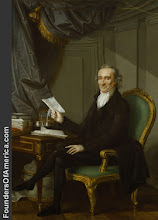
Thomas Paine
Monday, January 31, 2011


Sunday, January 30, 2011
My thoughts on the SOTU Address - pt. 2
"Our most urgent task upon taking office was to shore up the same banks that helped cause this crisis. It was not easy to do. And if there's one thing that has unified Democrats and Republicans, and everybody in between, it's that we all hated the bank bailout. I hated it -- (applause.) I hated it. You hated it. It was about as popular as a root canal. (Laughter.)
But when I ran for President, I promised I wouldn't just do what was popular -- I would do what was necessary. And if we had allowed the meltdown of the financial system, unemployment might be double what it is today. More businesses would certainly have closed. More homes would have surely been lost."
Why did this Administration have to shore up the banks when that was what TARP was supposed to accomplish? But, wait, some of the banks and Wall Street firms that supported hadn't yet received their spot at the government teat, so I guess Obama did have to "shore them up." As for "if we had allowed the meltdown of the financial system, unemployment might be double what it is today," from what source did he receive his figures? [Note: for the record double the unemployment would be 18.8%]. It must be nice to live in a world in which no one can call you on what you do or have said in the past. If your ideas stink on ice and show the opposite of the results you promise, then simply say: "oh, but if I hadn't have done what I did, then things would have been so much worse." I expect that to be the Obama line when healthcare costs skyrocket under Obamacare and he says "but if Congress hadn't have passed healthcare reform then [pick as many as apply:] a. healthcare costs would be even higher; b. people would be dying in the streets; or c. our deficit would have skyrocketed and the economy would have tanked.
"So I supported the last administration's efforts to create the financial rescue program. And when we took that program over, we made it more transparent and more accountable. And as a result, the markets are now stabilized, and we've recovered most of the money we spent on the banks. (Applause.) Most but not all."
How, exactly, has the financial rescue program been more transparent and more accountable? When was the President going to let us know that the Federal Reserve had loaned money to large corporations and foreign banks? If we've recovered most of the money back from the banks, then when can I expect to receive my share of the return, with interest? Or is the President going to surprise us and say that he took all of the money and applied it to reduce our $14 trillion deficit?
"To recover the rest, I've proposed a fee on the biggest banks. (Applause.) Now, I know Wall Street isn't keen on this idea. But if these firms can afford to hand out big bonuses again, they can afford a modest fee to pay back the taxpayers who rescued them in their time of need. (Applause.)"
First, why the biggest banks? What have they ever done to you Mr. President but give you humongous campaign contributions via their various PACs and individiual donors, helped write the financial reform bill you signed into law, and tacitly gave you a big fat target to demonize for political points? Why the biggest and not the smallest banks? What is the President's definition of "biggest" and "smallest?" Is he going to impose the fee via some executive order or regulation or is he actually going to encourage Democractic leaders in Congress to pass legislation aka follow the democratic process, unlike his recent environmental and internet regulations? If they have already paid back the money that we loaned them, then why should the federal government have any say in the amount of bonuses they pay and to whom they pay them? I can understand saying that TARP money comes with strings, but if we don't have that to hold over their heads, then why is the President engaging in the executive compensation regulation business? By the way, those fees that the government intends to pass on to the banks will simply be converted into fees that the banks pass on to their customers. In short, the banks can sit back and say: "fine us and demonize us all you want - we are still going to get paid."
"Now, as we stabilized the financial system, we also took steps to get our economy growing again, save as many jobs as possible, and help Americans who had become unemployed."
"That's why we extended or increased unemployment benefits for more than 18 million Americans; made health insurance 65 percent cheaper for families who get their coverage through COBRA; and passed 25 different tax cuts.
Now, let me repeat: We cut taxes. We cut taxes for 95 percent of working families. (Applause.) We cut taxes for small businesses. We cut taxes for first-time homebuyers. We cut taxes for parents trying to care for their children. We cut taxes for 8 million Americans paying for college. (Applause.)"
Only a fool would proudly trumpet the fact that the government extended benefits for 18 million unemployed Americans. Those people are unemployed, in part, because of horrendous government policies that stifle innovation, create uncertainty, and discourage investment. They are no longer unemployment benefits if they continue for 3 years: those payments are WELFARE.
Also, notice that he says "save as many jobs as possible" and not "create jobs." He knows that all of the experts working outside of his Administration will gladly admit: no jobs have been created and the economy has suffered a net job loss in the millions since President Obama took office.
Now we come to a particular peeve of mine: THE PRESIDENT HAS NOT CUT TAXES. Instead, he has given tax credits to a large number of people. Often those tax credits came in the form of an extra $250.00 in the mail. Tax credits are not tax cuts. Tax credits take tax money from one group of people, the wealthy and those who pay taxes, and redistribute them to another group of people who have less income or fall into a certain demographic or socio-economic category. Tax cuts occur when a person pays fewer taxes to the government. They don't occur when the government takes your money then gives back a portion of it to you.
Quotes of the day - Thomas Jefferson
"A wise and frugal government, which shall leave men free to regulate their own pursuits of industry and improvement, and shall not take from the mouth of labor and bread it has earned - this is the sum of good government."
"I predict future happiness for Americans if they can prevent the government from wasting the labors of the people under the pretense of taking care of them."
"I predict future happiness for Americans if they can prevent the government from wasting the labors of the people under the pretense of taking care of them."
Thursday, January 27, 2011
My thoughts on the 2011 State of the Union Address - pt. 1
Last night's State of the Union address was fairly uninspiring even, I presume, for the President's fans. Don't get me wrong: it will provide a temporary boost in his approval ratings, mainly because it was designed to allow the President do what he does best - CAMPAIGN. That said, I want to break down the President's remarks and give my take on what he said:
"One year ago, I took office amid two wars, an economy rocked by a severe recession, a financial system on the verge of collapse, and a government deeply in debt. Experts from across the political spectrum warned that if we did not act, we might face a second depression. So we acted -- immediately and aggressively. And one year later, the worst of the storm has passed."
One year later, and our country is still amid two wars, albeit one is winding down, primarily because of Obama's adherence to Pres. Bush's previous withdrawal timeline. Hey - with a presidency that has offered such few reasons to cheer, can you blame Obama for wanting to steal Bush's thunder? A-stan is much worse off than when Obama took office: the direct result of a failure to grant the general on the ground (McChrystal) what he requested (instead, sending a paltry "surge" of only 40% of the original troop increase request), the lack of a clear mission (one that has vacillated from hunting down Bin Laden and defeating the Taliban to eliminating all Al Qaeda elements to transforming A-stan into a democracy to whatever it is currently), and implementing rules of engagement which tie our troops' hands behind their backs. The withdrawal of our troops is scheduled to begin in July, yet considering the instability of current A-stan leadership and the mounting death toll, I don't see that happening.
That said, the more important part of this paragraph is the phrase "the worst of the storm has passed." Really. Is that what you believe, Mr. President? I ask because the Congressional Budget Office wholeheartedly disagrees:
"The United States faces daunting economic and budgetary challenges. The economy has struggled to recover from the recent recession: The pace of growth in output has been anemic compared with that during most other recoveries and the unemployment rate has remained quite high. Federal budget deficits and debt have surged in the past two years, owing to a combination of the severe drop in economic activity, the costs of policies implemented in response to the financial and economic problems, and an imbalance between revenues and spending that predated the recession. Unfortunately, it is likely that a return to normal economic conditions will take years, and even after the economy has fully recovered, a return to sustainable budget conditions will require significant changes in tax and spending policies." Budget and Economic Outlook: Fiscal Years 2011 Through 2021, http://cbo.gov/doc.cfm?index=12039.
That doesn't sound like the storm has passed. The President may point to that whopping .4% drop in unemployment to its current 9.4% as indication of a turnaround in our nation's jobless rate misfortunes, yet the experts contend that this small drop is attributable to discouraged job seekers' decisions to give up the hunt (since people who are unemployed and not actively seeking emplyment are not included in the official unemployment numbers).
"For these Americans and so many others, change has not come fast enough. Some are frustrated; some are angry. They don't understand why it seems like bad behavior on Wall Street is rewarded, but hard work on Main Street isn't; or why Washington has been unable or unwilling to solve any of our problems. They're tired of the partisanship and the shouting and the pettiness. They know we can't afford it. Not now."
Here the President reopens the old "Hope and Change" toolbox. He also returns to his familiar expressions of empathy for average Americans. What I find most interesting is that the President's myopia prevents him from seeing what's right under his nose: in fact, he mentions it in his speech. "[Americans] don't understand...why Washington has been unable...to solve any of our problems." The answer to this question, one that increasingly larger numbers of Americans are discovering, is that Washington is unable to solve our problems PERIOD.
"You know what else they share? They share a stubborn resilience in the face of adversity. After one of the most difficult years in our history, they remain busy building cars and teaching kids, starting businesses and going back to school. They're coaching Little League and helping their neighbors. One woman wrote to me and said, 'We are strained but hopeful, struggling but encouraged.
It's because of this spirit -- this great decency and great strength -- that I have never been more hopeful about America's future than I am tonight. (Applause.) Despite our hardships, our union is strong. We do not give up. We do not quit. We do not allow fear or division to break our spirit. In this new decade, it's time the American people get a government that matches their decency; that embodies their strength. (Applause.)
And tonight, tonight I'd like to talk about how together we can deliver on that promise."
This is Obama's halftime speech. He envisions himself as a progressive Knute Rockne standing on a stool in the locker room, rallying the Irish, who sit there - bruised, beaten, discouraged, heads hung low - for a tremendous second-half comeback. The problem, though, is that the President's game plan isn't up to the task. As I will explain in tomorrow's post, instead of making those eponymous "second-half adjustments" that we hear about from football commentators, Obama decides to stick with the same halfback dives that have been woefully unsuccessful and, in fact, are what have undermined any hope of a real recovery.
Sunday, January 23, 2011
Reminder: John Holdren is still a crazy eugenicist
Click on this link and read about John Holdren's admiration of a scientist who said this: "Is there anything that can be done to prevent the long-range degeneration of human stock? Unfortunately, at the present time there is little, other than to prevent breeding in persons who present glaring deficiencies clearly dangerous to society and which are known to be of a hereditary nature. Thus we could sterilize or in other ways discourage the mating of the feeble-minded. We could go further and systematically attempt to prune from society, by prohibiting them from breeding, persons suffering from serious inheritable forms of physical defects, such as congenital deafness, dumbness, blindness, or absence of limbs."
And this: "First, man can discourage unfit persons from breeding. Second, he can encourage breeding by those persons who are judged fit on the basis of physical and mental testing and examinations of the records of their ancestors."
And this: "Priorities for artificial insemination could be given to healthy women of high intelligence whose ancestors possessed no dangerous genetic defects. Conversely, priorities for abortions could be given to less intelligent persons of biologically unsound stock.
Such steps would undoubtedly contribute substantially to a slowing down of species deterioration. But it is clear that they would by no means be sufficient. A broad eugenics program would have to be formulated which would aid in the establishment of policies that would encourage able and healthy persons to have several offspring and discourage the unfit from breeding at excessive rates."
And to think that this nut may have had some input into the President's healthcare reform bill or healthcare policy. I shudder at the thought...
Thursday, January 20, 2011
Oh, BTW, Fidel Castro agrees with the Left: The AZ Shooting is the conservatives' fault.
I'm sure that this knowledge will thrill those in the Sean Penn crowd, but how does it make the Leftists that consider themselves merely liberal or progressive and who have blamed the same target?
Subscribe to:
Posts (Atom)