ITEM #5 - Repeal Obamacare
Besides being unconstitutional, Obamacare does not accomplish its stated purpose of insuring all Americans and, in fact, counts on Americas NOT obeying the law's individual mandate in order to secure the fines necessary to fund a good portion of the plan. For purposes of this discussion, the most damning aspect of Obamacare is that it creates uncertainty. Businesses cannot estimate what their healthcare costs are going to be and, therefore, cannot project what their future profit margins will be. If they do not know how much money they will have on hand, then businesses cannot make a determination as to whether or not they have sufficient funds to make new hires and they do not know what it will cost to provide benefits to those new employees.
This same principle of uncertainty applies to any government-compliance related cost: energy reg compliance (i.e. what will be the cost of transporting goods, supplying offices/plants with electricity, etc. with an Administration and a regulatory regime in place that are dead set on killing the fossil fuel industry, which supplies so much of our energy requirement), financial reg compliance (ex. the Consumer Financial Protection Bureau has carte blanche to draft and promulgate its own regs with no Congressional oversight and relies solely on the Federal Reserve for funding, in essence, placing it outside the purview of the Legislature; and Dodd-Frank with its stringent, but non-sensical requirements, all of which favor large banks, and its provisions that actually institutionalize the concept of "too big to fail" in perpetuity), and labor law compliance (i.e. the government has no business getting involved in labor disputes or contracts between employee and employer and the NLRB was created for the specific purpose of "evening the playing field" between labor and management which necessarily means that the federal government has decided to take the side of employees against employers). Ending government employee unions will help eliminate costs at every level of government.
ITEM #6 - Privatize government entities.
Any time the government provides a good or service, there is at least some degree of inefficiency and there are potential private sector jobs that are crowded out. We should end the boondoggle that is Amtrak or sell it at a fire sale to a private entity and let them try to operate it. Dissolve the Postal Service and repeal the laws that prevent private entities from competing to deliver our mail. That will end the USPS's annual $5 billion in losses. End Freddie and Fannie (did I already make this argument?). If there is going to be a mortgage clearing house, then the more efficient private market should supply it. This will have the added benefit of reducing the likelihood of future housing bubbles. End the Export/Import Bank, the Small Business Admnistration, and every other federally-funded entity and organization designed to provide cheap credit to businesses based on politics. These types of entities distort the market and contribute to malinvestment/bubbles or they result in the misallocation of taxpayer funds.
Clearly, there will be some that will call into question the possibility of creating jobs by ending government jobs and here's my response: government agencies that drain taxpayer dollars take money out of the economy that could be used on more productive activities and create terrible inefficiencies and waste. They should not exist, period, for that simple fact alone. However, there will be a tremendous demand for some of the services they perform. Accordingly, private entities will step in to fill that vacuum. This will allow government employees to obtain equivalent jobs in the private sector. Moreover, growth in any industry leads to greater employment opportunities. Since the USPS, for example, cannot grow unless the government says it can grow, the amount of jobs it can create is a fixed number. However, private entities, motivated by profit (and the increased productivity that leads to it), will want to grow as much as is feasible, thereby increasing the rate of job creation.
Item #7 - End government employee unions.
See my reasoning in Items 6 and 7 above. By way of further argument, government employee unions are particularly egregious because they allow one group of citizens (government union employees) to leverage money from other citizens solely for the benefit of those unionized workers. The real employers, the taxpayers, have no say in the negotiating process. Providing a service in the public sector should not grant you rights that other citizens cannot enjoy simply because you work for the government and have joined a union.
Item #8 - End the employers' contribution to FICA.
It is monumentally stupid to force employers to match their employees' contributions to FICA. First, it discourages employers from paying those employees a higher wage. Second, why should an employer be forced to contribute to its employee's retirement? What benefit does the employer received from doing so? None. Third, it is a cost that employers use to calculate whether or not to hire someone. Make it easier for them and repeal the employer's matching requirement.
I am sure that there are other areas of regulatory compliance that need to be trimmed back if not outright deleted. Ultimately, federal regulatory compliance is estimated to cost businesses $1.75 TRILLION annually. Remove that cost, save our economy, and create jobs.
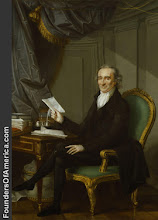
Thomas Paine
Sunday, November 27, 2011


Monday, October 24, 2011
How to create jobs: Lesson 1 - It's not about creating jobs - it's about growing the economy
Opposing bloggers often respond to my attacks on this Administration's policies by alleging that I complain all of the time without offering any of my own solutions. I disagree, but, in order to lay to rest those inane accusations, I am going to propose solutions to turn the economy around and create jobs. I'll start by making a number of assumptions: 1) growing the economy is what creates jobs. A strong economy means that there is stability in the markets and an anticipation of greater future profits. If there is an anticipation of greater profits, then investors and job creators know that they will have sufficient capital in the future to cover the cost of hiring new employees; 2) government is not the solution. Instead of creating a multiplier effect, every dollar spent in the public sector is a dollar taken out of the private sector where it can be used by the private sector, whose sole goal is the creation and massing of wealth, and, instead, spent based on political expediency, i.e. that money is given to someone who is a member of a favored special interest group. The net effect of public spending is at best zero and, usually, after deducting administrative costs, a net negativ; and 3) as Hazlitt teaches us, any good policy lifts all boats and considers the long-term consequences.
Idea #1 - END THE CORPORATE INCOME TAX
Eliminate the corporate income tax. Shareholders are taxed on their income. Those same shareholders own shares in companies whose taxable income is taxed again at the 35% corporate tax rate. That's double taxation. Elimating that double taxation will free up more capital for expanding businesses and creating jobs.
Item #2 - REFORM THE TAX SYSTEM
Many conservatives recommend making the Bush tax cuts permanent. They're right in principal, yet tax cuts only have a positive effect on the economy if they last long enough for entrepeneurs and investors to make long-term decisions based on them. However, a paltry 3% reduction is not enough to stimulate a stagnant economy. Instead, we should implement a flat tax so that everyone has skin in the game. People who don't pay taxes and receive their incomes from the government, have few qualms about spending other people's money. If they know that they will have to contribute an equal percentage to the pot, then they will be less likely to elect representatives whose sole intent is to tax and spend.
I'm not sure what that percentage rate should be. However, if government revenues as a percentage of GDP average 18% per year, then that would be a good starting point. We should ask for a little more than we know that we need, in the event there are some unforeseen costs, so let's set the rate at an even 20%. That should make our tax returns easier to prepare.
Next, we eliminate every tax credit and every deduction, including the sacred mortgage interest credit and the child tax credit. If you make $100,000 in income, then you pay $20,000 in taxes. If you make $10,000 in income, then you pay $2,000 in taxes. Businesses do not get a deduction for expenses or depreciation because we have eliminated the corporate income tax which allows them to keep more of their income. We also have lowered the top individual tax rates anywhere from 8%-16%.
ITEM #3 - CUT SPENDING DRAMATICALLY
Eliminate the following federal agencies: the Commerce Department, the Education Department, the Department of Energy, and the Department of Housing and Urban Development. Cut the budgets of all remaining agencies and departments by 10%. Let the agency and department heads, who are closer to where the rubber hits the road, choose what programs are to fall under the knife.
End all federal farm and energy subsidies and all corporate welfare.
End the federal gasoline tax.
Eliminate the Federal Reserve (I already took out Fannie and Freddie when I axed HUD). Since its inception, it has done nothing but create inflation and exacerbate business cycles, while, through its printing press, it enables politicians to start unconstitutional wars and fund their favorite government pet projects.
End all funding to the UN and NATO. The UN has not been our friend since the early 1950s, even though we have funded over 2/3 of its operations. Without the threat of the Soviet Union, are European allies can defend themselves at their own cost.
Reduce our military presence abroad. Not only should we get out of "foreign entanglements" in the form of multinational organizations, we should also close all of our bases in Europe and South America. It goes without saying that we need to withdraw our troops from Afghanistan.
ITEM #4 REMOVE ALL PROTECTIVE TARIFFS/END EMBARGOES
We live in a global economy. With our advancing levels of technology, we are able to transmit information, including prices, instantly across the globe. Our economy needs to be able to modernize and compete in a global market. When we impose protective tariffs, we disincentivize that growth and will trigger retaliatory tariffs, resulting in increased prices for all and greater difficulty for domestic firms to sell their own products abroad.
I detest trade embargoes and it's not because I don't get the point. Cubans are communists and we don't like that. Iranians want to kill us and we don't like that either. However, embargoes only hurt the citizens of that country. The government and the wealthy elite are going to get what they want, regardless of what we do. And disabuse yourself of the idea that they lead to popular revolution and the toppling of despots. There are no instances in which embargoes have led to such upheavals.
It's time for a different strategy. The 2 things that the United States has most going for it, more than any other nation, are its freedoms and its wealth. Why not trade freely with those countries and let them witness firsthand the benefits of a free market. Let them listen to US music, read our books, visit our websites, and taste of our liberty. Communism and despotism don't stand a chance. The added benefit is that we open up new markets for American products and services.
Idea #1 - END THE CORPORATE INCOME TAX
Eliminate the corporate income tax. Shareholders are taxed on their income. Those same shareholders own shares in companies whose taxable income is taxed again at the 35% corporate tax rate. That's double taxation. Elimating that double taxation will free up more capital for expanding businesses and creating jobs.
Item #2 - REFORM THE TAX SYSTEM
Many conservatives recommend making the Bush tax cuts permanent. They're right in principal, yet tax cuts only have a positive effect on the economy if they last long enough for entrepeneurs and investors to make long-term decisions based on them. However, a paltry 3% reduction is not enough to stimulate a stagnant economy. Instead, we should implement a flat tax so that everyone has skin in the game. People who don't pay taxes and receive their incomes from the government, have few qualms about spending other people's money. If they know that they will have to contribute an equal percentage to the pot, then they will be less likely to elect representatives whose sole intent is to tax and spend.
I'm not sure what that percentage rate should be. However, if government revenues as a percentage of GDP average 18% per year, then that would be a good starting point. We should ask for a little more than we know that we need, in the event there are some unforeseen costs, so let's set the rate at an even 20%. That should make our tax returns easier to prepare.
Next, we eliminate every tax credit and every deduction, including the sacred mortgage interest credit and the child tax credit. If you make $100,000 in income, then you pay $20,000 in taxes. If you make $10,000 in income, then you pay $2,000 in taxes. Businesses do not get a deduction for expenses or depreciation because we have eliminated the corporate income tax which allows them to keep more of their income. We also have lowered the top individual tax rates anywhere from 8%-16%.
ITEM #3 - CUT SPENDING DRAMATICALLY
Eliminate the following federal agencies: the Commerce Department, the Education Department, the Department of Energy, and the Department of Housing and Urban Development. Cut the budgets of all remaining agencies and departments by 10%. Let the agency and department heads, who are closer to where the rubber hits the road, choose what programs are to fall under the knife.
End all federal farm and energy subsidies and all corporate welfare.
End the federal gasoline tax.
Eliminate the Federal Reserve (I already took out Fannie and Freddie when I axed HUD). Since its inception, it has done nothing but create inflation and exacerbate business cycles, while, through its printing press, it enables politicians to start unconstitutional wars and fund their favorite government pet projects.
End all funding to the UN and NATO. The UN has not been our friend since the early 1950s, even though we have funded over 2/3 of its operations. Without the threat of the Soviet Union, are European allies can defend themselves at their own cost.
Reduce our military presence abroad. Not only should we get out of "foreign entanglements" in the form of multinational organizations, we should also close all of our bases in Europe and South America. It goes without saying that we need to withdraw our troops from Afghanistan.
ITEM #4 REMOVE ALL PROTECTIVE TARIFFS/END EMBARGOES
We live in a global economy. With our advancing levels of technology, we are able to transmit information, including prices, instantly across the globe. Our economy needs to be able to modernize and compete in a global market. When we impose protective tariffs, we disincentivize that growth and will trigger retaliatory tariffs, resulting in increased prices for all and greater difficulty for domestic firms to sell their own products abroad.
I detest trade embargoes and it's not because I don't get the point. Cubans are communists and we don't like that. Iranians want to kill us and we don't like that either. However, embargoes only hurt the citizens of that country. The government and the wealthy elite are going to get what they want, regardless of what we do. And disabuse yourself of the idea that they lead to popular revolution and the toppling of despots. There are no instances in which embargoes have led to such upheavals.
It's time for a different strategy. The 2 things that the United States has most going for it, more than any other nation, are its freedoms and its wealth. Why not trade freely with those countries and let them witness firsthand the benefits of a free market. Let them listen to US music, read our books, visit our websites, and taste of our liberty. Communism and despotism don't stand a chance. The added benefit is that we open up new markets for American products and services.
Monday, July 18, 2011
The Importance of the Rule of Law
Hayek defined the Rule of Law as meaning that "government in all its actions is bound by rules fixed and announced beforehand - rules which make it possible to foresee with fair certainty how the authority will use its coercive powers in given circumstances and to plan one's individual affairs on the basis of this knowledge...Within the known rules of the game, the individual is free to pursue his personal ends and desires, certain that the powers of government will not be used deliberately to frustrate his efforts." The Rule of Law provides a stable environment for all of man's myriad interactions, whether economic or otherwise, as well as the legal framework most conducive to freedom. Such a principle requires the state to limit itself to establishing formal rules that apply generally, to all persons, irrespective of time or circumstance, and those rules that are the must likely to benefit all of the people affected by them.
Contrast this principle with the concept of economic and social planning. In a planned system in which the goal is equality of outcome and distributive justice, the state is required to produce the same result for different people and, as a necessity, it must treat them differently. After all, in an imperfect world, some people are born healthy, but others sick, and some are intelligent and others not. Some people have the advantages of good parents, live in lands that are safe from natural disasters, and pass their entire lives without a significant illness or injury. Accordingly, a planned system can only pursue an equality of outcome and level the playing field by elevating those less fortunate or less endowed with superior characteristics, knowledge, skills, and talents. In short, it must offer the disadvantaged group some form of subsidy, typically, financial or legal in nature. However, there are both intended and unintended consequences of that action. Because the state has limited resources, it must first choose which of the groups it will benefit. This requires discriminating against on or more groups who either will not be the recipients of the subsidy or from which the material resources or wealth will be taken in order to benefit the less advantaged group. Moreover, the beneficiary of the subsidy will have an incentive not to achieve equality on their own since he/she is being sustained, in whole or in part, by the state. The government may reach a point at which it cannot remove the benefit because doing so will leave the beneficiary destitute or unable to fend for his/herself. At such time, it must adjust its laws, rules, and regulations to redirect or siphon more funds or resources from other groups. Ultimately, the Rule of Law is undermined as the planning authority must continuously adjust the laws to meet the various circumstances and changing needs of its beneficiaries, whose needs are often in conflict with the needs of others.
One way planned systems attempt to address these ever-changing circumstances is to delegate the law-making authority to agencies, bureaus, committees, and departments. The goal is efficiency. In theory, the legislature in a planned system does not have to debate and pass a law everytime that it is compelled to respond to a pressing need - it can merely defer to the bureaucrats who bear that responsibility. However, deferral to such a group only serves to make government action more arbitrary because, now, instead of having an elected legislature make the decisions, the rules are developed and implemented by unelected government employees who are politically-appointed and are not accountable to anyone other than the party in power. Rarely does anyone in the general public take the opportunity to learn what regulations are passed although it is certain that, at some point, they will feel the rules' effects, often without knowing the party responsible.
The legislature in a planned system is doomed to irrelevance. They are viewed as incompetent because, due to conflicting ideas of what priorities should take precedence, who should be the recipients of government benefits, and what actions should be taken, they will be slow to act and even slower to adjust to changes in circumstances. As noted above, bureaucracies, with their legions of so-called experts, are imbued with plenary authority with little legislative oversight to carry out the state's political goals. Unfortunately for advocates of this system, bureaucracies naturally only larger to combat the ever-growing list of problems that need immediate redress. This accretion of size and levels of structure leads to further inertia. At some point, the disgruntled masses of government beneficiaries cry out for someone to step up and do something. Almost invariably, that person is a dictator. Suddenly, things are getting done as the dictator, usually under the auspices of reform, implements sweeping reform, all of which is certain to grow the size of government and expand its intrusion into citizens' lives.
This scenario has played out time and time again. Carl Schmitt, the legal theorist of National Socialism, contrasted the National Socialist ideal of gerechte Staat (the "just state") with the concept of Rechstaat (the Rule of Law) and concluded that the type of justice that opposes formal justice must necessarily require discrimination against certain persons. I don't think that I need to elaborate on how those thoughts became actions.
More significantly, we see the same derogation of the Rule in Law in the last two Administrations. Billion dollar bailouts benefited some Wall Street entities, but did not benefit others nor did they extend to industries other than the financial industry. GM and Chrysler receive bailouts, while Ford does not (at least, not directly. Although not a technical government bailout, many firms, including Ford, McDonald's, Toyota, and GM received huge low interest loans from the Federal Reserve). Some companies receive exemptions from Obamacare (a decision based solely on authority delegated to the Department of Health and Human Services who has no regulatory criteria with which to determine who is eligible for an exemption). The green industry received government subsidies, while the oil industry did not. States whose employees are predominantly members of government employee unions received government stimulus money while non-unionized employees did not. Of course, all of these allocations of taxpayer funds are based on politics and reveals the corrupt nature of our government and its leaders, but, ultimately, the biggest blow to our freedom is that the Rule of Law has been persistently undermined and disregarded. A precedent has been established that says that there are no formal rules restricting government, that it can do whatever it deems necessary to further its own political goals. In the final analysis, a foundation has been laid for unbridled tyranny.
Contrast this principle with the concept of economic and social planning. In a planned system in which the goal is equality of outcome and distributive justice, the state is required to produce the same result for different people and, as a necessity, it must treat them differently. After all, in an imperfect world, some people are born healthy, but others sick, and some are intelligent and others not. Some people have the advantages of good parents, live in lands that are safe from natural disasters, and pass their entire lives without a significant illness or injury. Accordingly, a planned system can only pursue an equality of outcome and level the playing field by elevating those less fortunate or less endowed with superior characteristics, knowledge, skills, and talents. In short, it must offer the disadvantaged group some form of subsidy, typically, financial or legal in nature. However, there are both intended and unintended consequences of that action. Because the state has limited resources, it must first choose which of the groups it will benefit. This requires discriminating against on or more groups who either will not be the recipients of the subsidy or from which the material resources or wealth will be taken in order to benefit the less advantaged group. Moreover, the beneficiary of the subsidy will have an incentive not to achieve equality on their own since he/she is being sustained, in whole or in part, by the state. The government may reach a point at which it cannot remove the benefit because doing so will leave the beneficiary destitute or unable to fend for his/herself. At such time, it must adjust its laws, rules, and regulations to redirect or siphon more funds or resources from other groups. Ultimately, the Rule of Law is undermined as the planning authority must continuously adjust the laws to meet the various circumstances and changing needs of its beneficiaries, whose needs are often in conflict with the needs of others.
One way planned systems attempt to address these ever-changing circumstances is to delegate the law-making authority to agencies, bureaus, committees, and departments. The goal is efficiency. In theory, the legislature in a planned system does not have to debate and pass a law everytime that it is compelled to respond to a pressing need - it can merely defer to the bureaucrats who bear that responsibility. However, deferral to such a group only serves to make government action more arbitrary because, now, instead of having an elected legislature make the decisions, the rules are developed and implemented by unelected government employees who are politically-appointed and are not accountable to anyone other than the party in power. Rarely does anyone in the general public take the opportunity to learn what regulations are passed although it is certain that, at some point, they will feel the rules' effects, often without knowing the party responsible.
The legislature in a planned system is doomed to irrelevance. They are viewed as incompetent because, due to conflicting ideas of what priorities should take precedence, who should be the recipients of government benefits, and what actions should be taken, they will be slow to act and even slower to adjust to changes in circumstances. As noted above, bureaucracies, with their legions of so-called experts, are imbued with plenary authority with little legislative oversight to carry out the state's political goals. Unfortunately for advocates of this system, bureaucracies naturally only larger to combat the ever-growing list of problems that need immediate redress. This accretion of size and levels of structure leads to further inertia. At some point, the disgruntled masses of government beneficiaries cry out for someone to step up and do something. Almost invariably, that person is a dictator. Suddenly, things are getting done as the dictator, usually under the auspices of reform, implements sweeping reform, all of which is certain to grow the size of government and expand its intrusion into citizens' lives.
This scenario has played out time and time again. Carl Schmitt, the legal theorist of National Socialism, contrasted the National Socialist ideal of gerechte Staat (the "just state") with the concept of Rechstaat (the Rule of Law) and concluded that the type of justice that opposes formal justice must necessarily require discrimination against certain persons. I don't think that I need to elaborate on how those thoughts became actions.
More significantly, we see the same derogation of the Rule in Law in the last two Administrations. Billion dollar bailouts benefited some Wall Street entities, but did not benefit others nor did they extend to industries other than the financial industry. GM and Chrysler receive bailouts, while Ford does not (at least, not directly. Although not a technical government bailout, many firms, including Ford, McDonald's, Toyota, and GM received huge low interest loans from the Federal Reserve). Some companies receive exemptions from Obamacare (a decision based solely on authority delegated to the Department of Health and Human Services who has no regulatory criteria with which to determine who is eligible for an exemption). The green industry received government subsidies, while the oil industry did not. States whose employees are predominantly members of government employee unions received government stimulus money while non-unionized employees did not. Of course, all of these allocations of taxpayer funds are based on politics and reveals the corrupt nature of our government and its leaders, but, ultimately, the biggest blow to our freedom is that the Rule of Law has been persistently undermined and disregarded. A precedent has been established that says that there are no formal rules restricting government, that it can do whatever it deems necessary to further its own political goals. In the final analysis, a foundation has been laid for unbridled tyranny.
Tuesday, July 12, 2011
They will never learn
During the late 1920s and early 1930s, many influential progressives, including members of FDR's Brain Trust and other close advisers like Rexford Tugwell, Harold Ickes, and Stuart Chase couldn't wait to implement the economic planning of Russia, Germany, Italy, and Japan in America. Later, when knowledge of those nations' derogation of basic human rights, concentration camps, and the Gulag reached the light of day, progressives immediately began distancing themselves from their previous positions, at least, publicly. Those members of the general public that bought into the idea of government control of the economy fell into 2 groups: 1) the desperate, the poor, and the hungry who benefited from New Deal programs; and 2) those who may not have been the direct recipients of government handouts, but, nevertheless, believed that government provided the only path out of the Depression - in short, those who fed on a steady diet of pro-New Deal, pro-FDR propaganda. Both groups failed to comprehend the overwhelming weight of history: no government has been able to control the economy without exerting political control on its citizens. Freedom cannot be neatly compartmentalized into economic freedom and all other types of freedom - the concepts must go in hand. After all, what is more important than a man being able to work hard in a trade that he has chosen, being fairly compensated for his efforts, holding on to as much of those hard earned wages as possible, and spending it in the manner that he chooses? Economic freedom opens doorways to a better life. The head of the household does not have to worry about the fear of being unable to maintain a roof over his family's head and put food on the table. He can send his children to better schools, take family trips with them, enroll them in summer camp and pay for them to play sports. He can save for their education and his and his spouse's retirement.
If you take away economic freedom, then you become a slave to the whims of the state unless, of course, you belong to the ranks of the politically privileged. That concept, more than anything, has led to the economic ruin in which the world finds itself.
Although patronage has been a part of the American political landscape since the days of Andrew Jackson and Martin Van Buren, it was FDR who transformed it into a science. FDR understood that, once Americans realized the ineffectiveness of his policies and the sad state in which the economy wallowed, there was no way that he could win in an open and fair election. FDR's strategy was to create as many special interest groups as possible, ensure their loyalty by distributing taxpayer money to them, and then rely upon them to return the favor by re-electing him in perpetuity and donating to his campaign. How did he do it? He created agencies like the TVA which provided cheap electricity to certain areas of the country. The fact that the electricity was supported by taxes paid by people in other parts of the country was never really mentioned nor would it have mattered to the recipients of such largesse. FDR signed the Wagner Act into law which, by tilting the balance of power in favor of unions, led to 1000% growth in the number of Union workers - all of whom showed their appreciation by voting for FDR in national elections. FDR counted among his fans farmers, whom his programs subsidized (in fact, farmers were paid not to produce in order to drive up prices which further benefited them), academics (since he gave them jobs and a say in government), and the elderly and the retired (by creating Social Security). Everyone else, the so-called "Forgotten Man" of the 1940s, who did not benefit from government handouts, was left out on the cold. [Note: See William Sumner's quote - not the one that Roosevelt twisted for his own purposes].
The parallels with the Obama Administration are astounding. The members of his cabinet and the heads of the various government agencies with which he implements his policies are a microcosm of the broader group of special interest groups that form his core supporters: Wall Street bankers and hedge fund managers, academics, the unions, the youth, trial lawyers, and government employees. The stimulus was specifically designed to funnel taxpayer money into the coffers of those groups. Of course, those groups then turn around and repay Obama's magnanimity by donating to the DNC and to the President's reelection campaign (which, as of the date of this post, amounts to approximately $1 billion).
This is not how a republic functions. Instead, we are witnessing some bastardized form of direct democracy: the special interest groups elect their man who represents them exclusively - the rest of the nation be damned. Moreover, not only has our political system been transformed, our economy has experienced the same perversion: the stimulus bill, Obamacare, etc. are all redistributionist actions designed to only help the privileged few. It is as if the US has a two-tiered economy: on one level we find the special interest groups willing to play ball with the regime for financial gain and a second level of the virtually ignored who just happen to pay the tax dollars that support the other group. If we do not correct this imbalance of power and return to the principles of economics and government that created the greatest nation in the history of the world, then we will be doomed to an inferior existence, a mere extension of the economically weak and morally bankrupt Europe.
Lastly, as I mentioned above, the intelligentsia and social engineers have engaged in an enormous act of self-deception. In their blind pursuit of "change," whatever that term means, they have completely ignored the clear lessons of history. Those four (4) nations I listed at the beginning of my post all had planned economies. We fought a war against 3 of them and a cold war against the remaining one. The evidence is overwhelming that all 4 engaged in horrific acts of inhumanity, primarily against dissidents or those who were different. Eventually, the social planners will realize that they must firmly place their black boots on the necks of the opposition if they are ever going to realize their dreams of a socialist Utopia. Unfortunately for them, that fantasy never materializes and never will so long as the price is the end of human freedom.
If you take away economic freedom, then you become a slave to the whims of the state unless, of course, you belong to the ranks of the politically privileged. That concept, more than anything, has led to the economic ruin in which the world finds itself.
Although patronage has been a part of the American political landscape since the days of Andrew Jackson and Martin Van Buren, it was FDR who transformed it into a science. FDR understood that, once Americans realized the ineffectiveness of his policies and the sad state in which the economy wallowed, there was no way that he could win in an open and fair election. FDR's strategy was to create as many special interest groups as possible, ensure their loyalty by distributing taxpayer money to them, and then rely upon them to return the favor by re-electing him in perpetuity and donating to his campaign. How did he do it? He created agencies like the TVA which provided cheap electricity to certain areas of the country. The fact that the electricity was supported by taxes paid by people in other parts of the country was never really mentioned nor would it have mattered to the recipients of such largesse. FDR signed the Wagner Act into law which, by tilting the balance of power in favor of unions, led to 1000% growth in the number of Union workers - all of whom showed their appreciation by voting for FDR in national elections. FDR counted among his fans farmers, whom his programs subsidized (in fact, farmers were paid not to produce in order to drive up prices which further benefited them), academics (since he gave them jobs and a say in government), and the elderly and the retired (by creating Social Security). Everyone else, the so-called "Forgotten Man" of the 1940s, who did not benefit from government handouts, was left out on the cold. [Note: See William Sumner's quote - not the one that Roosevelt twisted for his own purposes].
The parallels with the Obama Administration are astounding. The members of his cabinet and the heads of the various government agencies with which he implements his policies are a microcosm of the broader group of special interest groups that form his core supporters: Wall Street bankers and hedge fund managers, academics, the unions, the youth, trial lawyers, and government employees. The stimulus was specifically designed to funnel taxpayer money into the coffers of those groups. Of course, those groups then turn around and repay Obama's magnanimity by donating to the DNC and to the President's reelection campaign (which, as of the date of this post, amounts to approximately $1 billion).
This is not how a republic functions. Instead, we are witnessing some bastardized form of direct democracy: the special interest groups elect their man who represents them exclusively - the rest of the nation be damned. Moreover, not only has our political system been transformed, our economy has experienced the same perversion: the stimulus bill, Obamacare, etc. are all redistributionist actions designed to only help the privileged few. It is as if the US has a two-tiered economy: on one level we find the special interest groups willing to play ball with the regime for financial gain and a second level of the virtually ignored who just happen to pay the tax dollars that support the other group. If we do not correct this imbalance of power and return to the principles of economics and government that created the greatest nation in the history of the world, then we will be doomed to an inferior existence, a mere extension of the economically weak and morally bankrupt Europe.
Lastly, as I mentioned above, the intelligentsia and social engineers have engaged in an enormous act of self-deception. In their blind pursuit of "change," whatever that term means, they have completely ignored the clear lessons of history. Those four (4) nations I listed at the beginning of my post all had planned economies. We fought a war against 3 of them and a cold war against the remaining one. The evidence is overwhelming that all 4 engaged in horrific acts of inhumanity, primarily against dissidents or those who were different. Eventually, the social planners will realize that they must firmly place their black boots on the necks of the opposition if they are ever going to realize their dreams of a socialist Utopia. Unfortunately for them, that fantasy never materializes and never will so long as the price is the end of human freedom.
Sunday, July 10, 2011
Where are the jobs?
The United States created a paltry 18,000 jobs in June and the unemployment rate increased to 9.2%. The number of long-term unemployed (those jobless for 27 weeks and over) sits at 6.3 million and accounts for 44.4% of the unemployed. Let that marinate for a while: almost half of all unemployed persons have been without a job for more than 6 months. Also, do you recall a few months ago how this Administration and its propagandists in the media trumpeted an alleged reduction trend in the jobless rate? The decrease in the jobless numbers apparently was not as reported. From the BLS website: "The change in total nonfarm payroll employment for April was revised from +232,000 to +217,000, and the change for May was revised from +54,000 to +25,000." The 15,000 discrepancy might be excused due to miscounting or slightly-off estimates, but being off by 29,000 (approximately 54% difference)? It appears as if someone is fudging on the figures.
So, in spite of the New Dealesque stimulus spending and over a trillion dollars in government bailouts, unemployment has not fallen lower than 8.8% since March 2009 - the date the original stimuls bill became law. The average unemployment rate under the Obama Administration has been 9.4% (I did not include January 2009 since the President did not take office until January 21, 2009). Unemployment has averaged 9.5% since the passage of the stimulus bill. For those who argue that we need to give the stimulus bill time to work, unemployment has averaged 9.5% for a period beginning 6 months after the stimulus bill was passed. It has averaged 9.4% for a period beginning 12 months after the bill passed.
The multi-trillion dollar question is: WHY?
Many bloggers and pundits blame corporate job outsourcing for the lack of jobs. The same group often bundles the ephemeral concept of hoarding with outsourcing in its condemnation of evil corporations.
If corporations are "hoarding," which I believe detractors define as "not spending greater money on employee compensation and not hiring new workers," then what is the reason for their failure to spend their cash reserves? One reason is that the US currently exists under a regime that plays favorites, only helps its friends (i.e. its pet special interest groups) and punishes its enemies (i.e. everyone not willing to play ball). If you do not have a multi-million dollar lobbying budget or cannot order hundreds of thousands of workers contribute to and vote for this President and his cronies in Congress, then you are insignificant. If, like the US Chamber of Commerce, Boeing, or Fox News, you attempt to challenge this President's agenda, then you will feel his wrath via a facilitating media or punitive legislation. How can you operate a business in that type of environment? How can you plan for the future, including determining whether you can hire more employees.
Moreover, the first 18 months of the Obama Administration has resulted in the passage of the most sweeping redistributionist legislation since the New Deal. Regulation continue to accumulate. Businesses are unable to determine their future finances because they have no way of determining whether or not some new law will pass in the near future that will result in higher compliance costs or a reduction in production (and revenue). This means that it would not be advisable for many businesses to take the risk of hiring new employees and spend the time and resources to train them if they only have to let them go in a few months because of a future increase in costs. In addition, those same businesses are equally reluctant to invest in capital goods because of potentially higher costs. That means there is less spending on big ticket items like buildings, equipment, and vehicles because the businesses do not know if they will be able to afford them in the future. Businesses' inability to predict their costs translates into an inability to obtain credit. After all, commercial lenders will not loan to businesses because they have no way of assessing their risk since the businesses themselves do not know what their costs will be. Along those same lines, in an environment in which lending money to businesses is much more risky (and other investments options like stocks, due to their volatility, or real estate, due to the collapse of prices, are rendered highly unattractive), they will invest in government securities since there is a guaranteed return. Said differently, banks will invest in treasury bonds because of their guaranteed return over running the risk of lending to a business that may default or file bankruptcy.
Because businesses are reluctant or, due to the inability to obtain credit, incapable of purchasing capital goods, it creates a snowball effect of ever-increasing unemployment. Less capital goods purchased means fewer revenue for manufacturers which means fewer manufacturing jobs. But the negative tidal wave does not end there. Fewer capital goods being made means that the producers of raw materials, transportation companies, wholesalers, salespeople, repairmen, etc. (together with all of the countless industries that support the various industries) all experience a drop in revenue. Less revenue means less money for capital goods purchases and hiring.
Lastly, in such an environment, one in which corporations are constantly demonized, investors who would otherwise run the risk of investing their money in shares, funds that corporations would have been able to use to purchase capital goods and hire employees, instead invest in other vehicles such as treasury bonds guaranteed by the full faith and credit of the United States government, or they save (i.e. investing in money market accounts, CDs, etc. - lower return but safer investments). Without investment, the economy suffers deleterious effects in other ways. There is less capital available to support innovation. In fact, the only investment in innovation is typically government subsidies that go to political favorites resulting in distortions in the economy, malinvestment (often creating bubbles), and inefficiencies (i.e. allocations of resources to areas that do not provide the maximum benefit to consumers or for the production of items that consumers neither want nor need).
So, in spite of the New Dealesque stimulus spending and over a trillion dollars in government bailouts, unemployment has not fallen lower than 8.8% since March 2009 - the date the original stimuls bill became law. The average unemployment rate under the Obama Administration has been 9.4% (I did not include January 2009 since the President did not take office until January 21, 2009). Unemployment has averaged 9.5% since the passage of the stimulus bill. For those who argue that we need to give the stimulus bill time to work, unemployment has averaged 9.5% for a period beginning 6 months after the stimulus bill was passed. It has averaged 9.4% for a period beginning 12 months after the bill passed.
The multi-trillion dollar question is: WHY?
Many bloggers and pundits blame corporate job outsourcing for the lack of jobs. The same group often bundles the ephemeral concept of hoarding with outsourcing in its condemnation of evil corporations.
If corporations are "hoarding," which I believe detractors define as "not spending greater money on employee compensation and not hiring new workers," then what is the reason for their failure to spend their cash reserves? One reason is that the US currently exists under a regime that plays favorites, only helps its friends (i.e. its pet special interest groups) and punishes its enemies (i.e. everyone not willing to play ball). If you do not have a multi-million dollar lobbying budget or cannot order hundreds of thousands of workers contribute to and vote for this President and his cronies in Congress, then you are insignificant. If, like the US Chamber of Commerce, Boeing, or Fox News, you attempt to challenge this President's agenda, then you will feel his wrath via a facilitating media or punitive legislation. How can you operate a business in that type of environment? How can you plan for the future, including determining whether you can hire more employees.
Moreover, the first 18 months of the Obama Administration has resulted in the passage of the most sweeping redistributionist legislation since the New Deal. Regulation continue to accumulate. Businesses are unable to determine their future finances because they have no way of determining whether or not some new law will pass in the near future that will result in higher compliance costs or a reduction in production (and revenue). This means that it would not be advisable for many businesses to take the risk of hiring new employees and spend the time and resources to train them if they only have to let them go in a few months because of a future increase in costs. In addition, those same businesses are equally reluctant to invest in capital goods because of potentially higher costs. That means there is less spending on big ticket items like buildings, equipment, and vehicles because the businesses do not know if they will be able to afford them in the future. Businesses' inability to predict their costs translates into an inability to obtain credit. After all, commercial lenders will not loan to businesses because they have no way of assessing their risk since the businesses themselves do not know what their costs will be. Along those same lines, in an environment in which lending money to businesses is much more risky (and other investments options like stocks, due to their volatility, or real estate, due to the collapse of prices, are rendered highly unattractive), they will invest in government securities since there is a guaranteed return. Said differently, banks will invest in treasury bonds because of their guaranteed return over running the risk of lending to a business that may default or file bankruptcy.
Because businesses are reluctant or, due to the inability to obtain credit, incapable of purchasing capital goods, it creates a snowball effect of ever-increasing unemployment. Less capital goods purchased means fewer revenue for manufacturers which means fewer manufacturing jobs. But the negative tidal wave does not end there. Fewer capital goods being made means that the producers of raw materials, transportation companies, wholesalers, salespeople, repairmen, etc. (together with all of the countless industries that support the various industries) all experience a drop in revenue. Less revenue means less money for capital goods purchases and hiring.
Lastly, in such an environment, one in which corporations are constantly demonized, investors who would otherwise run the risk of investing their money in shares, funds that corporations would have been able to use to purchase capital goods and hire employees, instead invest in other vehicles such as treasury bonds guaranteed by the full faith and credit of the United States government, or they save (i.e. investing in money market accounts, CDs, etc. - lower return but safer investments). Without investment, the economy suffers deleterious effects in other ways. There is less capital available to support innovation. In fact, the only investment in innovation is typically government subsidies that go to political favorites resulting in distortions in the economy, malinvestment (often creating bubbles), and inefficiencies (i.e. allocations of resources to areas that do not provide the maximum benefit to consumers or for the production of items that consumers neither want nor need).
The argument that the 14th Amendment allows the Treasury Department to borrow as much money as it wants is hogwash
From the National Review Online:
July 4, 2011 4:00 A.M.
Obama’s Spendthrift Constitution
Congress, not the president, authorizes new borrowing.
All those pesky people attempting to tie raising the debt limit to reducing the debt through spending cuts must be unreconstructed southerners. How so? Well, they are clearly obstructing the president’s efforts to enforce the 14th amendment!
A constitutional claim newly minted by some administration asserts that the president can raise the debt ceiling if Congress doesn’t. This novel claim rests on Section 4 of the 14th Amendment, which says:
The validity of the public debt of the United States, authorized by law, including debts incurred for payment of pensions and bounties for services in suppressing insurrection or rebellion, shall not be questioned. But neither the United States nor any State shall assume or pay any debt or obligation incurred in aid of insurrection or rebellion against the United States, or any claim for the loss or emancipation of any slave; but all such debts, obligations and claims shall be held illegal and void.
The argument claims: (1) The federal government is constitutionally prohibited from defaulting on its debt; (2) therefore, Congress must raise the debt ceiling in order to avoid a default; and (3) if Congress refuses to do so, the 14th Amendment’s Section 4 impliedly allows the president to authorize the issuance of additional debt.
For many liberal constitutional-law professors — including former constitutional-law professor Barack Obama — the 14th Amendment is the only part of the Constitution that really matters. Still, even if the rest of the Constitution did not exist, Section 4’s language could not support this argument.
The argument blurs the meaning of “public debt.” It fails to distinguish deficit spending from issuing debt instruments to cover that deficit.
No one has questioned the federal government’s obligations to pay the debt instruments already issued — Treasury notes, bills, and bonds held by investors and foreign governments. Congress has authorized issuance of debt instruments of up to $14.29 trillion.
The controversy concerns whether Congress will authorize the Treasury to issue additional debt instruments. Section 4 specifies “public debt of the United States, authorized by law” (emphasis added). Only Congress — not the president — makes laws. Nothing in Section 4 requires Congress to “authorize[] by law” any additional debt.
Nevertheless, some who claim Section 4 supports implied presidential powers cite dicta in the Supreme Court’s plurality opinion in Perry v. U.S. (1935). This case involved a Treasury bond written as “payable in United States gold coin,” which the Treasury refused to pay in gold after Congress barred gold payments in 1933. In reality, the plurality opinion’s discussion of Section 4 cuts against arguments for expanded presidential power. It states:
We regard [Section 4] as confirmatory of a fundamental principle, which applies as well to the government bonds in question, and to others duly authorized by the Congress, as to those issued before the Amendment was adopted. Nor can we perceive any reason for not considering the expression “the validity of the public debt” as embracing whatever concerns the integrity of the public obligations. [Emphasis added.]
Perry confirms that Section 4 deals with debt “duly authorized by Congress.”
Even if Congress refused to pay debts already authorized — which no one is suggesting — the president could not provide a remedy. As the Perry plurality also stated, Congress has no duty to provide a remedy: “While the Congress is under no duty to provide remedies through the courts, the contractual obligation still exists and, despite infirmities of procedure, remains binding upon the conscience of the sovereign [emphasis added].”
Obligations “binding on the conscience” are also recognized by Article VI of the Constitution. It obligates the payment of “All Debts” incurred under the Confederation. Nevertheless, both that provision and Section 4 rely on Congress’s power “to borrow money on credit of the United States” (Article I, Section 8).
The struggle between House Republicans, who insist on spending cuts, and the president, who advocates higher taxes, simply exemplifies our separation-of-powers system in action. By design, the system usually forces resolutions of policy conflicts through some kind of compromise. And if the president and Congress fail to reach an agreement, the Constitution has not left the president powerless. As Senator Toomey insists, the Treasury can easily pay interest to bondholders first. The remaining funds would cover about two-thirds of the budget, and the president would simply be forced to make drastic cuts because he lacked money to pay all the bills.
Ultimately, public opinion will dictate whether a compromise occurs and whether spending cuts or tax increases prevail. That is as it should be in a self-governing republic.
On the debt ceiling, House Republicans have both the moral and the constitutional high ground. The 14th Amendment’s Section 4 and Article VI recognize the general obligation “binding upon the conscience of the sovereign” to pay lawful debts. Congress — not the president — decides the lawful debt level under its Article I power to borrow. Section 4 cannot imply novel presidential powers of enforcement because Section 5 provides: “The Congress shall have power to enforce, by appropriate legislation, the provisions of this article.”
The Congress need not even pass legislation requiring that current debt holders be paid first. Nor should House Republicans be intimidated by the Section 4 argument. In fact, they should use it against the president. The argument recognizes the president’s obligation to pay existing debt instruments. He can do so regardless of whether Congress raises the debt limit.
July 4, 2011 4:00 A.M.
Obama’s Spendthrift Constitution
Congress, not the president, authorizes new borrowing.
All those pesky people attempting to tie raising the debt limit to reducing the debt through spending cuts must be unreconstructed southerners. How so? Well, they are clearly obstructing the president’s efforts to enforce the 14th amendment!
A constitutional claim newly minted by some administration asserts that the president can raise the debt ceiling if Congress doesn’t. This novel claim rests on Section 4 of the 14th Amendment, which says:
The validity of the public debt of the United States, authorized by law, including debts incurred for payment of pensions and bounties for services in suppressing insurrection or rebellion, shall not be questioned. But neither the United States nor any State shall assume or pay any debt or obligation incurred in aid of insurrection or rebellion against the United States, or any claim for the loss or emancipation of any slave; but all such debts, obligations and claims shall be held illegal and void.
The argument claims: (1) The federal government is constitutionally prohibited from defaulting on its debt; (2) therefore, Congress must raise the debt ceiling in order to avoid a default; and (3) if Congress refuses to do so, the 14th Amendment’s Section 4 impliedly allows the president to authorize the issuance of additional debt.
For many liberal constitutional-law professors — including former constitutional-law professor Barack Obama — the 14th Amendment is the only part of the Constitution that really matters. Still, even if the rest of the Constitution did not exist, Section 4’s language could not support this argument.
The argument blurs the meaning of “public debt.” It fails to distinguish deficit spending from issuing debt instruments to cover that deficit.
No one has questioned the federal government’s obligations to pay the debt instruments already issued — Treasury notes, bills, and bonds held by investors and foreign governments. Congress has authorized issuance of debt instruments of up to $14.29 trillion.
The controversy concerns whether Congress will authorize the Treasury to issue additional debt instruments. Section 4 specifies “public debt of the United States, authorized by law” (emphasis added). Only Congress — not the president — makes laws. Nothing in Section 4 requires Congress to “authorize[] by law” any additional debt.
Nevertheless, some who claim Section 4 supports implied presidential powers cite dicta in the Supreme Court’s plurality opinion in Perry v. U.S. (1935). This case involved a Treasury bond written as “payable in United States gold coin,” which the Treasury refused to pay in gold after Congress barred gold payments in 1933. In reality, the plurality opinion’s discussion of Section 4 cuts against arguments for expanded presidential power. It states:
We regard [Section 4] as confirmatory of a fundamental principle, which applies as well to the government bonds in question, and to others duly authorized by the Congress, as to those issued before the Amendment was adopted. Nor can we perceive any reason for not considering the expression “the validity of the public debt” as embracing whatever concerns the integrity of the public obligations. [Emphasis added.]
Perry confirms that Section 4 deals with debt “duly authorized by Congress.”
Even if Congress refused to pay debts already authorized — which no one is suggesting — the president could not provide a remedy. As the Perry plurality also stated, Congress has no duty to provide a remedy: “While the Congress is under no duty to provide remedies through the courts, the contractual obligation still exists and, despite infirmities of procedure, remains binding upon the conscience of the sovereign [emphasis added].”
Obligations “binding on the conscience” are also recognized by Article VI of the Constitution. It obligates the payment of “All Debts” incurred under the Confederation. Nevertheless, both that provision and Section 4 rely on Congress’s power “to borrow money on credit of the United States” (Article I, Section 8).
The struggle between House Republicans, who insist on spending cuts, and the president, who advocates higher taxes, simply exemplifies our separation-of-powers system in action. By design, the system usually forces resolutions of policy conflicts through some kind of compromise. And if the president and Congress fail to reach an agreement, the Constitution has not left the president powerless. As Senator Toomey insists, the Treasury can easily pay interest to bondholders first. The remaining funds would cover about two-thirds of the budget, and the president would simply be forced to make drastic cuts because he lacked money to pay all the bills.
Ultimately, public opinion will dictate whether a compromise occurs and whether spending cuts or tax increases prevail. That is as it should be in a self-governing republic.
On the debt ceiling, House Republicans have both the moral and the constitutional high ground. The 14th Amendment’s Section 4 and Article VI recognize the general obligation “binding upon the conscience of the sovereign” to pay lawful debts. Congress — not the president — decides the lawful debt level under its Article I power to borrow. Section 4 cannot imply novel presidential powers of enforcement because Section 5 provides: “The Congress shall have power to enforce, by appropriate legislation, the provisions of this article.”
The Congress need not even pass legislation requiring that current debt holders be paid first. Nor should House Republicans be intimidated by the Section 4 argument. In fact, they should use it against the president. The argument recognizes the president’s obligation to pay existing debt instruments. He can do so regardless of whether Congress raises the debt limit.
Wednesday, July 6, 2011
Subscribe to:
Posts (Atom)