Lewis's makes the following reference to Fanon: "To Franz Fanon, a rebirth of consciousness was necessary, a violent reawakening to the basic rights and responsibilities that are every human being's birthright. That decades of seemingly thuggish stability could be blasted apart so quickly in Egypt speaks to the fragility of that consciousness of suppression. Fanon spoke to a different era, for in these events we see that no existential cataclysm was required."
"Existential cataclysm?" Indulge in melodrama much, do we Mr. Lewis? What does that phrase mean exactly? Is this combination of words tautological? "Existential" means pertaining to existence. Cataclysm, in Lewis's context, means "any violent upheaval, especially one of a social or political nature." Accordingly, lumped together, the words mean a violent upheaval pertaining to one's existence? Can there be any other type of violent upheaval? But I digress...
Now to my point, followers of Fanon make the same mistake often committed by followers of Marx: they re-package their spiritual mentor's theories into what they believe the guy meant, in essence, imbuing the original texts with meanings that simply aren't there. This is particular so with regards to modern socialists' interpretations of Marx's theories of economics.
In the present case, Lewis implies that Fanon advocated a collective "rebirth of consciousness" as the means of escaping colonialist/imperialist oppression. In reality, Fanon advocated nationalism as the foundation of developing a collective identity:
"The nation is not only the condition of culture, its fruitfulness, its
continuous renewal, and its deepening. It is also a necessity. It is the
fight for national existence which sets culture moving and opens to it
the doors of creation. Later on it is the nation which will ensure the
conditions and framework necessary to culture...Far from keeping aloof from other nations, therefore, it is national liberation which leads the nation to play its part on the stage of history. "
Marxists like Lewis cannot attribute nationalistic tendencies to a Marxist hero like Fanon for two reasons: 1) Socialism is intended to be an international and universal system. It will not succeed unless the entire world converts to socialism; and 2) nationalism is the purview of the Nazis and other fascists. So, Lewis projects his own interpretations (or, the more likely scenario, Lewis' poli sci professor interpreted Fanon and Lewis absorbed that interpretation as the gospel). Interestingly, the original nationalist movement which surfaced in France during the French Revolution, with its emphasis on the collective and the rights of all mankind, is one of the primary inspirations of Marxist thought.
How close does Fanon approximate Hitler? Consider this quote from Mein Kampf:
"All the human culture, all the results of art, science, and technology that we see before us today, are almost exclusively the creative product of the Aryan. This very fact admits of the not unfounded inference that he alone was the founder of all higher humanity, therefore representing the prototype of all that we understand by the word "man." He is the Prometheus of mankind from whose bright forehead the divine spark of genius has sprung at all times.... Exclude him and perhaps after a few thousand years darkness will again descend on the earth, human culture will pass, and the world turn to a desert. Human culture and civilization on this continent are inseparably bound up with the presence of the Aryan. If he dies out or declines, the dark veils of an age without culture will again descend on this globe."
Some will balk at the idea of comparing Fanon's ideas regarding African nationalism to Hitler's Aryanism, but, before you discount my comments, consider the reference in the article I copied in a previous post: Fanon was a protege of Aime Cesaire, one of, if not, the progenitor of the Negritude movement. Negritude was a form of black consciousness and racial solidarity against French colonial racism. It is as race-based as Aryanism. From Black Skin, White Masks:
"The Negro is aiming for the universal, but on the screen his Negro essence, his Negro 'nature,' is kept intact: . . . I have barely opened my eyes that had been blindfolded, and someone already wants to drown me in the universal? . . . I need to lose myself in my negritude, to see the fires, the segregations, the repressions, the rapes, the discriminations, the boycotts. We need to put our fingers on every sore that mottles the black uniform. . . . It is my belief that a true culture cannot come to life under present conditions. It will time enough to talk of the black genius when the man has regained his rightful place."
To summarize, the pantheon of the Left must remain inviolate and virginal in its purity at all costs. Since many of its icons are ahistorical, common sense averse, and self-contradictory, it is incumbent upon the priests of the Left to fill in the gaps where necessary to ensure that the overall narrative is preserved. This clergy interprets the words of the deities for the masses from their Delphic oracles (aka post-secondary institutions of lower learning). [An aside: although the comparison of the Left's monopoly on divine "truth" to the oracles of ancient Greece holds true, an identical comparison could be made to the Dark Age Catholic church]. As a result, the useful idiots on the Left frequently fail to read their own holy writ.
Also, there is often little ideological difference between the radicals on the Left and the radicals on the Right. Fanon may have joined the French army to fight Hitler, but, when he returned to peacetime Algiers, his soon to be acquired radical ideas that appear very similar to Hitler's. Of course, since the Left's narrative is that oppressed minorities, by their very natures, cannot be racist, confronting the Left with examples of these similarities will only fall on deaf ears.
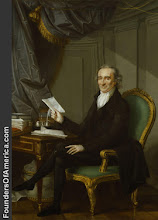
Thomas Paine
Sunday, March 13, 2011


Sunday, March 6, 2011
Analyzing the Mind of the Left: pt. 4
We move now to Mr. Lewis's reference to Frantz Fanon. To understand the importance of this reference, you need to know more about the man. The following is from www.absoluteastronomy.com:
"Frantz Omar Fanon (July 20, 1925 – December 6, 1961) was a French psychiatrist and author, born in Martinique. His work remains influential in the fields of post-colonial studies and critical theory. Fanon is known as a Marxist thinker on the issue of decolonization of colonization. His works have incited and inspired anti-colonial liberation movements for more than four decades.
Martinique and World War II
Frantz Fanon was born on the Caribbean island of Martinique, which was then a French colony and is now a French département. He was born into a mixed family background: his father was the descendent of African slaves, and his mother was said to be an illegitimate child of mixed race, whose white ancestors came from Strasbourg. Fanon's family was socioeconomically middle-class, and they could afford the fees for the Lycée Schoelcher, then the most prestigious high school in Martinique, where the writer Aimé Césaire was one of his teachers.
After France fell to the Nazis in 1940, Vichy French naval troops were blockaded on Martinique. Forced to remain on the island, French soldiers became "authentic racists." Many accusations of harassment and sexual misconduct arose. The abuse of the Martiniquan people by the French Army was a major influence on Fanon, as it reinforced his feelings of alienation and his disgust at the realities of colonial racism. At the age of eighteen, Fanon fled the island as a "dissident" (the coined word for French West Indians joining the gaullist forces) and traveled to then-British colony to join the Free French ForcesFree French Forces. He later enlisted in the French army and joined an Allied convoy that arrived in Casablanca. He was later transferred to an army base at Bejaia on the Kabyle coast of Algeria. Fanon left Algeria from Oran and saw service in France. In 1944 he was wounded at Colmar and received the Croix de Guerre medal. When the Nazis were defeated and Allied forces crossed the Rhine, along with photo journalists, Fanon's regiment was 'bleached' of all non-white soldiers and Fanon and his fellow Caribbean soldiers were sent to Toulon (Provence) instead. Later, they were transferred to Normandy to await repatriation home.
In 1945 Fanon returned to Martinique. His return lasted only a short time. While there, he worked for the parliamentary campaign of his friend and mentor Aimé Césaire, who would be the greatest influence in his life. Although Fanon never professed to be a communist, Césaire ran on the communist ticket. Fanon stayed long enough to complete his Baccalaureate and then went to France where he studied medicine. He was educated in Lyon where he also studied literature, drama and philosophy, sometimes attending Merleau-Ponty's lectures. During this period he wrote three plays, whose manuscripts are now lost. After qualifying as a psychiatrist in 1951, Fanon did a residency in psychiatry at Saint-Alban under the radical Catalan psychiatrist Francois Tosquelles, who invigorated Fanon's thinking by emphasizing the important yet often overlooked role of culture in psychopathology. After his residency, Fanon practiced psychiatry at Pontorson, near Mont St Michel, for another year and then (from 1953) in Algeria. He was chef de service at the Blida-Joinville Psychiatric Hospital in Algeria, where he stayed until his deportation in January 1957.
His service in France's army (and his experiences in Martinique) influenced Black Skin, White Masks. For Fanon, being colonized by a language had larger implications for one's political consciousness: "To speak . . . means above all to assume a culture, to support the weight of a civilization" (BSWM 17-18). Speaking French means that one accepts, or is coerced into accepting, the collective consciousness of the French.
France
While in France, Fanon then wrote his first book in 1952, Black Skin, White Masks. In this study, Fanon uses psychoanalysis and psychoanalytical theory to explain the feelings of dependency and inadequacy that Black people experience in a White world, an analysis of the effect of colonial subjugation on humanity. This book was originally his doctoral thesis submitted at Lyon and entitled, "The Disalienation of the Black Man". The rejection of the thesis led Fanon to seek to have the book published. It was the left wing philosopher Francis Jeanson, leader of the pro-Algerian independence, who insisted on the new title and also wrote an epilogue for this publication.
Algeria
Fanon left France for Algeria, where he had been stationed for some time during the war. He secured an appointment as a psychiatrist at Blida-Joinville Psychiatric Hospital. It was there that he radicalized methods of treatment. In particular, he began socio-therapy which connected with his patients' cultural backgrounds. He also trained nurses and interns. Following the outbreak of the Algerian revolution in November 1954 he joined the FLN liberation front (Front de Libération Nationale) as a result of contacts with Dr. Pierre Chaulet at Blida in 1955.
In The Wretched of the Earth (Les damnés de la terre), published shortly before Fanon's death in 1961, Fanon discusses in depth the effects on Algerians of torture by the French forces. His book was then censored by the French government.
Fanon made extensive trips across Algeria, mainly in the Kabyle region, to study the cultural and psychological life of Algerians. His lost study of "The marabout of Si Slimane" is an example. These trips were also a means for clandestine activities, notably in his visits to the ski resort of Chrea which hid an FLN base. By summer 1956 he wrote his "Letter of resignation to the Resident Minister" and made a clean break with his French assimilationist upbringing and education. He was expelled from Algeria in January 1957 and the "nest of fellaghas [rebels]" at Blida hospital was dismantled.
Fanon left for France and subsequently traveled secretly to Tunis. He was part of the editorial collective of El Moudjahid for which he wrote to the end of his life. He also served as Ambassador to Ghana for the Provisional Algerian Government and attended conferences in Accra, Conakry, Addis Ababa, Leopoldville, Cairo and Tripoli. Many of his shorter writings from this period were collected posthumously in the book Toward the African Revolution. In this book Fanon reveals himself as a war strategist; in one chapter he discusses how to open a southern front to the war and how to run the supply lines.
Death
On his return to Tunis, after his exhausting trip across the Sahara
to open a Third Front, Fanon was diagnosed with leukemia. He went to the Soviet Union for treatment and experienced some remission of his illness. On his return to Tunis he dictated his testament The Wretched of the EarthThe Wretched of the Earth. When he was not confined to his bed, he delivered lectures to ALN (Armée de Libération Nationale) officers at Ghardimao on the Algero-Tunisian border. He made a final visit to Sartre in Rome and went for further leukemia treatment in the USA.
He died in Bethesda, Maryland, on December 6, 1961 under the name of Ibrahim Fanon. He was buried in Algeria, after lying in state in Tunisia. Later his body was moved to a martyrs (chouhada) graveyard at Ain Kerma
in eastern Algeria. Fanon was survived by his wife Josie (née Dublé), their son Olivier, and his daughter (from a previous relationship) Mireille. Mireille married Bernard Mendès-France, son of the French politician Pierre Mendès-France. Josie committed suicide in Algiers in 1989.
Work
Although Fanon wrote Black Skin, White Masks while still in France, most of his work was written while in North Africa. It was during this time that he produced works such as L'An Cinq, de la Révolution Algérienne, or Year Five of the Algerian Revolution, later republished as 'Sociology of a Revolution" and later still as 'A Dying Colonialism'. The irony of this was that Fanon's original title was "Reality of a Nation", however the publisher, Francois Maspero, refused to accept this title. He also wrote an important work on decolonization. The Wretched of the Earth was first published in 1961 by François Maspero and has a preface by Jean-Paul Sartre. In it Fanon analyzes the role of class, race, national culture and violence in the struggle for national liberation. Both books established Fanon in the eyes of much of the Third World as the leading anti-colonial thinker of the 20th century.
Fanon's three books were supplemented by numerous psychiatry articles as well as radical critiques of French colonialism in journals such as Esprit and El Moudjahid.
The reception of his work has been affected by English translations which are recognized to contain numerous omissions and errors, while his unpublished work, including his doctoral thesis, has received little attention. As a result, Fanon has often been portrayed as an advocate of violence. This reductionist vision of Fanon's work ignores the subtlety of his understanding of the colonial system.
For Fanon in The Wretched of the Earth, the colonizer's presence in Algeria is based sheerly on military strength. Any resistance to this strength must also be of a violent nature because it is the only 'language' the colonizer speaks. The relevance of language and the reformation of discourse pervades much of his work, which is why it is so interdisciplinary, spanning psychiatric concerns to encompass politics, sociology, anthropology, linguistics and literature.
His participation in the Algerian FLN from 1955 determined his audience as the Algerian colonized. It was to them that his final work, Les damnés de la terre (translated into English by Constance Farrington as The Wretched of the Earth) was directed. It constitutes a warning to the oppressed of the dangers they face in the whirlwind of decolonization and the transition to a neo-colonialist/globalized world.
Influences
Much of Fanon's writings is traced to the influence of Aimé Césaire. But, while it could be said that Fanon's works are directly influenced by the Négritude movement, Fanon reformulated the theory of Césaire and Léopold Senghor by positing a new theory of consciousness. Négritude implicitly based consciousness in racial difference and tension. A mean to achieve equality and remain under French rule without losing one’s identity through assimilation. Fanon's psychological training and experience influenced him to base much of the problems he saw as psychological and as the product of the domination which arises in oppressive colonial situations. That is, consciousness was not of "racial essence" but a fact arising from political and social situations. Fanon's consciousness was not purely black, but extended to colonized peoples of any racial category. Fanon's own explanation of the difference between his theory and that of Blaise Diagne, Senghor and Césaire was based in an evolutionary model where the colonized ideologies transition from assimiliationist, négritude, and finally Fanon's own theory.
Influence
Fanon has had an influence on anti-colonial and national liberation movements. In particular, Les damnés de la terre was a major influence on the work of revolutionary leaders such as Ali Shariati in Iran, Steve Biko in South Africa, Malcolm X in the United States and Ernesto Che Guevara in Cuba. Of these only Guevara was primarily concerned with Fanon's theories on violence; for Shariati and Biko the main interest in Fanon was "the new man" and "black consciousness" respectively. Fanon's influence extended to the liberation movements of the Palestinians, the Tamils and others. His work was a key influence on the Black Panther Party. More recently, radical South African people's movements have been influenced by Fanon's work. His work was a key influence on Brazilian educationist Paulo Freire. Barack Obama references Fanon in his book, Dreams From My Father."
I have no reason to doubt the veracity of the biographical portion of this article. I cannot say the same with the analysis part of the article.
Before proceeding with my analysis of Lewis's article and its connection to Fanon, one term in the biographical article has to be defined: critical theory. The term "critical theory," at times, is improperly used as a general term describing any theory founded on critique. However, in its proper context, critical theory is a Marxist theory that draws upon all of the social sciences and humanities in making a critique of society and culture. The "theory" part is somewhat of a misnomer since Marxism, as a general rule, does not rely on science or the scientific method, especially with regards to economics.
Now that you have a background on Fanon, we will discuss his theories in my next post. In the meantime, should you want to read Fanon, you can find the full text of The Wretched of the Earth here: http://www.questia.com/PM.qst?a=o&d=9701586.
"Frantz Omar Fanon (July 20, 1925 – December 6, 1961) was a French psychiatrist and author, born in Martinique. His work remains influential in the fields of post-colonial studies and critical theory. Fanon is known as a Marxist thinker on the issue of decolonization of colonization. His works have incited and inspired anti-colonial liberation movements for more than four decades.
Martinique and World War II
Frantz Fanon was born on the Caribbean island of Martinique, which was then a French colony and is now a French département. He was born into a mixed family background: his father was the descendent of African slaves, and his mother was said to be an illegitimate child of mixed race, whose white ancestors came from Strasbourg. Fanon's family was socioeconomically middle-class, and they could afford the fees for the Lycée Schoelcher, then the most prestigious high school in Martinique, where the writer Aimé Césaire was one of his teachers.
After France fell to the Nazis in 1940, Vichy French naval troops were blockaded on Martinique. Forced to remain on the island, French soldiers became "authentic racists." Many accusations of harassment and sexual misconduct arose. The abuse of the Martiniquan people by the French Army was a major influence on Fanon, as it reinforced his feelings of alienation and his disgust at the realities of colonial racism. At the age of eighteen, Fanon fled the island as a "dissident" (the coined word for French West Indians joining the gaullist forces) and traveled to then-British colony to join the Free French ForcesFree French Forces. He later enlisted in the French army and joined an Allied convoy that arrived in Casablanca. He was later transferred to an army base at Bejaia on the Kabyle coast of Algeria. Fanon left Algeria from Oran and saw service in France. In 1944 he was wounded at Colmar and received the Croix de Guerre medal. When the Nazis were defeated and Allied forces crossed the Rhine, along with photo journalists, Fanon's regiment was 'bleached' of all non-white soldiers and Fanon and his fellow Caribbean soldiers were sent to Toulon (Provence) instead. Later, they were transferred to Normandy to await repatriation home.
In 1945 Fanon returned to Martinique. His return lasted only a short time. While there, he worked for the parliamentary campaign of his friend and mentor Aimé Césaire, who would be the greatest influence in his life. Although Fanon never professed to be a communist, Césaire ran on the communist ticket. Fanon stayed long enough to complete his Baccalaureate and then went to France where he studied medicine. He was educated in Lyon where he also studied literature, drama and philosophy, sometimes attending Merleau-Ponty's lectures. During this period he wrote three plays, whose manuscripts are now lost. After qualifying as a psychiatrist in 1951, Fanon did a residency in psychiatry at Saint-Alban under the radical Catalan psychiatrist Francois Tosquelles, who invigorated Fanon's thinking by emphasizing the important yet often overlooked role of culture in psychopathology. After his residency, Fanon practiced psychiatry at Pontorson, near Mont St Michel, for another year and then (from 1953) in Algeria. He was chef de service at the Blida-Joinville Psychiatric Hospital in Algeria, where he stayed until his deportation in January 1957.
His service in France's army (and his experiences in Martinique) influenced Black Skin, White Masks. For Fanon, being colonized by a language had larger implications for one's political consciousness: "To speak . . . means above all to assume a culture, to support the weight of a civilization" (BSWM 17-18). Speaking French means that one accepts, or is coerced into accepting, the collective consciousness of the French.
France
While in France, Fanon then wrote his first book in 1952, Black Skin, White Masks. In this study, Fanon uses psychoanalysis and psychoanalytical theory to explain the feelings of dependency and inadequacy that Black people experience in a White world, an analysis of the effect of colonial subjugation on humanity. This book was originally his doctoral thesis submitted at Lyon and entitled, "The Disalienation of the Black Man". The rejection of the thesis led Fanon to seek to have the book published. It was the left wing philosopher Francis Jeanson, leader of the pro-Algerian independence, who insisted on the new title and also wrote an epilogue for this publication.
Algeria
Fanon left France for Algeria, where he had been stationed for some time during the war. He secured an appointment as a psychiatrist at Blida-Joinville Psychiatric Hospital. It was there that he radicalized methods of treatment. In particular, he began socio-therapy which connected with his patients' cultural backgrounds. He also trained nurses and interns. Following the outbreak of the Algerian revolution in November 1954 he joined the FLN liberation front (Front de Libération Nationale) as a result of contacts with Dr. Pierre Chaulet at Blida in 1955.
In The Wretched of the Earth (Les damnés de la terre), published shortly before Fanon's death in 1961, Fanon discusses in depth the effects on Algerians of torture by the French forces. His book was then censored by the French government.
Fanon made extensive trips across Algeria, mainly in the Kabyle region, to study the cultural and psychological life of Algerians. His lost study of "The marabout of Si Slimane" is an example. These trips were also a means for clandestine activities, notably in his visits to the ski resort of Chrea which hid an FLN base. By summer 1956 he wrote his "Letter of resignation to the Resident Minister" and made a clean break with his French assimilationist upbringing and education. He was expelled from Algeria in January 1957 and the "nest of fellaghas [rebels]" at Blida hospital was dismantled.
Fanon left for France and subsequently traveled secretly to Tunis. He was part of the editorial collective of El Moudjahid for which he wrote to the end of his life. He also served as Ambassador to Ghana for the Provisional Algerian Government and attended conferences in Accra, Conakry, Addis Ababa, Leopoldville, Cairo and Tripoli. Many of his shorter writings from this period were collected posthumously in the book Toward the African Revolution. In this book Fanon reveals himself as a war strategist; in one chapter he discusses how to open a southern front to the war and how to run the supply lines.
Death
On his return to Tunis, after his exhausting trip across the Sahara
to open a Third Front, Fanon was diagnosed with leukemia. He went to the Soviet Union for treatment and experienced some remission of his illness. On his return to Tunis he dictated his testament The Wretched of the EarthThe Wretched of the Earth. When he was not confined to his bed, he delivered lectures to ALN (Armée de Libération Nationale) officers at Ghardimao on the Algero-Tunisian border. He made a final visit to Sartre in Rome and went for further leukemia treatment in the USA.
He died in Bethesda, Maryland, on December 6, 1961 under the name of Ibrahim Fanon. He was buried in Algeria, after lying in state in Tunisia. Later his body was moved to a martyrs (chouhada) graveyard at Ain Kerma
in eastern Algeria. Fanon was survived by his wife Josie (née Dublé), their son Olivier, and his daughter (from a previous relationship) Mireille. Mireille married Bernard Mendès-France, son of the French politician Pierre Mendès-France. Josie committed suicide in Algiers in 1989.
Work
Although Fanon wrote Black Skin, White Masks while still in France, most of his work was written while in North Africa. It was during this time that he produced works such as L'An Cinq, de la Révolution Algérienne, or Year Five of the Algerian Revolution, later republished as 'Sociology of a Revolution" and later still as 'A Dying Colonialism'. The irony of this was that Fanon's original title was "Reality of a Nation", however the publisher, Francois Maspero, refused to accept this title. He also wrote an important work on decolonization. The Wretched of the Earth was first published in 1961 by François Maspero and has a preface by Jean-Paul Sartre. In it Fanon analyzes the role of class, race, national culture and violence in the struggle for national liberation. Both books established Fanon in the eyes of much of the Third World as the leading anti-colonial thinker of the 20th century.
Fanon's three books were supplemented by numerous psychiatry articles as well as radical critiques of French colonialism in journals such as Esprit and El Moudjahid.
The reception of his work has been affected by English translations which are recognized to contain numerous omissions and errors, while his unpublished work, including his doctoral thesis, has received little attention. As a result, Fanon has often been portrayed as an advocate of violence. This reductionist vision of Fanon's work ignores the subtlety of his understanding of the colonial system.
For Fanon in The Wretched of the Earth, the colonizer's presence in Algeria is based sheerly on military strength. Any resistance to this strength must also be of a violent nature because it is the only 'language' the colonizer speaks. The relevance of language and the reformation of discourse pervades much of his work, which is why it is so interdisciplinary, spanning psychiatric concerns to encompass politics, sociology, anthropology, linguistics and literature.
His participation in the Algerian FLN from 1955 determined his audience as the Algerian colonized. It was to them that his final work, Les damnés de la terre (translated into English by Constance Farrington as The Wretched of the Earth) was directed. It constitutes a warning to the oppressed of the dangers they face in the whirlwind of decolonization and the transition to a neo-colonialist/globalized world.
Influences
Much of Fanon's writings is traced to the influence of Aimé Césaire. But, while it could be said that Fanon's works are directly influenced by the Négritude movement, Fanon reformulated the theory of Césaire and Léopold Senghor by positing a new theory of consciousness. Négritude implicitly based consciousness in racial difference and tension. A mean to achieve equality and remain under French rule without losing one’s identity through assimilation. Fanon's psychological training and experience influenced him to base much of the problems he saw as psychological and as the product of the domination which arises in oppressive colonial situations. That is, consciousness was not of "racial essence" but a fact arising from political and social situations. Fanon's consciousness was not purely black, but extended to colonized peoples of any racial category. Fanon's own explanation of the difference between his theory and that of Blaise Diagne, Senghor and Césaire was based in an evolutionary model where the colonized ideologies transition from assimiliationist, négritude, and finally Fanon's own theory.
Influence
Fanon has had an influence on anti-colonial and national liberation movements. In particular, Les damnés de la terre was a major influence on the work of revolutionary leaders such as Ali Shariati in Iran, Steve Biko in South Africa, Malcolm X in the United States and Ernesto Che Guevara in Cuba. Of these only Guevara was primarily concerned with Fanon's theories on violence; for Shariati and Biko the main interest in Fanon was "the new man" and "black consciousness" respectively. Fanon's influence extended to the liberation movements of the Palestinians, the Tamils and others. His work was a key influence on the Black Panther Party. More recently, radical South African people's movements have been influenced by Fanon's work. His work was a key influence on Brazilian educationist Paulo Freire. Barack Obama references Fanon in his book, Dreams From My Father."
I have no reason to doubt the veracity of the biographical portion of this article. I cannot say the same with the analysis part of the article.
Before proceeding with my analysis of Lewis's article and its connection to Fanon, one term in the biographical article has to be defined: critical theory. The term "critical theory," at times, is improperly used as a general term describing any theory founded on critique. However, in its proper context, critical theory is a Marxist theory that draws upon all of the social sciences and humanities in making a critique of society and culture. The "theory" part is somewhat of a misnomer since Marxism, as a general rule, does not rely on science or the scientific method, especially with regards to economics.
Now that you have a background on Fanon, we will discuss his theories in my next post. In the meantime, should you want to read Fanon, you can find the full text of The Wretched of the Earth here: http://www.questia.com/PM.qst?a=o&d=9701586.
Wednesday, February 23, 2011
Analyzing the Mind of the Left (pt. 3)
"One of the most insidious aspects of life under despotism is that it can create an existential ennui among the subject, a barely conscious layer of hopelessness and helplessness, which then becomes a tacit participation in allowing the despotism to continue."
First of all, Mr. Lewis, in his rush to dazzle you with his vernacular, misdefines "ennui." "Ennui" means boredom. What he meant to say was "malaise." That's the result of using a thesaurus in a vacuum without being sufficiently well-read to understand the contexts in which the word should be used. Ok, I'm nitpicking so let's move on...Let's crack these little nuts such as "existential ennui," ""barely conscious layer of hopelessness and helplessness," and "tacit participation allowing the depotism to continue." Again, "ennui" should be "malaise," but the use of the term "existential" is key to Lewis's point. The French existentialist, Albert Camus, is a hero of the Left. Camus joined the Algerian Communist Party in order to work politically towards expanding the rights of Algerians. Camus saw communism as a means to an end, but was never a devout Marxist-Leninist. Nevertheless, Camus' appeal to the Left arises from his commitment to revolting against one's state in life. Camus' philosophy, reduced to one sentence is: "Human beings are caught in a constant attempt to derive meaning from a meaningless world. This is the ‘paradox of the absurd’." Life is absurd because it has no meaning despite our heroic attempts to impose meaning on it without considering the possibility (and, in fact, dismissing out of hand the possibility) that life has no meaning at all. Without getting too far into the weeds, Camus believed that existential authenticity demands that we admit to ourselves that our plans and projects are for the most part hopeless and in vain – and struggle on regardless. This, for Camus, is existential revolt – to affirm the absurdity of life and continue. As Camus said:
"Revolt … is a constant confrontation between man and his own obscurity … [It] is certainty of a crushing fate, without the resignation which ought to accompany it".
To sell his point, Camus used the attitude of revolt in the mythological figure of Sisyphus.
"The gods had condemned Sisyphus to ceaselessly rolling a rock to the top of a mountain, whence the stone would fall back of its own weight. They had thought with some reason that there is no more dreadful punishment than futile and hopeless labor."
According to Camus, Sisyphus is heroic not because he suffers his fate, but because "he is superior to his fate." Sisyphus does not weep and lament his fate. Out of scorn for the gods who condemned him to this fate, he affirms his labor, and concludes that all is well. Fixing his eye on the stone at the bottom of the hill, he trudges down the slope to retrieve it. Camus says: "One must imagine that Sisyphus is happy."
To revolt is to affirm the absurdity of existence and continue. As Camus muses:
"It may be thought that suicide follows revolt – but wrongly. … [R]evolt gives value to life. … To a man devoid of blinders, there is no finer sight than that of the intelligence at grips with a reality that transcends it." (Camus, The Myth of Sisyphus).
(Note: Much of the above was plagiarized liberally from various websites on topic).
Lewis believes that the Egyptian people (pre-Jan. 25, 2011) were living in a state of abject existential malaise. They had very little meaning in their lives due to a natural reaction to 30 years of despotism (actually, the despotism predates Mubarak and his predecessor, Sadat. It goes all the way back to 1952 when the military deposed King Farouk-last scion of a 150 year dynasty, took over Egypt, and established a "republic" that was nothing more than a Soviet puppet-state. I assume that, since the original Egyptian revolution installed a communist-friendly regime that distanced itself from Russian influence only when President Sadat wisely decided to side with the US in the late '70s, Lewis doesn't want to tack on 28 more years to Egypt's history of oppression. In Lewis's mind, communism, by definition, can never be oppressive). In this barely conscious existence, the Egyptians knew they were oppressed, but had little motivation to throw off their chains. Then, according to Lewis, freedom surfaced ex nihilo in the malaise-stricken minds of the Egyptians and they knew a priori what path they needed to take towards democracy. Purely spontaneous, purely organic. Pure horse-hocky. Anyways, as the argument goes, the Egyptians have achieved existential authenticity by revolting and casting off the yoke of their oppressor. "I rebel; therefore, I exist" as Camus said.
First of all, Mr. Lewis, in his rush to dazzle you with his vernacular, misdefines "ennui." "Ennui" means boredom. What he meant to say was "malaise." That's the result of using a thesaurus in a vacuum without being sufficiently well-read to understand the contexts in which the word should be used. Ok, I'm nitpicking so let's move on...Let's crack these little nuts such as "existential ennui," ""barely conscious layer of hopelessness and helplessness," and "tacit participation allowing the depotism to continue." Again, "ennui" should be "malaise," but the use of the term "existential" is key to Lewis's point. The French existentialist, Albert Camus, is a hero of the Left. Camus joined the Algerian Communist Party in order to work politically towards expanding the rights of Algerians. Camus saw communism as a means to an end, but was never a devout Marxist-Leninist. Nevertheless, Camus' appeal to the Left arises from his commitment to revolting against one's state in life. Camus' philosophy, reduced to one sentence is: "Human beings are caught in a constant attempt to derive meaning from a meaningless world. This is the ‘paradox of the absurd’." Life is absurd because it has no meaning despite our heroic attempts to impose meaning on it without considering the possibility (and, in fact, dismissing out of hand the possibility) that life has no meaning at all. Without getting too far into the weeds, Camus believed that existential authenticity demands that we admit to ourselves that our plans and projects are for the most part hopeless and in vain – and struggle on regardless. This, for Camus, is existential revolt – to affirm the absurdity of life and continue. As Camus said:
"Revolt … is a constant confrontation between man and his own obscurity … [It] is certainty of a crushing fate, without the resignation which ought to accompany it".
To sell his point, Camus used the attitude of revolt in the mythological figure of Sisyphus.
"The gods had condemned Sisyphus to ceaselessly rolling a rock to the top of a mountain, whence the stone would fall back of its own weight. They had thought with some reason that there is no more dreadful punishment than futile and hopeless labor."
According to Camus, Sisyphus is heroic not because he suffers his fate, but because "he is superior to his fate." Sisyphus does not weep and lament his fate. Out of scorn for the gods who condemned him to this fate, he affirms his labor, and concludes that all is well. Fixing his eye on the stone at the bottom of the hill, he trudges down the slope to retrieve it. Camus says: "One must imagine that Sisyphus is happy."
To revolt is to affirm the absurdity of existence and continue. As Camus muses:
"It may be thought that suicide follows revolt – but wrongly. … [R]evolt gives value to life. … To a man devoid of blinders, there is no finer sight than that of the intelligence at grips with a reality that transcends it." (Camus, The Myth of Sisyphus).
(Note: Much of the above was plagiarized liberally from various websites on topic).
Lewis believes that the Egyptian people (pre-Jan. 25, 2011) were living in a state of abject existential malaise. They had very little meaning in their lives due to a natural reaction to 30 years of despotism (actually, the despotism predates Mubarak and his predecessor, Sadat. It goes all the way back to 1952 when the military deposed King Farouk-last scion of a 150 year dynasty, took over Egypt, and established a "republic" that was nothing more than a Soviet puppet-state. I assume that, since the original Egyptian revolution installed a communist-friendly regime that distanced itself from Russian influence only when President Sadat wisely decided to side with the US in the late '70s, Lewis doesn't want to tack on 28 more years to Egypt's history of oppression. In Lewis's mind, communism, by definition, can never be oppressive). In this barely conscious existence, the Egyptians knew they were oppressed, but had little motivation to throw off their chains. Then, according to Lewis, freedom surfaced ex nihilo in the malaise-stricken minds of the Egyptians and they knew a priori what path they needed to take towards democracy. Purely spontaneous, purely organic. Pure horse-hocky. Anyways, as the argument goes, the Egyptians have achieved existential authenticity by revolting and casting off the yoke of their oppressor. "I rebel; therefore, I exist" as Camus said.
The World is in a State of Utter Chaos...and There is No Way I Can Keep Up with It.
The Middle East is on fire. Every Arab nation with the exception of Saudi Arabia is in a state of revolt or at war. Our oil prices are about to skyrocket off the charts. Stateside, there are public union employee protests in Wisconsin, Ohio, and Illinois. Van Jones, the unions, and the other communist/socialist agitators are calling for protests in every state capital. There are a large number of protests scheduled for this Saturday. Meanwhile, while the public's attention is on the protests and the growing violence in Libya (and the potential increases in crude oil prices), the President and his Attorney General unilaterally decided that discrimination against gays is unconstitutional and any law discriminating in such a way is subject to heightened scrutiny. In short, the President, without any Supreme Court precedent or legislative action to support him, has decided, apparently, by executive fiat, that: 1) his Department of Justice will no longer defend the US government in lawsuits filed against the Defense of Marriage Act; and 2) that, the DOJ is going to subject state laws that discriminate against gays to the same standard that they use in prosecuting cases of discrimination on the basis of age, gender, and race. Said differently, the President is extending rights to a complete group of people based solely on their sexual orientation. It is rule by edict. King Obama has no qualms about circumventing the law when it doesn't comport with his political agenda. It is a spit in the face of judicial process and the legislature. Congressmen and the Honorable Justices of the Supreme Court: you are now officially irrelevant.
By the way, this is the same President who, as a candidate, defined marriage as between a man and a woman. Why is he backtracking now? (More on that later). When the Iranian government hanged two gay men for the simple fact that they were gay during the recent protests in Iran, where was the President advocating on behalf of human rights and the rights of gays in particular?
The President is backtracking on a campaign position because that was never really his position. He wanted to appear more centrist to further his attempts to fool Americans into believing that he wasn't a died in the wool radical. Not only did he lie during the campaign, but, now, his minions want you to believe that this has always been his stated position. Whatever.
The other reason is the following: the labor movement is up in arms over austerity measures taken by state governments that are on the brink of insolvency. The states can no longer continue to fund public employee pensions and other benefits at their present levels. There simply is no more money in the states' coffers to continue paying these ridiculous pension plan and health insurance rates. As a result, we have the aforementioned protests in a number of states protesting what our esteemed Union Sock Puppet in Chief labels an "attack on unions." How does that connect to today's letter from Holder?
If the Justice Department takes that position, then doesn't it follow that states can no longer have laws that prohibit gay marriage? Doesn't it also mean that public employee benefits and, indeed, private benefits such as health insurance, retirement, etc., have to be extended to gay and their partners? Isn't this going to impose a greater financial burden on states who now have to extend the same benefits to the partners/spouses/etc. of gays as they do for heterosexuals?
By the way, this is the same President who, as a candidate, defined marriage as between a man and a woman. Why is he backtracking now? (More on that later). When the Iranian government hanged two gay men for the simple fact that they were gay during the recent protests in Iran, where was the President advocating on behalf of human rights and the rights of gays in particular?
The President is backtracking on a campaign position because that was never really his position. He wanted to appear more centrist to further his attempts to fool Americans into believing that he wasn't a died in the wool radical. Not only did he lie during the campaign, but, now, his minions want you to believe that this has always been his stated position. Whatever.
The other reason is the following: the labor movement is up in arms over austerity measures taken by state governments that are on the brink of insolvency. The states can no longer continue to fund public employee pensions and other benefits at their present levels. There simply is no more money in the states' coffers to continue paying these ridiculous pension plan and health insurance rates. As a result, we have the aforementioned protests in a number of states protesting what our esteemed Union Sock Puppet in Chief labels an "attack on unions." How does that connect to today's letter from Holder?
If the Justice Department takes that position, then doesn't it follow that states can no longer have laws that prohibit gay marriage? Doesn't it also mean that public employee benefits and, indeed, private benefits such as health insurance, retirement, etc., have to be extended to gay and their partners? Isn't this going to impose a greater financial burden on states who now have to extend the same benefits to the partners/spouses/etc. of gays as they do for heterosexuals?
Wednesday, February 16, 2011
Analyzing the Mind of the Left pt. 2
Let's break down Mr. Lewis's article:
“While many have been surprised by the seemingly sudden uprising in Egypt, the real question isn't about how it happened but why it didn't happen sooner.”
Actually, the question that everyone should be asking is “why now?” Why did it take 30 years under Mubarak for the people to revolt? Does it have to do with the 1979 Islamic Revolution in Iran? After all, Mubarak stepped down on the 32nd anniversary (yes, to the date) of the Shah’s ouster in Iran. For a culture where everything carries symbolic meaning, that date cannot be a mere coincidence.
The Egyptian military has taken over the government, dissolved parliament, and suspended the constitution. Military leaders promise that a committee will be appointed to amend the constitution. I assume that the military leaders will be the ones to elect the members of the committee. Can someone tell me how this revolution is any different than any number of revolutions that have occurred in the past? Another question: the people are complaining about, not only oppression, but the lack of basic necessities like food and housing. The Egyptian constitution already created a democratic socialist state that provides for the feeding, clothing, and sheltering of its people. Why, then, do they want to amend the constitution? The skeptic in me says that the new constitution most likely will decrease individual liberties as opposed to increasing them.
But, let's get back to Mr. Lewis's post and answer his rhetorical question. The revolt in Egypt happened now because it was planned that way. Glenn Beck has already done an expose on this and a full discussion of this issue is beyond the scope of what we are doing now, but, suffice it to say that, first, you have the Obama State Department's direct involvement in encouraging revolt. Research the Alliance of Youth Movements and the backgrounds of its constituent organizations. Look at the role of Wael Ghonim, the Google executive. Go to the international union, socialist party, and communist party websites. This coup was staged from the beginning.
“While many have been surprised by the seemingly sudden uprising in Egypt, the real question isn't about how it happened but why it didn't happen sooner.”
Actually, the question that everyone should be asking is “why now?” Why did it take 30 years under Mubarak for the people to revolt? Does it have to do with the 1979 Islamic Revolution in Iran? After all, Mubarak stepped down on the 32nd anniversary (yes, to the date) of the Shah’s ouster in Iran. For a culture where everything carries symbolic meaning, that date cannot be a mere coincidence.
The Egyptian military has taken over the government, dissolved parliament, and suspended the constitution. Military leaders promise that a committee will be appointed to amend the constitution. I assume that the military leaders will be the ones to elect the members of the committee. Can someone tell me how this revolution is any different than any number of revolutions that have occurred in the past? Another question: the people are complaining about, not only oppression, but the lack of basic necessities like food and housing. The Egyptian constitution already created a democratic socialist state that provides for the feeding, clothing, and sheltering of its people. Why, then, do they want to amend the constitution? The skeptic in me says that the new constitution most likely will decrease individual liberties as opposed to increasing them.
But, let's get back to Mr. Lewis's post and answer his rhetorical question. The revolt in Egypt happened now because it was planned that way. Glenn Beck has already done an expose on this and a full discussion of this issue is beyond the scope of what we are doing now, but, suffice it to say that, first, you have the Obama State Department's direct involvement in encouraging revolt. Research the Alliance of Youth Movements and the backgrounds of its constituent organizations. Look at the role of Wael Ghonim, the Google executive. Go to the international union, socialist party, and communist party websites. This coup was staged from the beginning.
Found this EXTREMELY sobering piece on Monty Pelerin's World
According to the Bank of International Settlements, the Central Bank for central bankers, the use would have to cut spending by $2 trillion EACH YEAR FOR 20 YEARS in order to get spending back to 2007 levels.
Sunday, February 13, 2011
As promised: The Mind of the Left (WARNING: Read at your own risk)
Our first case study is one Laurence Lewis, a frequent blogger on The Daily Kos. I Googled Mr. Lewis to try to get some insight into his background, but without result. Suffice it to say that he fits the profile I created in my post below to a tee. Let's start this analysis by reading one of Mr. Lewis's quotes in its entirety. This pretty little piece is called "Egypt is the future:"
"While many have been surprised by the seemingly sudden uprising in Egypt, the real question isn't about how it happened but why it didn't happen sooner. Despite brave and noble opposition efforts by various individuals and groups over the past decades, it seems nevertheless to have been taken for granted by much of the world that the Egyptian people would live under oppression indefinitely. It seems to have been taken for granted that the revolutionary movements that have shaken half the globe in the past half century somehow couldn't touch one of the world's oldest nations, as if that very ancient history stultified the very modern Egyptian people. Of course, most of the efforts within Egypt have been ignored by much of the world for decades, and if noticed at all, were mostly written off as but spasms of extremism. So the surprise at current events is not, itself, surprising. The grace and humanity of the current revolutionary opposition is a wake-up call not for Egypt, but for the world.
One of the most insidious aspects of life under despotism is that it can create an existential ennui among the subject, a barely conscious layer of hopelessness and helplessness, which then becomes a tacit participation in allowing the despotism to continue. To Franz Fanon, a rebirth of consciousness was necessary, a violent reawakening to the basic rights and responsibilities that are every human being's birthright. That decades of seemingly thuggish stability could be blasted apart so quickly in Egypt speaks to the fragility of that consciousness of suppression. Fanon spoke to a different era, for in these events we see that no existential cataclysm was required. It took but a whisper, a breath, a candle flame, and a people thought to have been completely denuded of will exploded into such full possession of their own unique ability to create their own history that it's clear they had never lost it. It wasn't even dormant, it was lying latent, just barely beneath the surface, where the merest hint of possibility resonates and concatenates. This is a warning. This is the future. This is a reminder of the strength of the human spirit.
The industrialized world has built much of its wealth off the theft, enslavement, and exploitation of less militarily powerful people. The Age of Colonialism and Imperialism couldn't last forever, but in many places it was replaced by but the Age of Neo-Colonialism and Neo-Imperialism, which in some ways was less messy for those reaping the financial rewards. Occupation and the garrisoning of military personnel could be outsourced to locals, with the extra added bonus of further enriching the arms merchants, often by a process of ostensible foreign aid which was, in reality, just recycled back to the home land as corporate welfare disguised as arms purchases. The war profiteers didn't even need wars, and local despots had shiny new toys with which to keep themselves in power and their people under constant threat of violent and torturous repression. As others have pointed out, the tear gas canisters used in Cairo, the tanks rumbling through its streets, and the military jets thundering in its skies, all were made in America. To some, no doubt, this is cause for patriotic rejoicing.
That the West has had to continually recalibrate its response has been revealing, but again not surprising. So many assumptions are failing. That a long transition was floated would have been laughable, had it not been so absurd, but the quick flip from that to the possibility of a quick exit for Hosni Mubarak while his hand-picked successor leads the interim regime is no more likely to be acceptable to the people actually on the ground in Cairo--particularly given that hand-picked successor's role in the brutalities of the Mubarak era, and his deep ties to the CIA. It's fascinating watching the West fumble for answers while ignoring the answers already presenting themselves by the people leading the revolution. But Mohamed ElBaradei is considered suspect to the West, despite his being a secularist, and as much European as Egyptian. Of course, some won't forgive him for having had the temerity to complicate the fervor to invade Iraq by insisting that Saddam Hussein had no weapons of mass destruction. A temerity all the more unforgivable because he was proved right. But even worse has been ElBaradei's insistance on allowing the weapons inspections process to work in Iran, once again, and this time more successfully, undermining the chickenhawks' desire to invade and destroy yet another Muslim nation that has done nothing to merit being invaded and destroyed. And it is perhaps most interesting that Iran itself considers ElBaradei a thorn in its side, which means the Western neocons and the Iranian theocrats are united against much of the rest of the world in reviling a Nobel Peace Prize-winning diplomat.
But these latter day imperialists are not only consistently wrong and deranged in their movable blood lust, they are also on the wrong side of a critical turning point in world history. They don't recognize the realities of the world in which they live, and they certainly won't recognize the world that is evolving. And they will hate what they do recognize. But they are not now holding the reins of power, and the most curious aspect of the larger state of geopolitical confusion has been the inability of those that do now hold the reins of power to create a clear separation between its approach and that of the antideluvians who are perhaps genetically incapable of anything else. What is happening is obvious. It's not that the West must meddle or force itself on the Egytpian people, it's that the West can do best by but helping to clear the path that the Egyptian people themselves are defining. Convoluted half-hearted solutions are not the answer. The answer is right there, on the ground, in Cairo. It's not only about trying to protect the opposition, it should be about helping them to be heard and empowered. In the end, doing so would be quicker and easier and much less invasive.
Another undeniable dimension of the Egyptian revolution is that the internet once again has played a key role in redefining political possibility. The WikiLeaks revelations seem to have helped inspire the Tunisian uprising, and there is no question that access to the internet has opened worlds of information to peoples all around the globe, people who otherwise would have little access to information that was not directly controlled by their governments. It hasn't received much notice, but Chinese authorities have revealed their own worries by restricting news and discussion of the revolution that is rocking North Africa. The Mubarak regime itself quickly shut down the internet and Blackberry texting. On the other hand, in an attempt to be proactive, Jordan's King Abdullah has sacked his entire cabinet. But perhaps most interestingly, the unrest has yet to hit the oil-rich Middle Eastern states, where local governments are not alone in keeping a close watch. The leaders of the industrialized world have been slow and cautious in responding to Egypt, but their real fears lie in their not knowing what to do if the revolution expands. Current attempts to comprehend and to figure out a path forward will be considered all but politically trivial if the world's economy is potentially to be thrown into chaos. And that's the real secret to what is happening in Egypt. Because the Egyptians, like the Tunisians before them, hardly were alone in but awaiting a reason to believe in the possibility of hope. People around the globe share the yearning, and access to information has become a critical means of empowering that yearning.
It long has been as absurd as it is cruel to expect that the current system of economic and military imbalances can last forever. It long has been as absurd as it is cruel to expect so many people to suffer so much for the financial benefit of so relative few. A world so dominated by the North and the West cannot continue forever. The forms of Colonialism and Imperialism and Neo-Colonialism and Neo-Imperialism have evolved and refined, but the most basic truths have remained the same. People everywhere deserve their basic human rights. Those suffering from a loss of basic human rights will not tolerate it forever. And those responsible for the suffering are going to have to help end it if they are going to claim their own basic sense of humanity. Tunisia and Egypt are not the end. They are barely the beginning. The pace of change cannot be foreseen, but the responsibility of people of conscience could not be more obvious. The world's economic powers no longer can thrive off the exploitation and subjugation of others. The revolutions in Tunisia and Egypt are by, of, and for the people of Tunisia and Egypt. But the larger story is about us."
What erudition, no? No, not really. More like typical close-minded wannabe revolutionary far Left drivel. In the following posts I will take salient portions of Mr. Lewis's post and analyze them on a historical, contemporary political, psychological, and maybe even a religious level. Stay tuned.
"While many have been surprised by the seemingly sudden uprising in Egypt, the real question isn't about how it happened but why it didn't happen sooner. Despite brave and noble opposition efforts by various individuals and groups over the past decades, it seems nevertheless to have been taken for granted by much of the world that the Egyptian people would live under oppression indefinitely. It seems to have been taken for granted that the revolutionary movements that have shaken half the globe in the past half century somehow couldn't touch one of the world's oldest nations, as if that very ancient history stultified the very modern Egyptian people. Of course, most of the efforts within Egypt have been ignored by much of the world for decades, and if noticed at all, were mostly written off as but spasms of extremism. So the surprise at current events is not, itself, surprising. The grace and humanity of the current revolutionary opposition is a wake-up call not for Egypt, but for the world.
One of the most insidious aspects of life under despotism is that it can create an existential ennui among the subject, a barely conscious layer of hopelessness and helplessness, which then becomes a tacit participation in allowing the despotism to continue. To Franz Fanon, a rebirth of consciousness was necessary, a violent reawakening to the basic rights and responsibilities that are every human being's birthright. That decades of seemingly thuggish stability could be blasted apart so quickly in Egypt speaks to the fragility of that consciousness of suppression. Fanon spoke to a different era, for in these events we see that no existential cataclysm was required. It took but a whisper, a breath, a candle flame, and a people thought to have been completely denuded of will exploded into such full possession of their own unique ability to create their own history that it's clear they had never lost it. It wasn't even dormant, it was lying latent, just barely beneath the surface, where the merest hint of possibility resonates and concatenates. This is a warning. This is the future. This is a reminder of the strength of the human spirit.
The industrialized world has built much of its wealth off the theft, enslavement, and exploitation of less militarily powerful people. The Age of Colonialism and Imperialism couldn't last forever, but in many places it was replaced by but the Age of Neo-Colonialism and Neo-Imperialism, which in some ways was less messy for those reaping the financial rewards. Occupation and the garrisoning of military personnel could be outsourced to locals, with the extra added bonus of further enriching the arms merchants, often by a process of ostensible foreign aid which was, in reality, just recycled back to the home land as corporate welfare disguised as arms purchases. The war profiteers didn't even need wars, and local despots had shiny new toys with which to keep themselves in power and their people under constant threat of violent and torturous repression. As others have pointed out, the tear gas canisters used in Cairo, the tanks rumbling through its streets, and the military jets thundering in its skies, all were made in America. To some, no doubt, this is cause for patriotic rejoicing.
That the West has had to continually recalibrate its response has been revealing, but again not surprising. So many assumptions are failing. That a long transition was floated would have been laughable, had it not been so absurd, but the quick flip from that to the possibility of a quick exit for Hosni Mubarak while his hand-picked successor leads the interim regime is no more likely to be acceptable to the people actually on the ground in Cairo--particularly given that hand-picked successor's role in the brutalities of the Mubarak era, and his deep ties to the CIA. It's fascinating watching the West fumble for answers while ignoring the answers already presenting themselves by the people leading the revolution. But Mohamed ElBaradei is considered suspect to the West, despite his being a secularist, and as much European as Egyptian. Of course, some won't forgive him for having had the temerity to complicate the fervor to invade Iraq by insisting that Saddam Hussein had no weapons of mass destruction. A temerity all the more unforgivable because he was proved right. But even worse has been ElBaradei's insistance on allowing the weapons inspections process to work in Iran, once again, and this time more successfully, undermining the chickenhawks' desire to invade and destroy yet another Muslim nation that has done nothing to merit being invaded and destroyed. And it is perhaps most interesting that Iran itself considers ElBaradei a thorn in its side, which means the Western neocons and the Iranian theocrats are united against much of the rest of the world in reviling a Nobel Peace Prize-winning diplomat.
But these latter day imperialists are not only consistently wrong and deranged in their movable blood lust, they are also on the wrong side of a critical turning point in world history. They don't recognize the realities of the world in which they live, and they certainly won't recognize the world that is evolving. And they will hate what they do recognize. But they are not now holding the reins of power, and the most curious aspect of the larger state of geopolitical confusion has been the inability of those that do now hold the reins of power to create a clear separation between its approach and that of the antideluvians who are perhaps genetically incapable of anything else. What is happening is obvious. It's not that the West must meddle or force itself on the Egytpian people, it's that the West can do best by but helping to clear the path that the Egyptian people themselves are defining. Convoluted half-hearted solutions are not the answer. The answer is right there, on the ground, in Cairo. It's not only about trying to protect the opposition, it should be about helping them to be heard and empowered. In the end, doing so would be quicker and easier and much less invasive.
Another undeniable dimension of the Egyptian revolution is that the internet once again has played a key role in redefining political possibility. The WikiLeaks revelations seem to have helped inspire the Tunisian uprising, and there is no question that access to the internet has opened worlds of information to peoples all around the globe, people who otherwise would have little access to information that was not directly controlled by their governments. It hasn't received much notice, but Chinese authorities have revealed their own worries by restricting news and discussion of the revolution that is rocking North Africa. The Mubarak regime itself quickly shut down the internet and Blackberry texting. On the other hand, in an attempt to be proactive, Jordan's King Abdullah has sacked his entire cabinet. But perhaps most interestingly, the unrest has yet to hit the oil-rich Middle Eastern states, where local governments are not alone in keeping a close watch. The leaders of the industrialized world have been slow and cautious in responding to Egypt, but their real fears lie in their not knowing what to do if the revolution expands. Current attempts to comprehend and to figure out a path forward will be considered all but politically trivial if the world's economy is potentially to be thrown into chaos. And that's the real secret to what is happening in Egypt. Because the Egyptians, like the Tunisians before them, hardly were alone in but awaiting a reason to believe in the possibility of hope. People around the globe share the yearning, and access to information has become a critical means of empowering that yearning.
It long has been as absurd as it is cruel to expect that the current system of economic and military imbalances can last forever. It long has been as absurd as it is cruel to expect so many people to suffer so much for the financial benefit of so relative few. A world so dominated by the North and the West cannot continue forever. The forms of Colonialism and Imperialism and Neo-Colonialism and Neo-Imperialism have evolved and refined, but the most basic truths have remained the same. People everywhere deserve their basic human rights. Those suffering from a loss of basic human rights will not tolerate it forever. And those responsible for the suffering are going to have to help end it if they are going to claim their own basic sense of humanity. Tunisia and Egypt are not the end. They are barely the beginning. The pace of change cannot be foreseen, but the responsibility of people of conscience could not be more obvious. The world's economic powers no longer can thrive off the exploitation and subjugation of others. The revolutions in Tunisia and Egypt are by, of, and for the people of Tunisia and Egypt. But the larger story is about us."
What erudition, no? No, not really. More like typical close-minded wannabe revolutionary far Left drivel. In the following posts I will take salient portions of Mr. Lewis's post and analyze them on a historical, contemporary political, psychological, and maybe even a religious level. Stay tuned.
Subscribe to:
Posts (Atom)